What the data shows.
Our Dental Ad Report is a snapshot of public Meta advertising collected in August 2026. It records the creative, treatment, message and how long an ad had been running when we collected it.
That makes it useful for finding ideas and understanding how practices present themselves. It does not give us their cost per booking, attendance rate or revenue. Keeping an ad live is a decision by its advertiser, not proof that the ad is profitable.
Compare the message and layout.
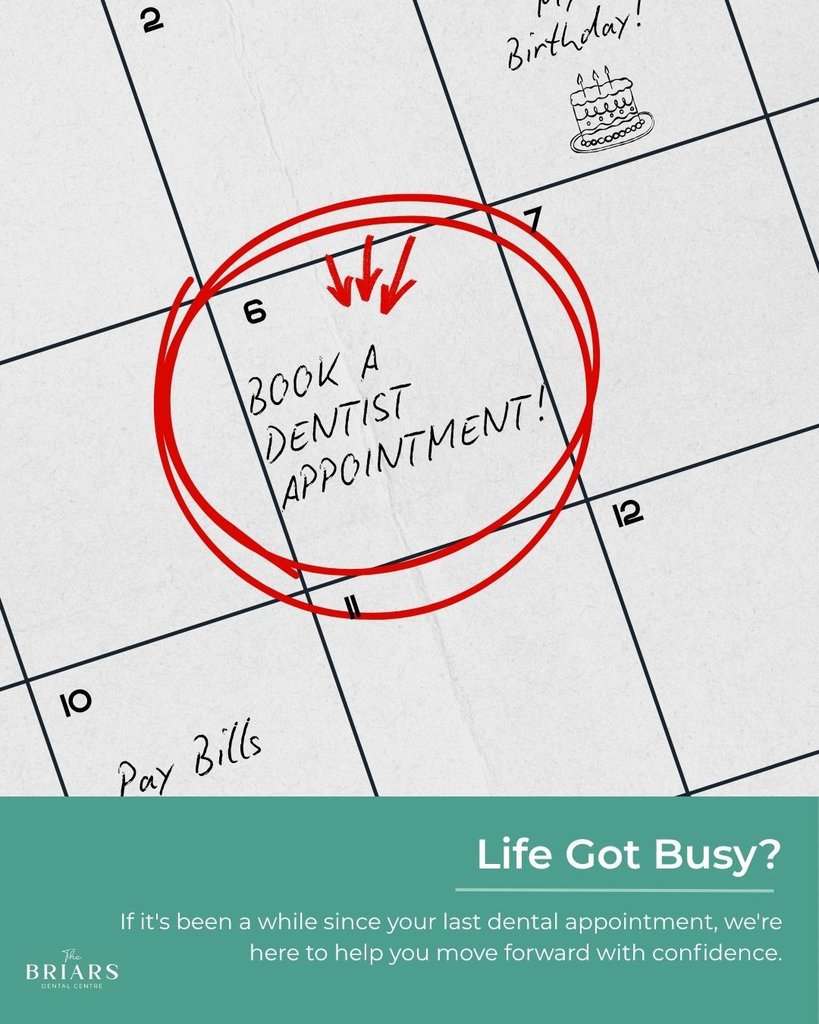
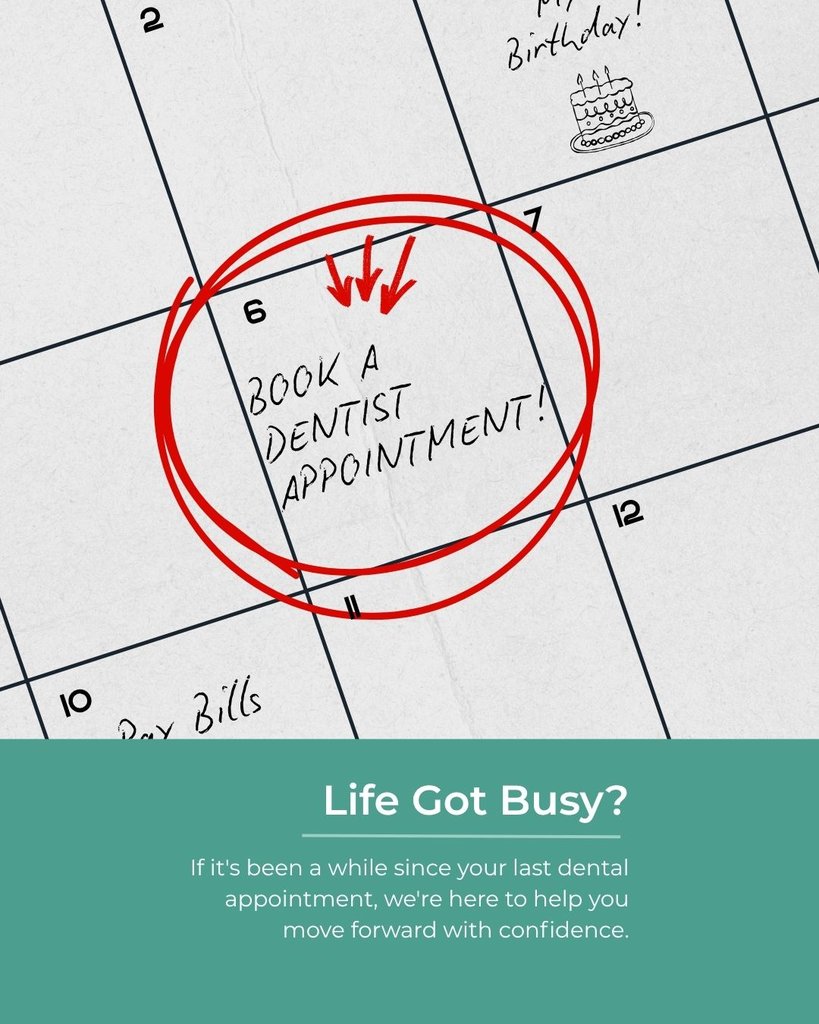
These two Briars Dental Centre ads use a calendar reminder to address someone who has put off a dental visit. The treatment is not the main idea; recognising a familiar situation is.
The executions change the size and arrangement of the copy. At phone size, we would ask whether the reason to book is still easy to read. We cannot name a winner from these images: they are research examples, not a test we ran.
Design a controlled test.
Start with a question your reception team hears repeatedly. Write one clear answer using your practice’s actual offer, clinician and consultation process. Make the page after the click answer the same question.
Decide what you are testing before producing variants. Changing the message, offer and page together makes the result harder to interpret.
Thinking about Invisalign?Explore the consultation
What happens at an Invisalign consultation?Explore the consultation
- Consultation offer
- Treatment page
- Audience
Change the opening message. Follow the resulting enquiries into your booking records.
Measure the resulting bookings.
Follow the enquiries through to recorded consultations where your systems allow it. A cheaper enquiry is not necessarily a cheaper booking. Keep an explicit unknown category when outcomes have not been recorded.
Use the report to choose what to test next. Use your own campaign and booking data to decide what to keep.
Browse the research and real ads