The Dental Ad Report.
Meta advertising from 80 dental practices, collected in August 2026. Browse reviewed examples by treatment. Free, with no email required.
80% of ads put a face in the frame
Patient portraits are the most common format, followed by a clinician with a patient. The chart shows the number of creatives in each category.
21% had run for more than 90 days
Median ad age was 47 days when the data was collected. These figures describe the ads at that time, not how long they eventually ran. Ad age does not establish bookings or profitability.
Most ads never say the price
37% show a price and 37% include an offer or free consultation. These are useful differences to consider when planning a campaign; the data does not show which approach converts better.
The chart also compares on-image text and treatment specificity. All figures are shares of the same 529-creative sample.
Share of all 529 creatives, as a percentage.
Browse the ad library.
92 reviewed examples, with notes and links to Meta's public Ad Library. Filter by treatment, market or creative type. Patient photographs are excluded from this gallery; the figures above cover all 529 creatives. 14 of the examples come from a second read in October 2026 of the image ads each practice showed most. They are in the gallery only, not in the figures.
Full arch22 of 22
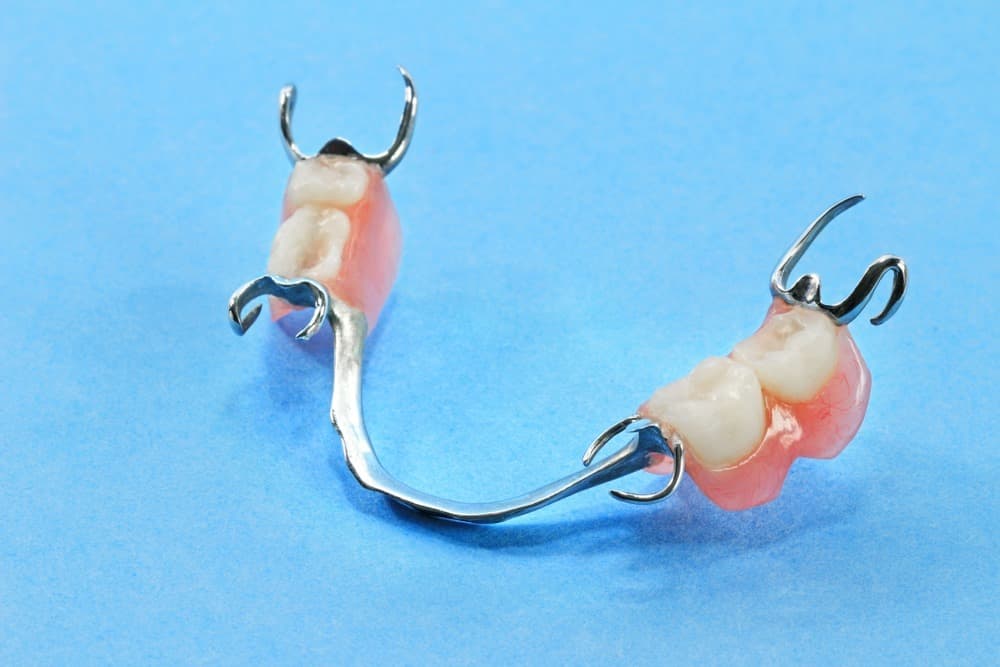
This ad leads with a close-up photograph of a removable partial denture against a plain blue background, asking the viewer to consider the product itself. The practice shows the prosthetic without context or patient testimony, leaving room to add before-and-after imagery or to explain what problems it solves.
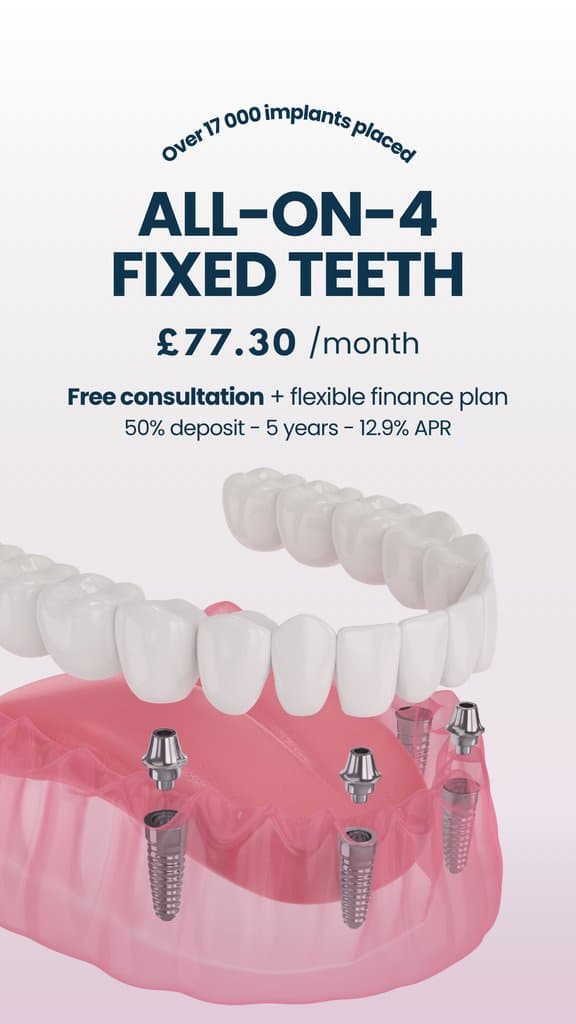
This ad leads with clinical credibility (17,000 implants) then pivots to monthly cost (£77.30), asking readers to book a consultation. The practice could sharpen messaging by choosing whether to emphasise experience or affordability, rather than asking readers to hold both claims at once.
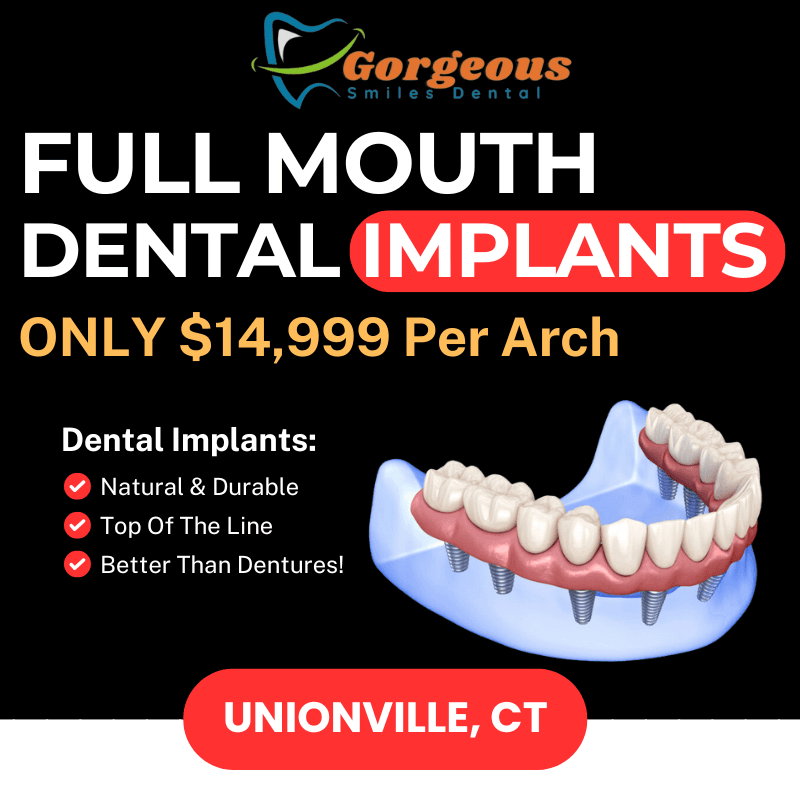
This ad leads with price and product name in large text, then lists three features as checkmarks. A practice could test whether emphasising the full-arch scope and durability claims outperforms focusing on cost alone, or whether adding patient testimonials would strengthen the pitch.
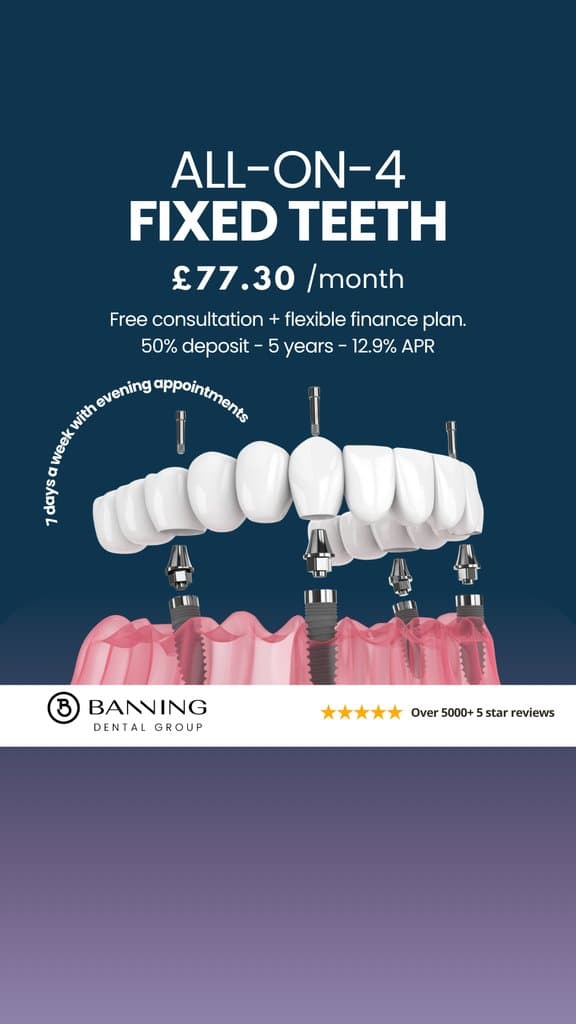
This ad leads with a monthly price and finance terms, asking readers to imagine affording full-arch teeth. The practice could strengthen it by showing what the treatment looks like in use, rather than just the components.
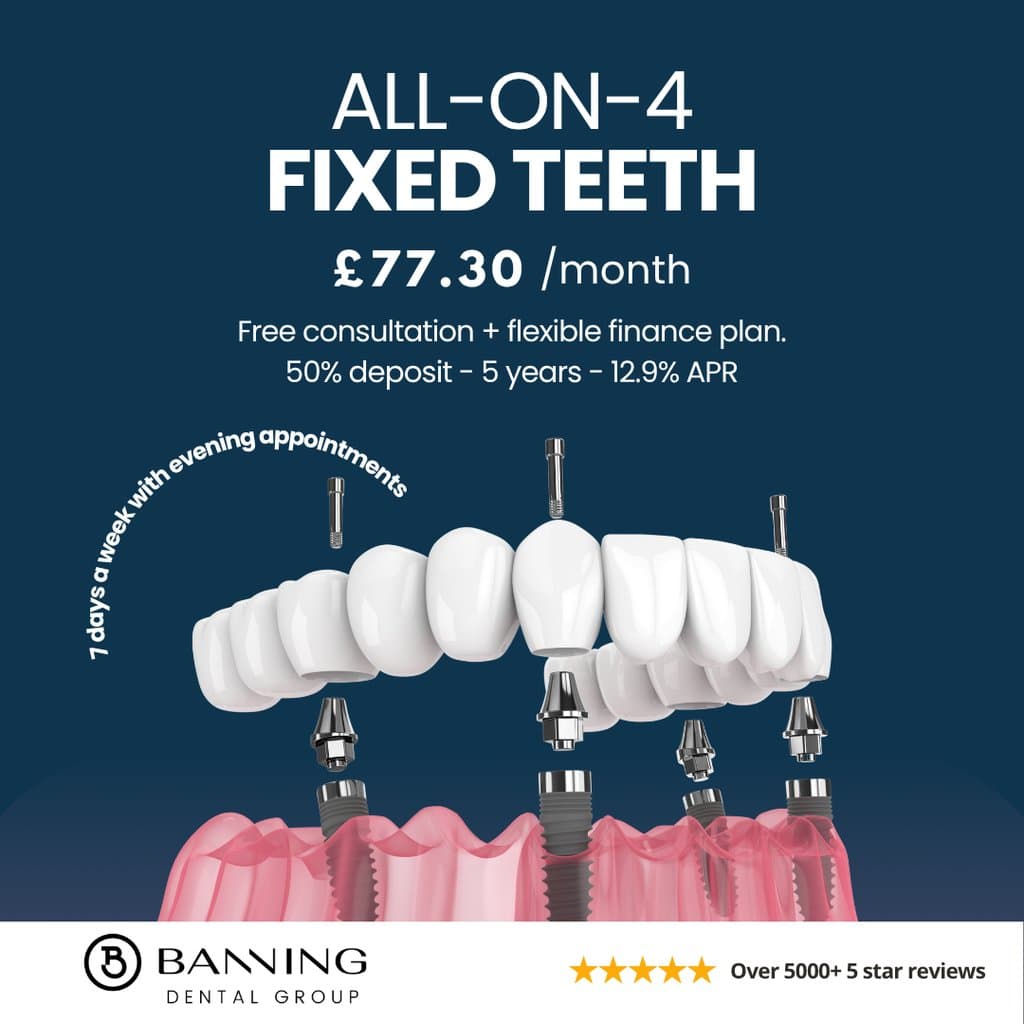
The ad leads with a monthly price and financing terms, asking readers to imagine affording new teeth in one appointment. It leaves unsaid what All-on-4 actually is, and doesn't explain why one appointment matters to a patient who needs teeth.
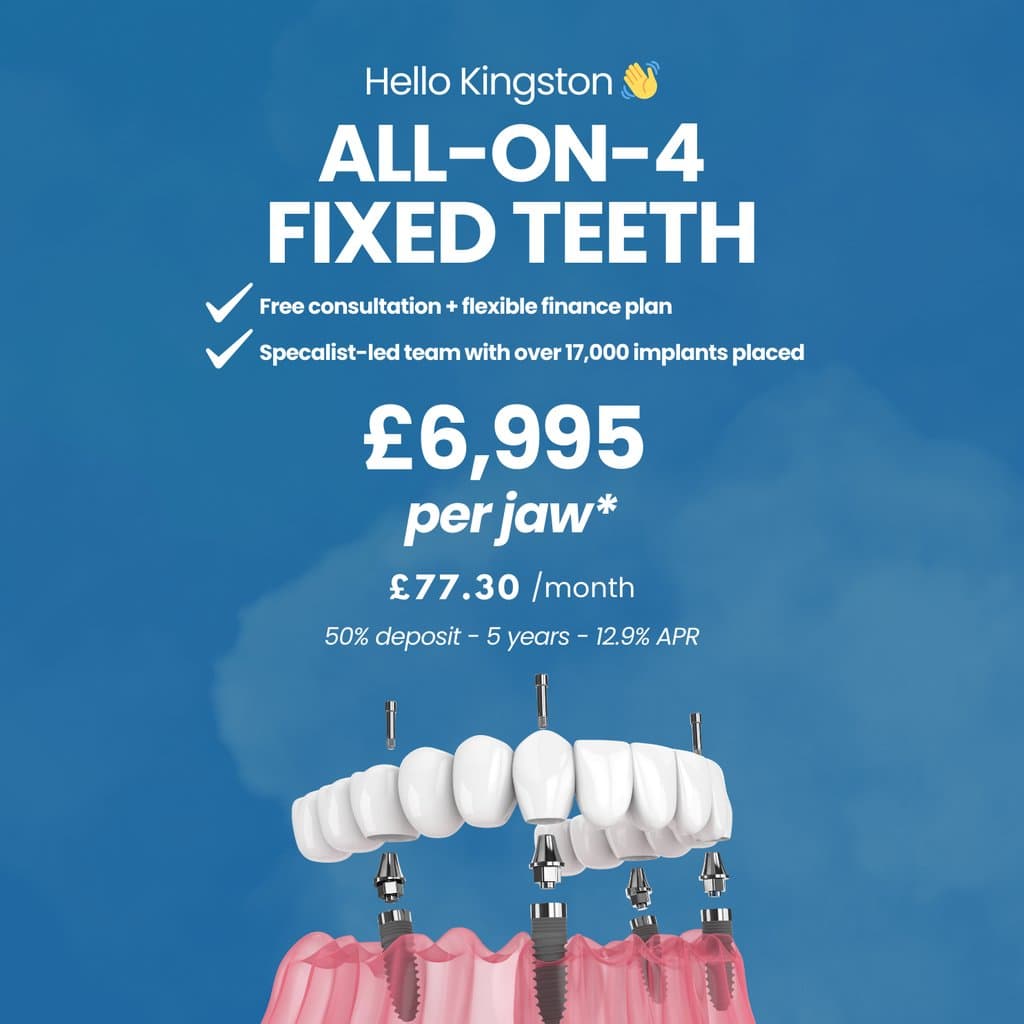
This ad leads with price and financing terms, using a visual breakdown of the All-on-4 procedure to make the offer concrete. The practice could strengthen it by addressing common patient concerns like recovery time or candidacy, rather than assuming price alone drives inquiry.
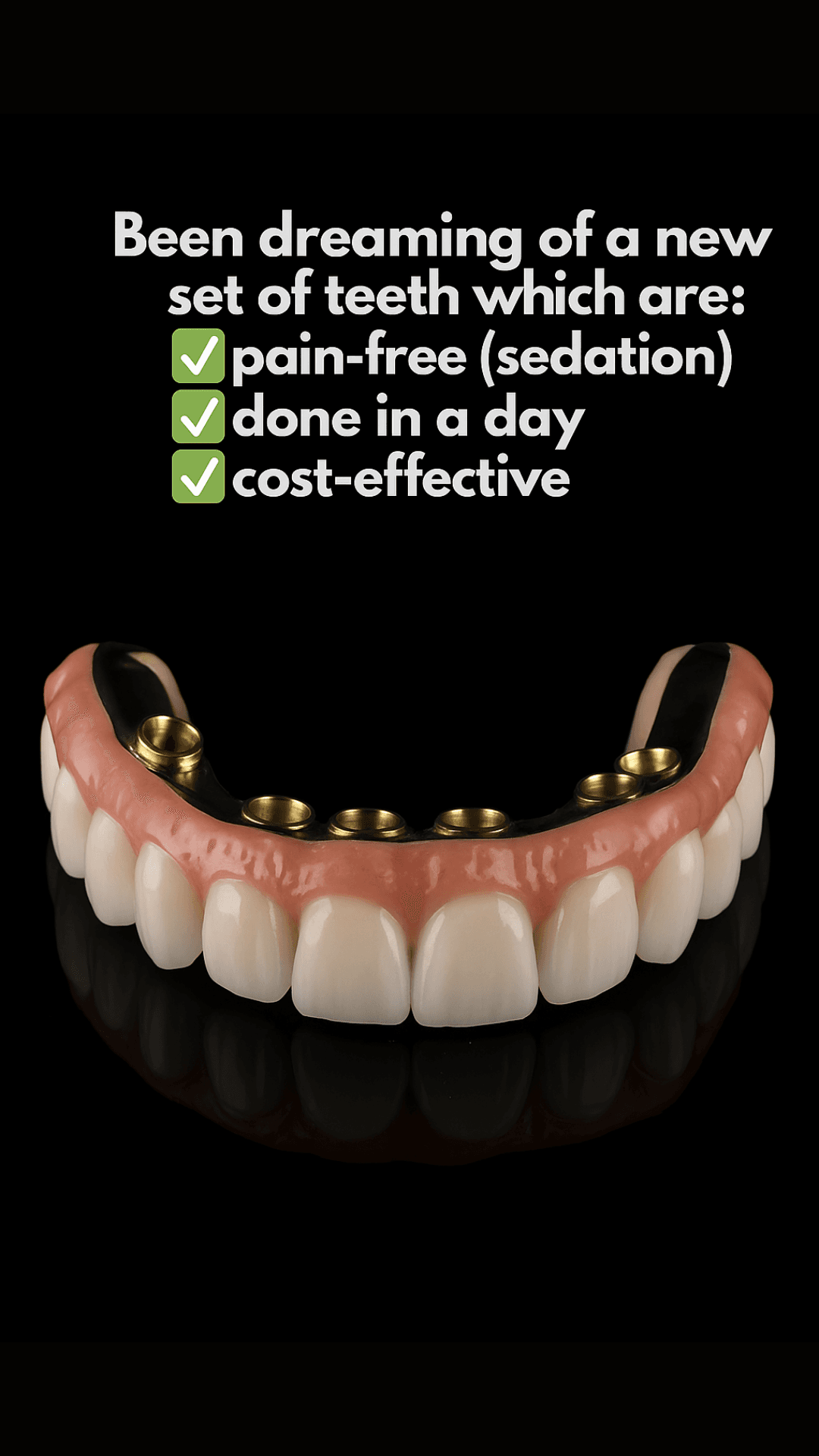
This ad leads with a direct question about desire ("been dreaming") then lists three benefits as checkmarks, anchoring the offer to speed and sedation. The practice could test whether naming a specific price or timeline competes better than "cost-effective," which remains vague beside the concrete "done in a day" claim.
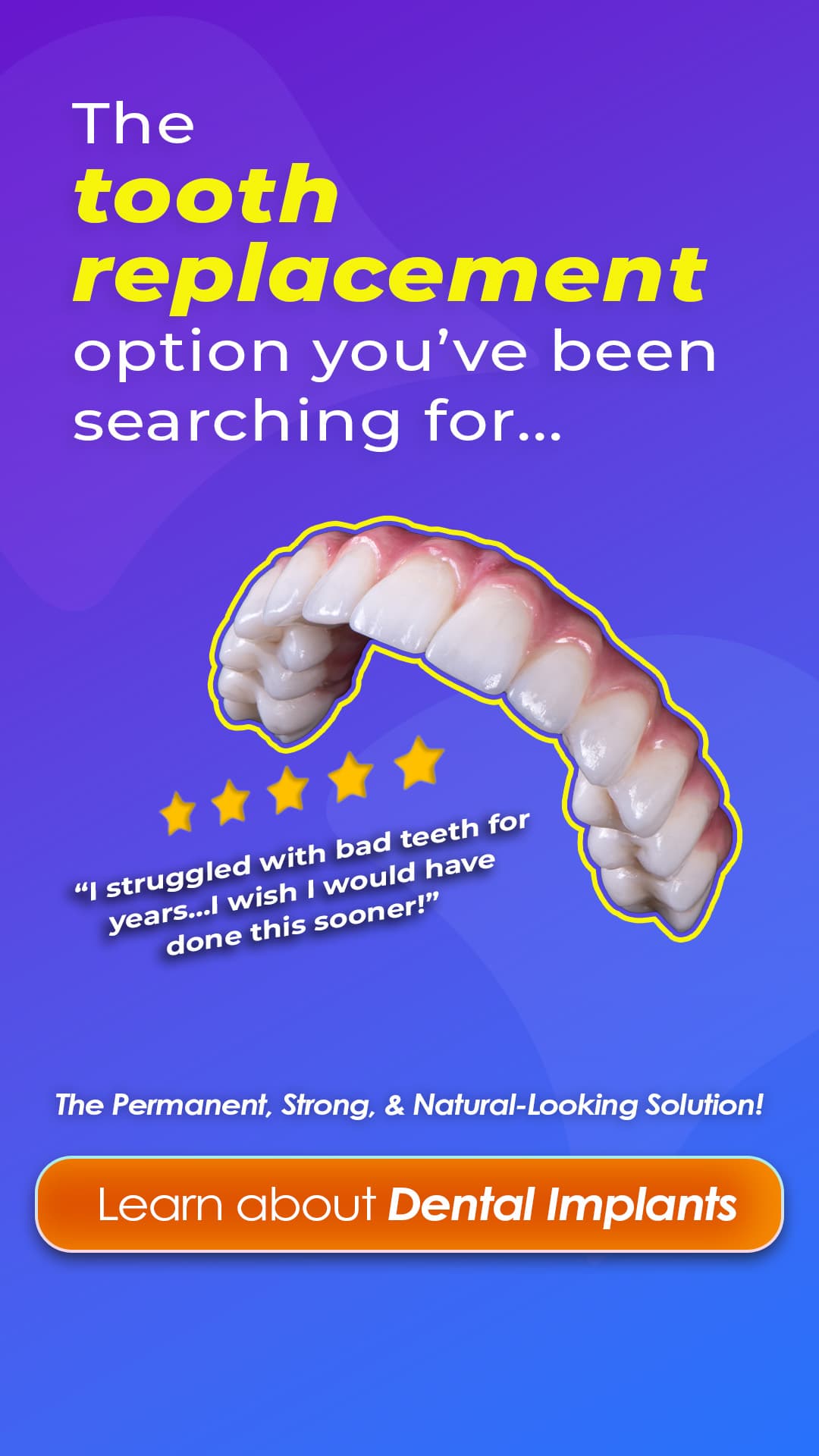
This ad leads with the emotional problem (struggling with bad teeth) before naming the solution (dental implants), using a patient testimonial to build credibility. A practice could test whether naming the specific treatment earlier, or showing the functional benefit of full-arch implants rather than general struggle, shifts engagement.
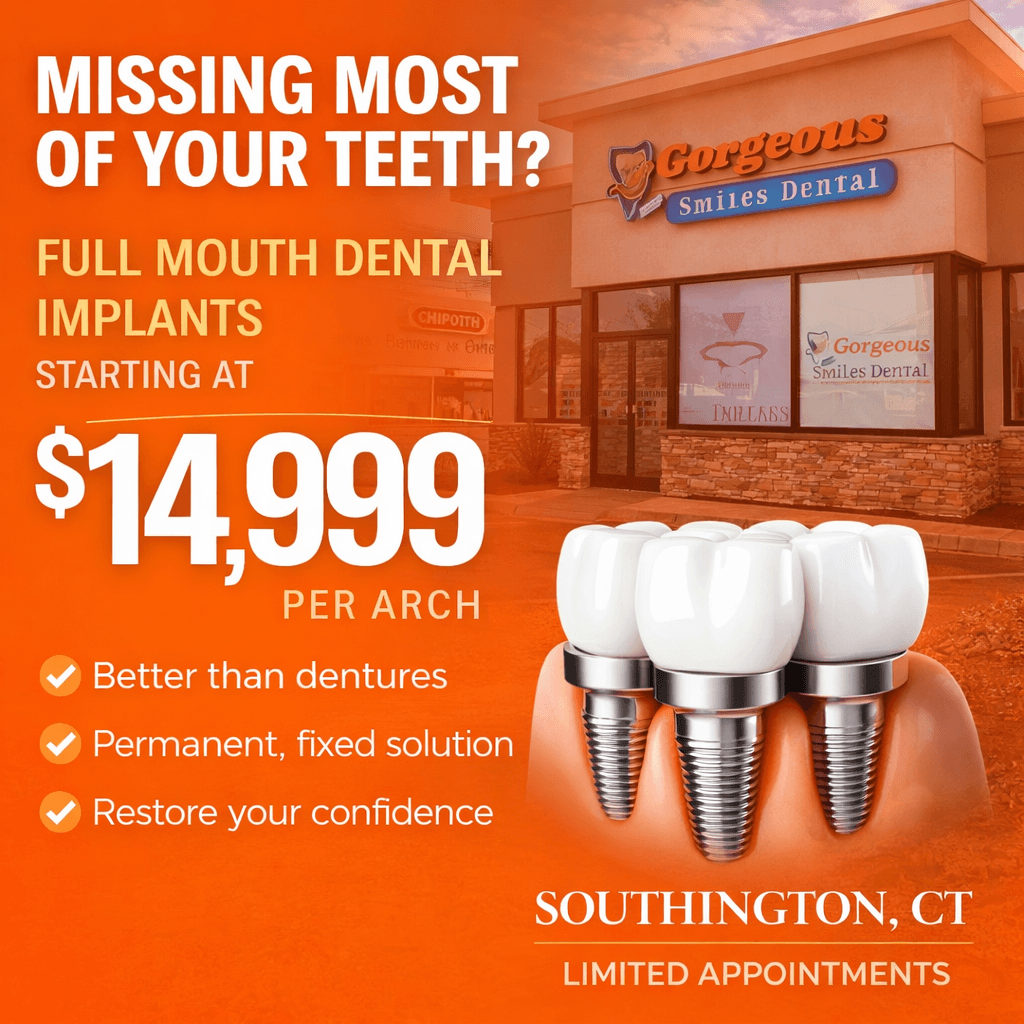
The ad opens with a problem statement, then presents implants as a superior alternative to dentures at a fixed price point, emphasising permanence and confidence. It could specify what "per arch" means for patients unfamiliar with dental terminology, and might test whether naming the treatment cost attracts or deters inquiries.
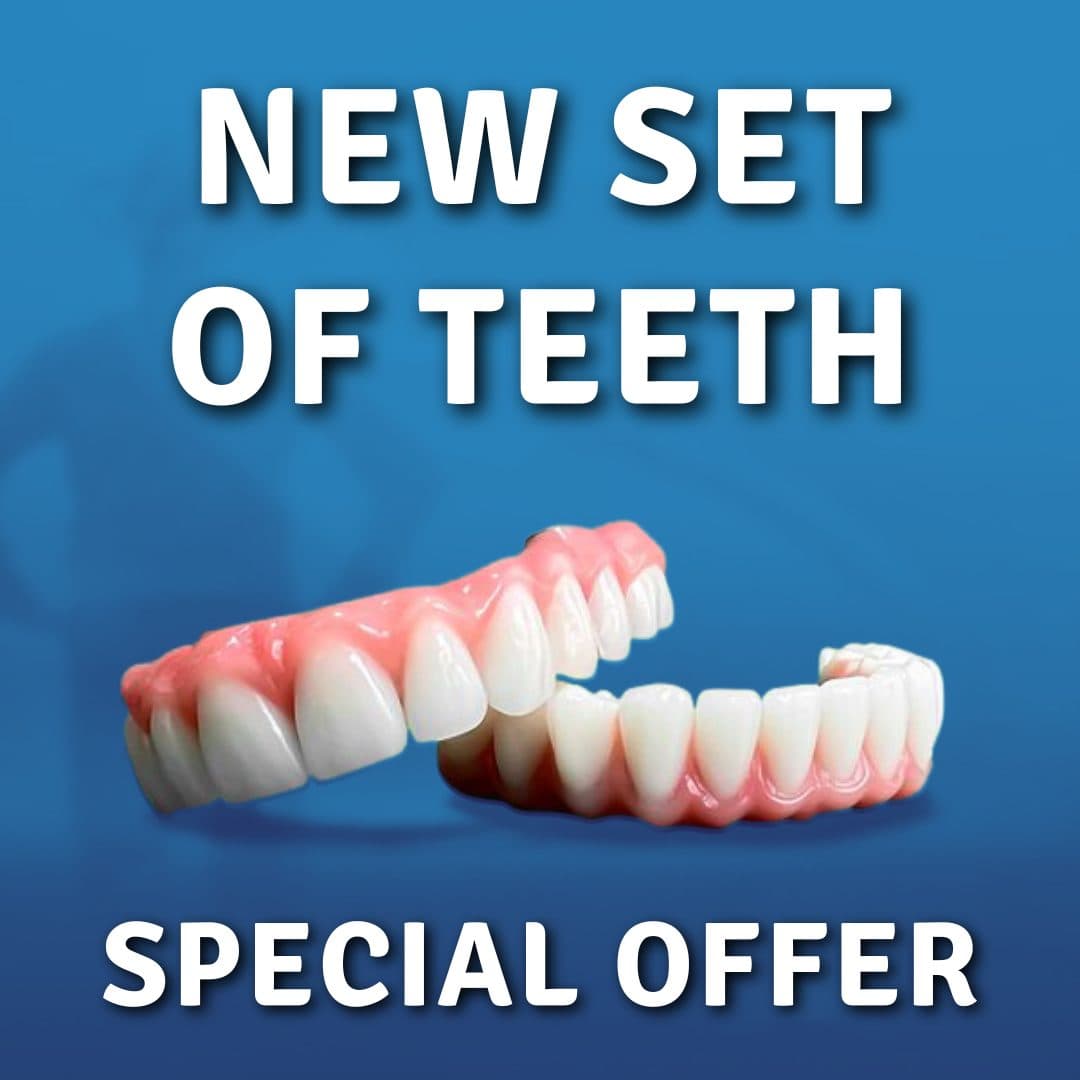
This ad leads with a product image of full-arch dentures and a direct offer statement, asking viewers to consider immediate treatment. The approach is straightforward but leaves unclear what problem the dentures solve or what makes this practice distinctive from competitors.
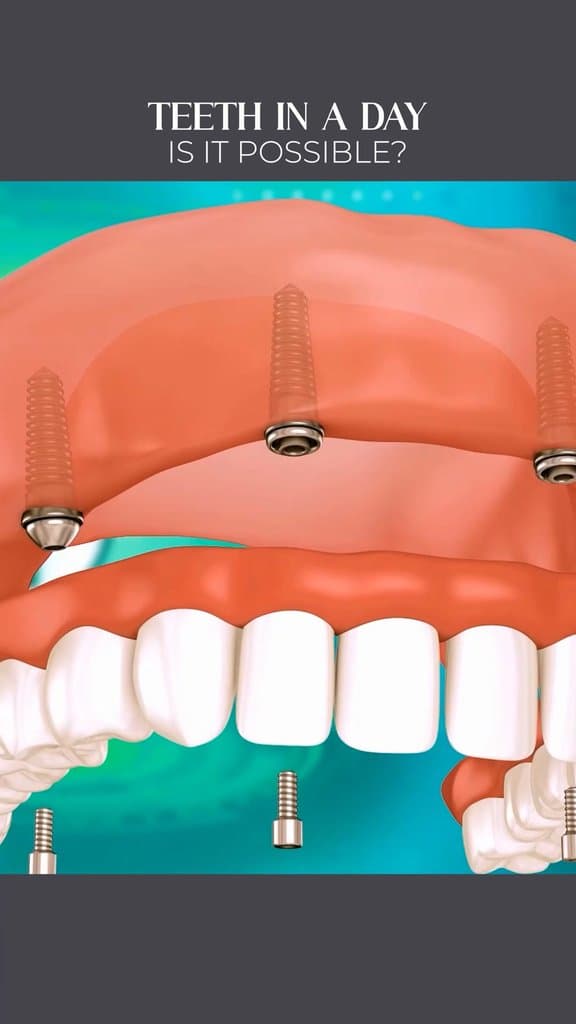
This ad opens with a question about same-day teeth to hook interest, then shows the implant hardware involved. A practice could test whether naming the procedure upfront ("Full-arch implants") converts better than posing a question first.
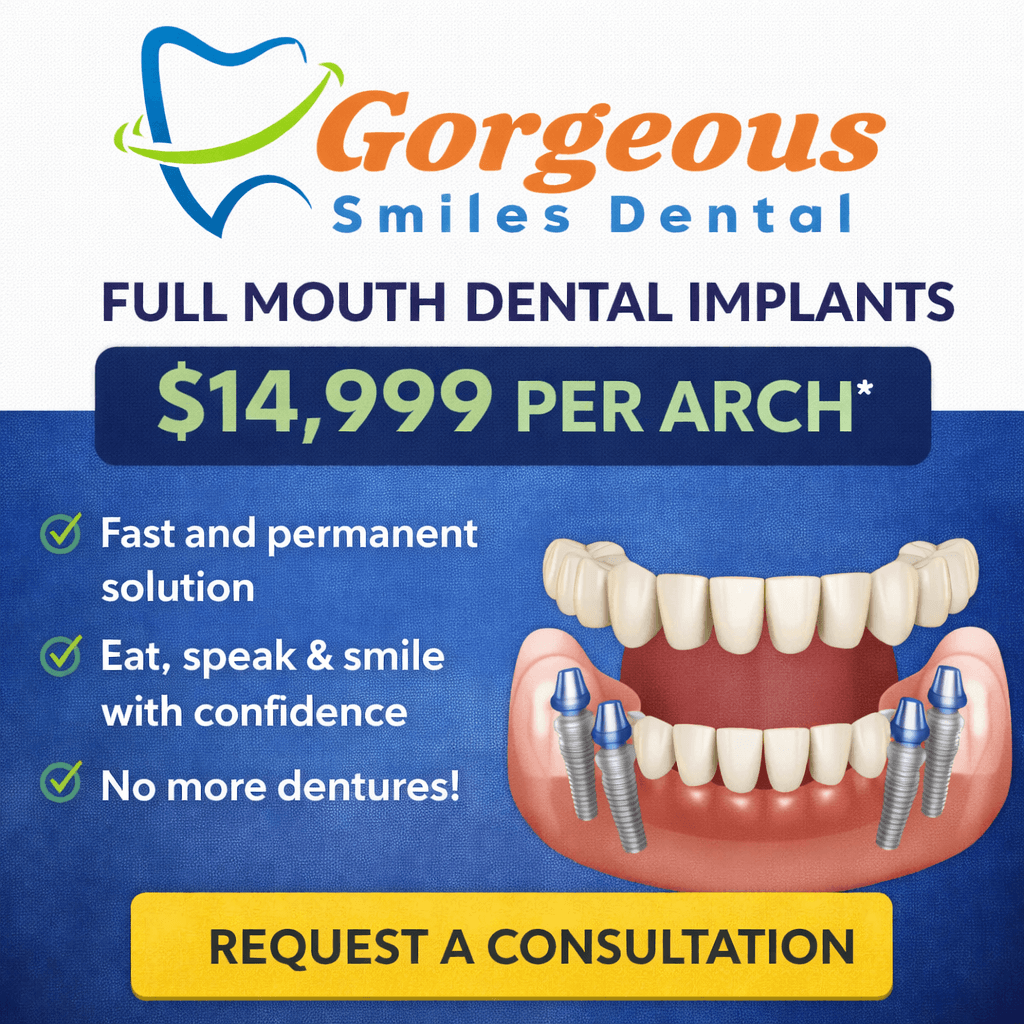
This ad leads with a single price point and three benefit statements, then asks viewers to book a consultation. The asterisk on the price goes unexplained, and the ad does not address common concerns like implant longevity, bone requirements, or the total cost of treatment.
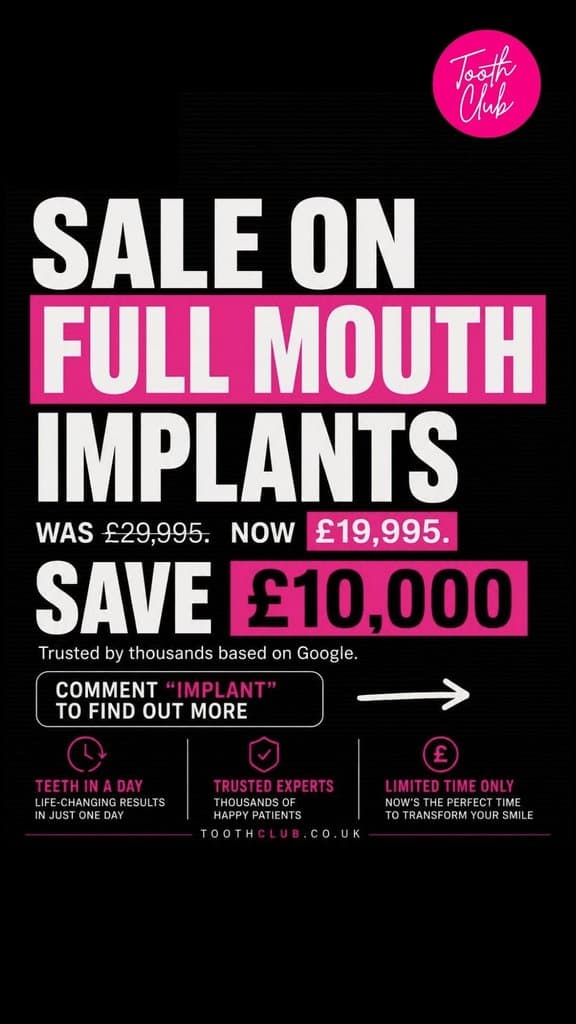
This ad leads with a £10,000 saving on full-arch implants and asks readers to comment for details rather than click through. The practice could test whether a direct booking link or phone number converts better than the comment call-to-action.
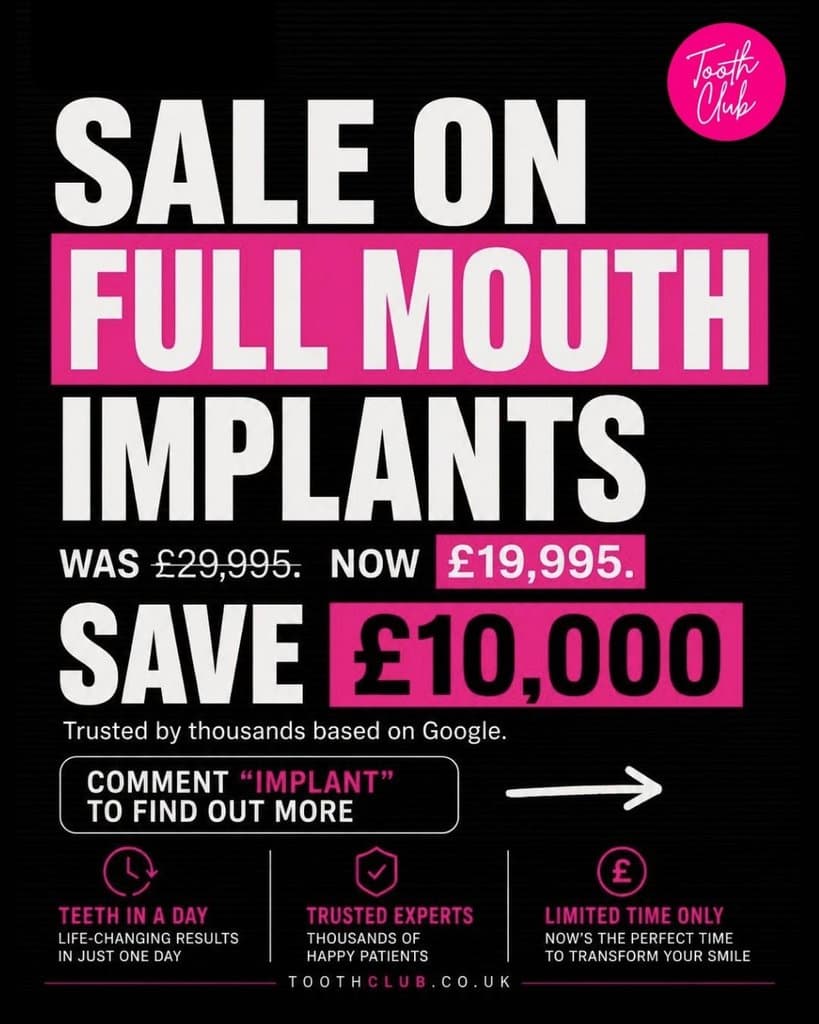
This ad leads with a price drop and "teeth in a day" promise, then asks viewers to comment for more details. The £10,000 saving is bold, but practices might test whether the commitment barrier of commenting loses prospects who would respond to a direct link or phone number.
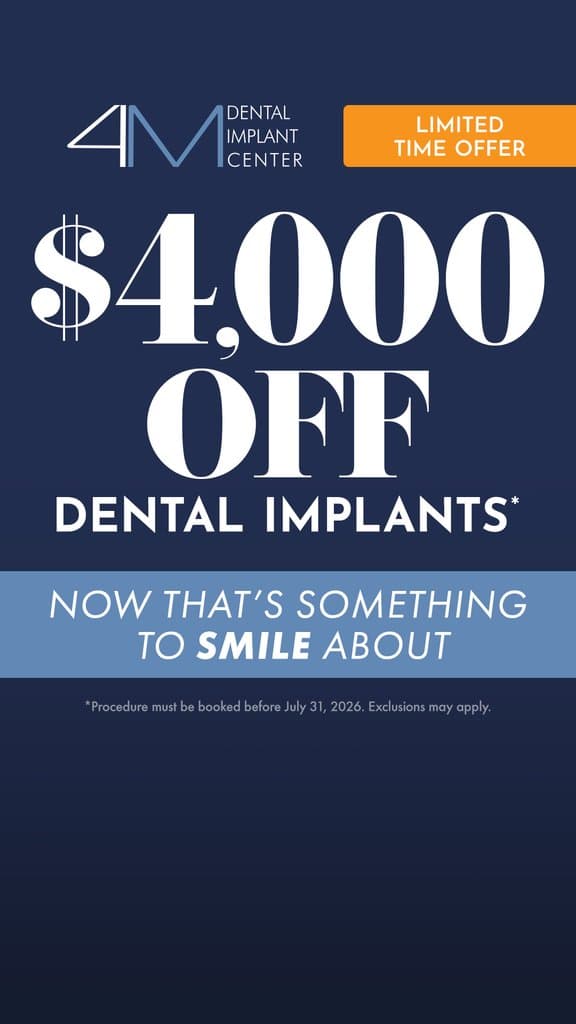
This ad leads with a dollar figure and urgency (a July deadline), asking readers to book an implant procedure. The practice omits what full-arch treatment costs before the discount, leaving potential patients unable to judge whether the offer represents real savings.
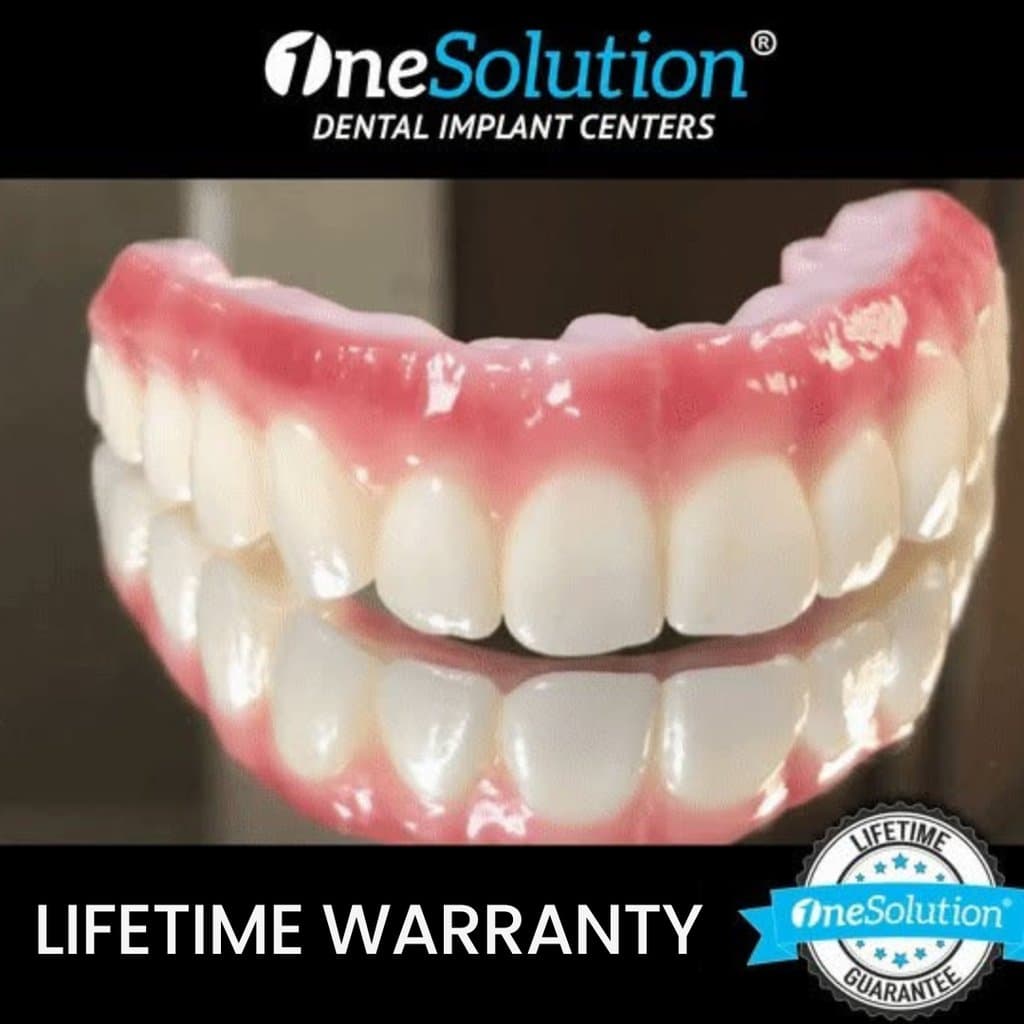
This ad leads with a product image of a full-arch restoration and anchors the message to a lifetime warranty claim. A practice could test whether highlighting warranty terms moves enquiries, or explore what specific restoration details patients ask about when seeing the guarantee prominently.
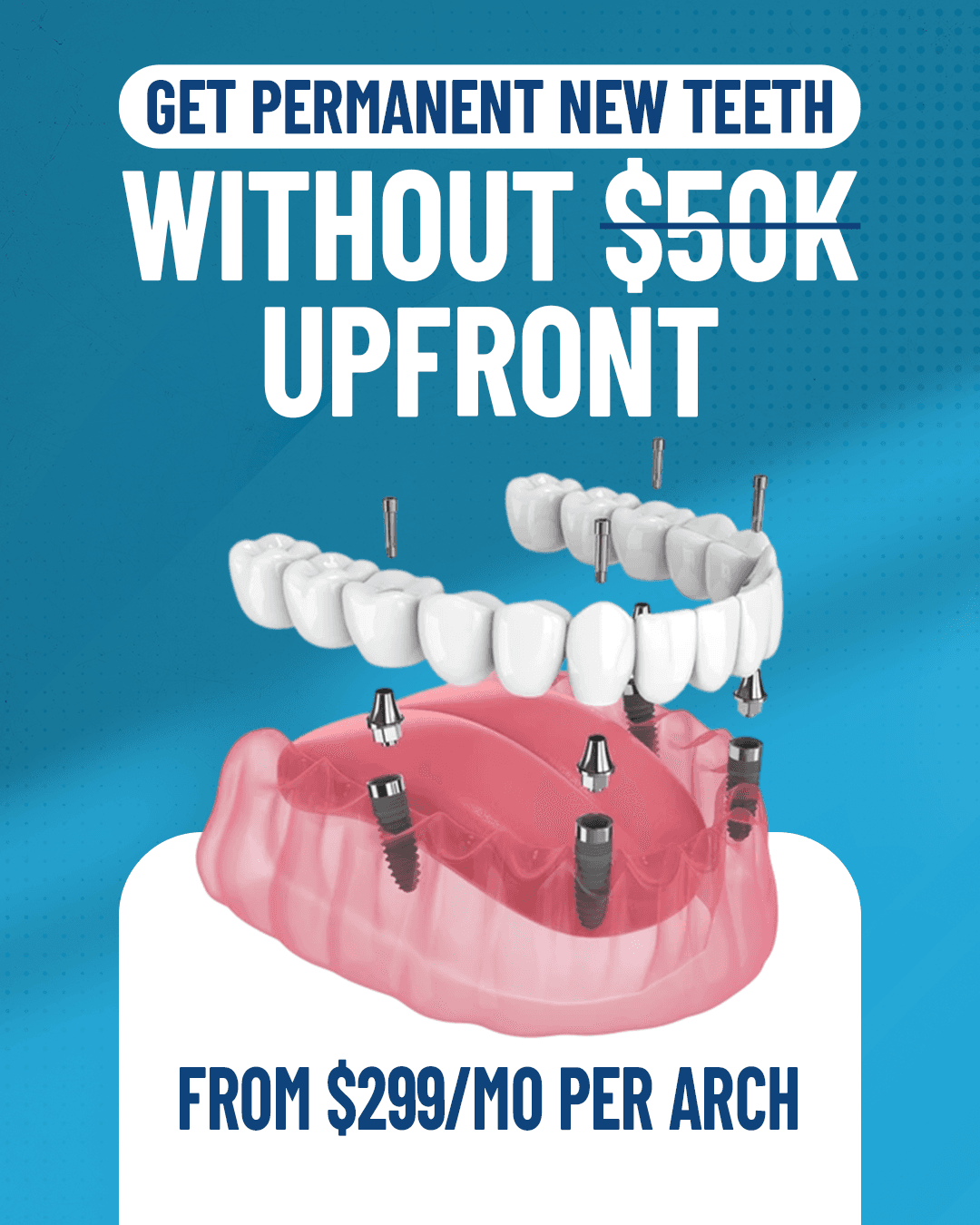
The ad leads with price relief, positioning monthly payments as the alternative to a large upfront cost. A practice might test whether naming the avoided expense ($50k) resonates more than stating the monthly figure alone, or whether showing the implant model adds persuasive weight.
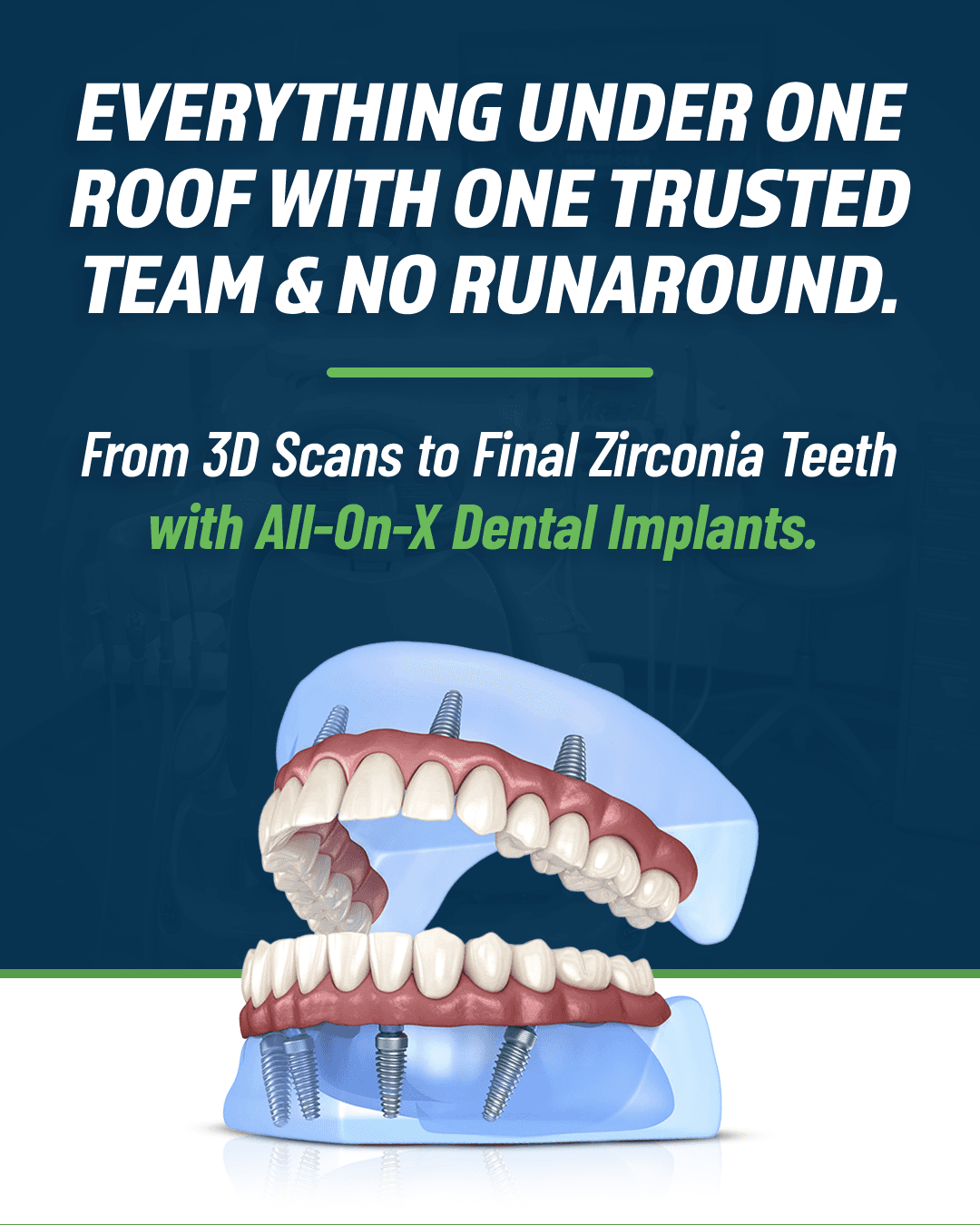
The ad leads with convenience and coordination, listing the journey from scan to fitted teeth whilst emphasising a single trusted team. A practice could strengthen this by naming specific timeframes or showing the clinical steps more distinctly, rather than clustering benefits into one statement.
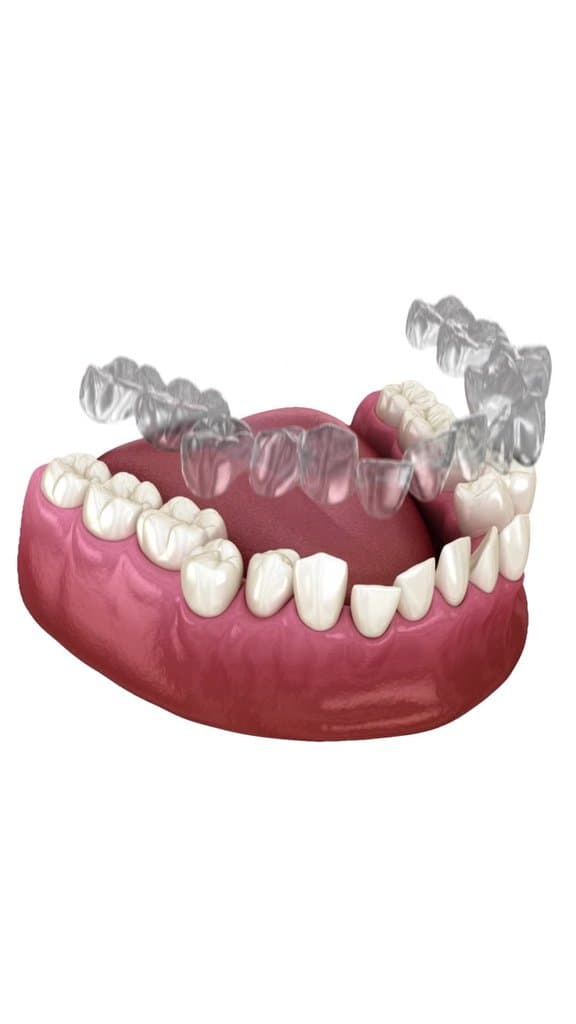
This ad leads with a 3D model of a full-arch restoration, showing the prosthetic teeth against the gum tissue without text overlay. A practice might add written context explaining the treatment, as the visual alone leaves the clinical process unclear.
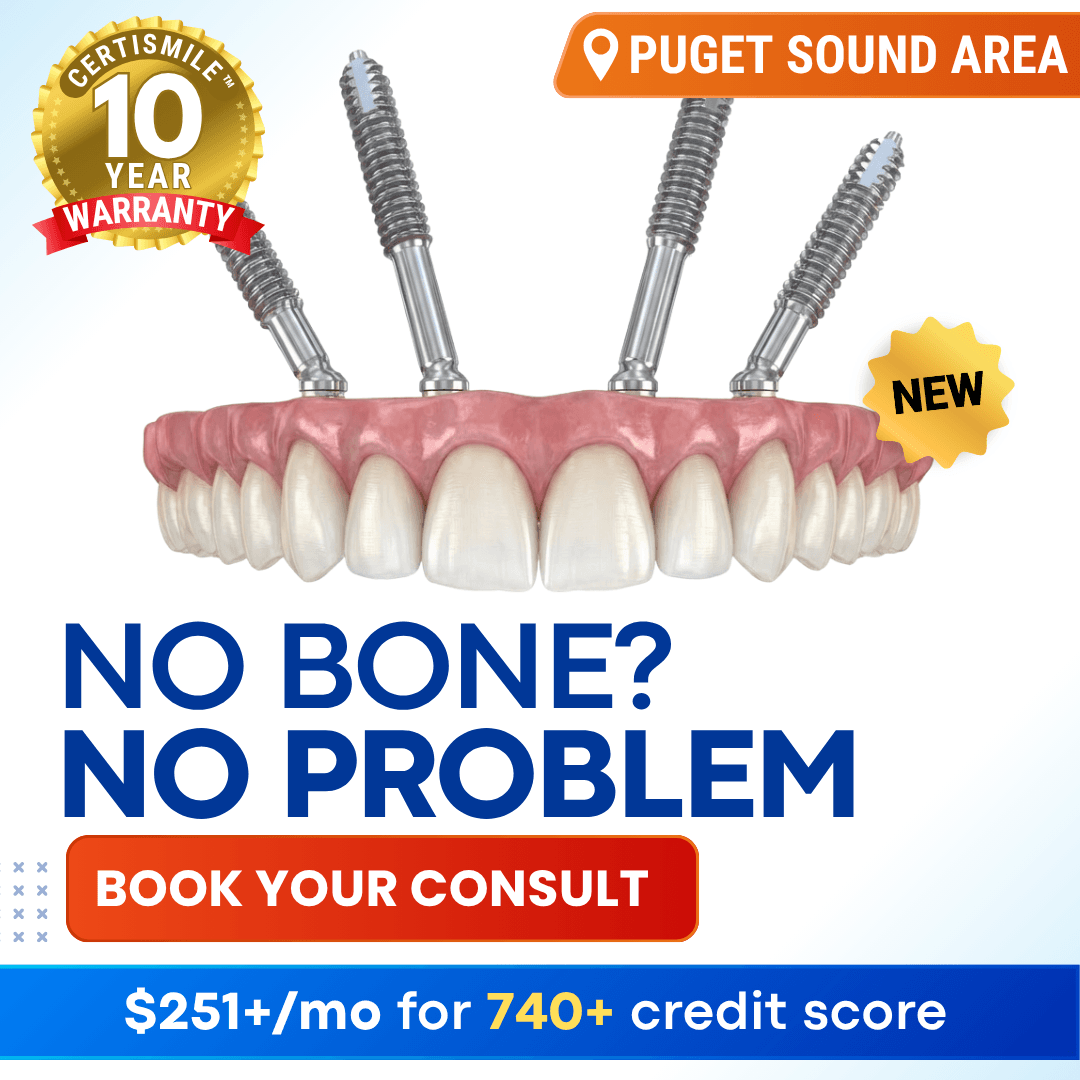
The ad leads with a visual of implants in gum tissue and the headline "No bone? No problem", positioning full-arch implants as accessible to patients who lack sufficient jawbone. A practice could test whether naming a specific barrier (bone loss) and dismissing it draws more inquiries than standard messaging, though the financing terms here are equally prominent.
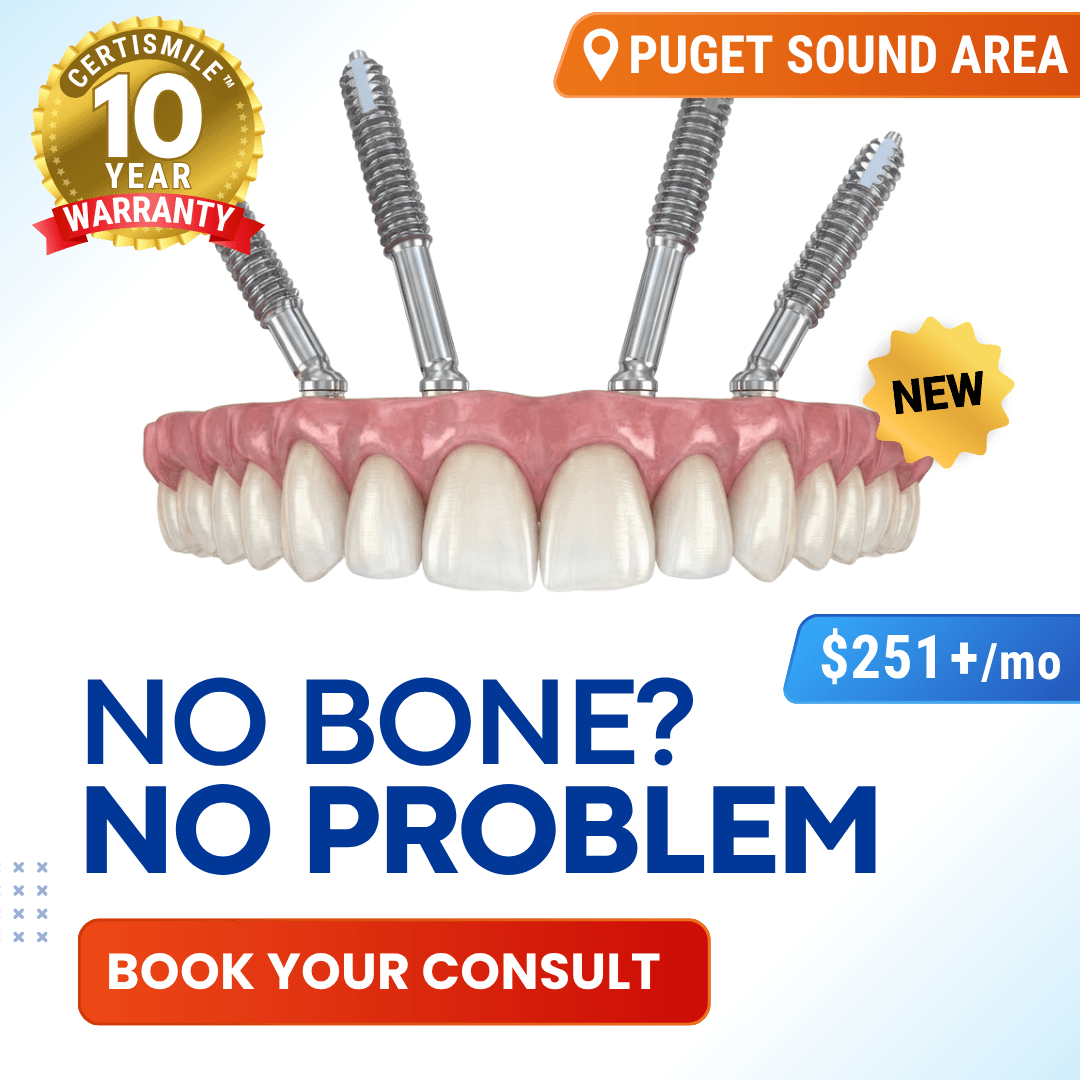
The ad leads with a product image and price, then addresses a specific barrier (bone loss) before asking for a consultation booking. It could strengthen by clarifying what makes this solution different, or by showing what patients actually gain beyond implant placement.
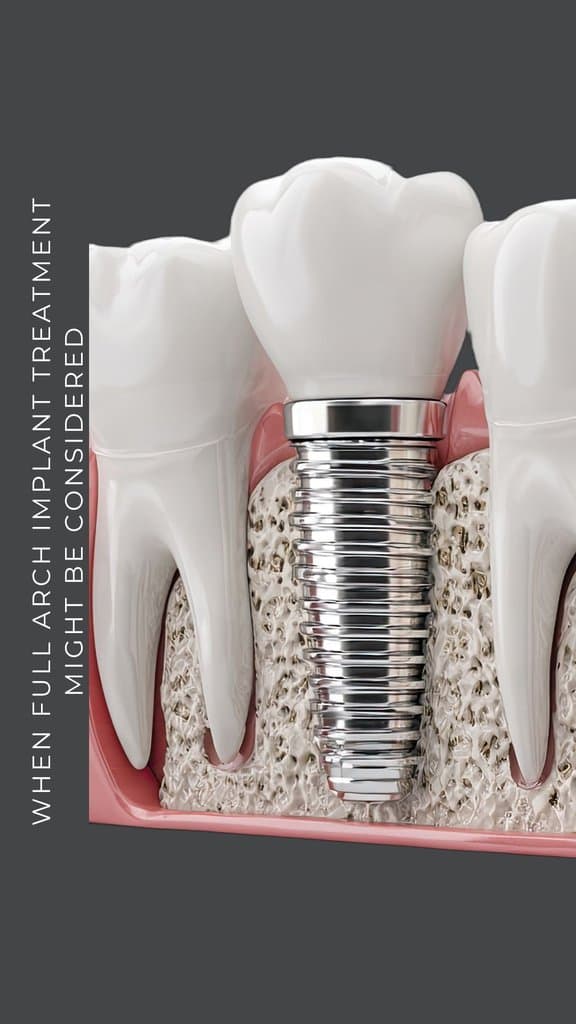
The ad leads with a close-up cross-section of an implant fixture and crown, labelling full-arch treatment as something patients "might be considered" for. A practice could test whether naming specific candidacy criteria upfront, rather than hedging, shifts inquiry quality or volume.
Implants17 of 17
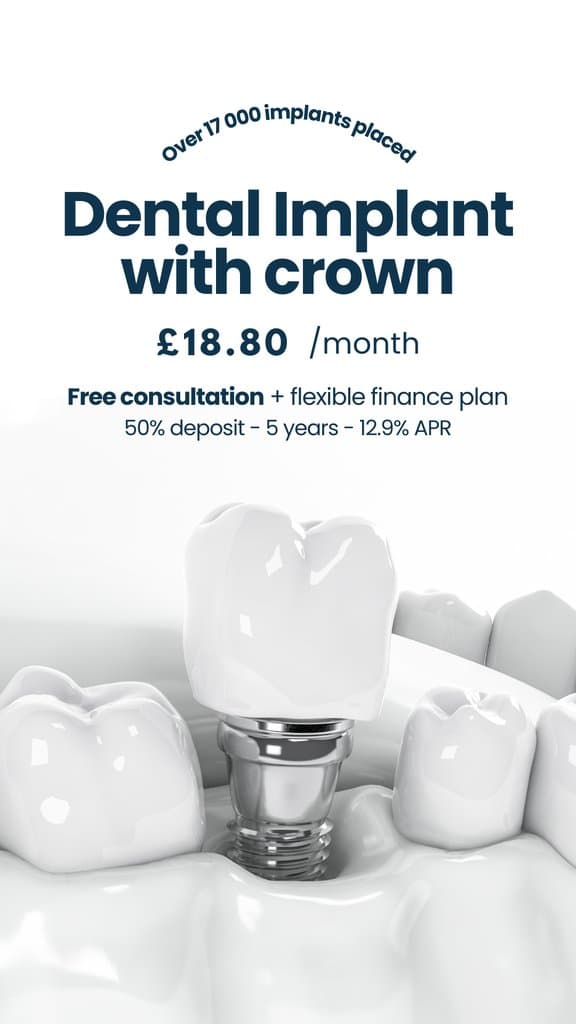
The ad leads with implant volume (17,000 placed) then anchors the offer to monthly cost (£18.80) with finance terms visible. A practice could test whether leading with trust-building numbers outperforms leading with price, or clarify what makes its implant outcome rate distinct.
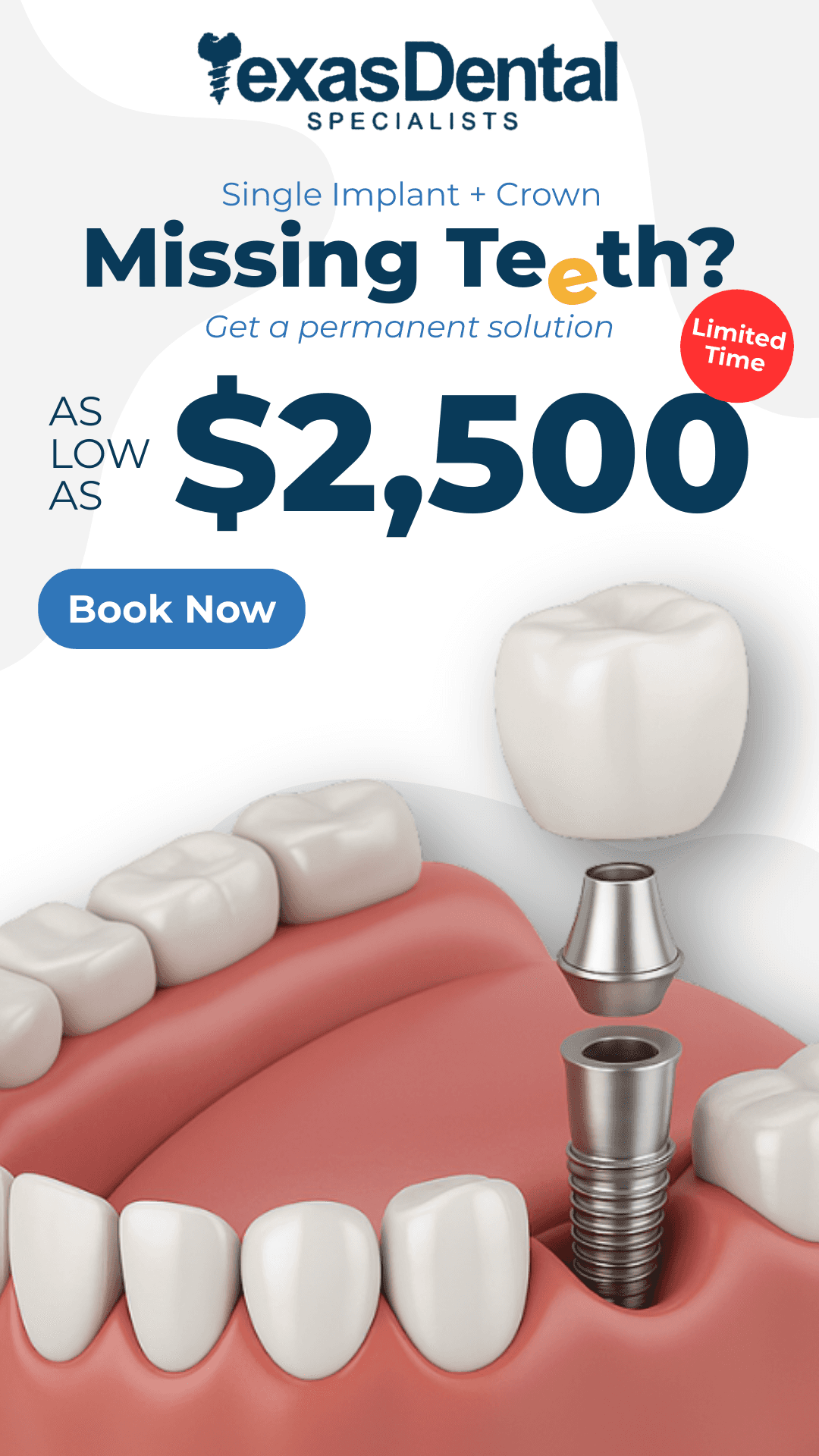
This ad leads with a specific price for a defined treatment (implant and crown), then asks viewers to book. The visual breakdown of implant components is clear, though the ad doesn't explain why this price point matters or what typically costs more.
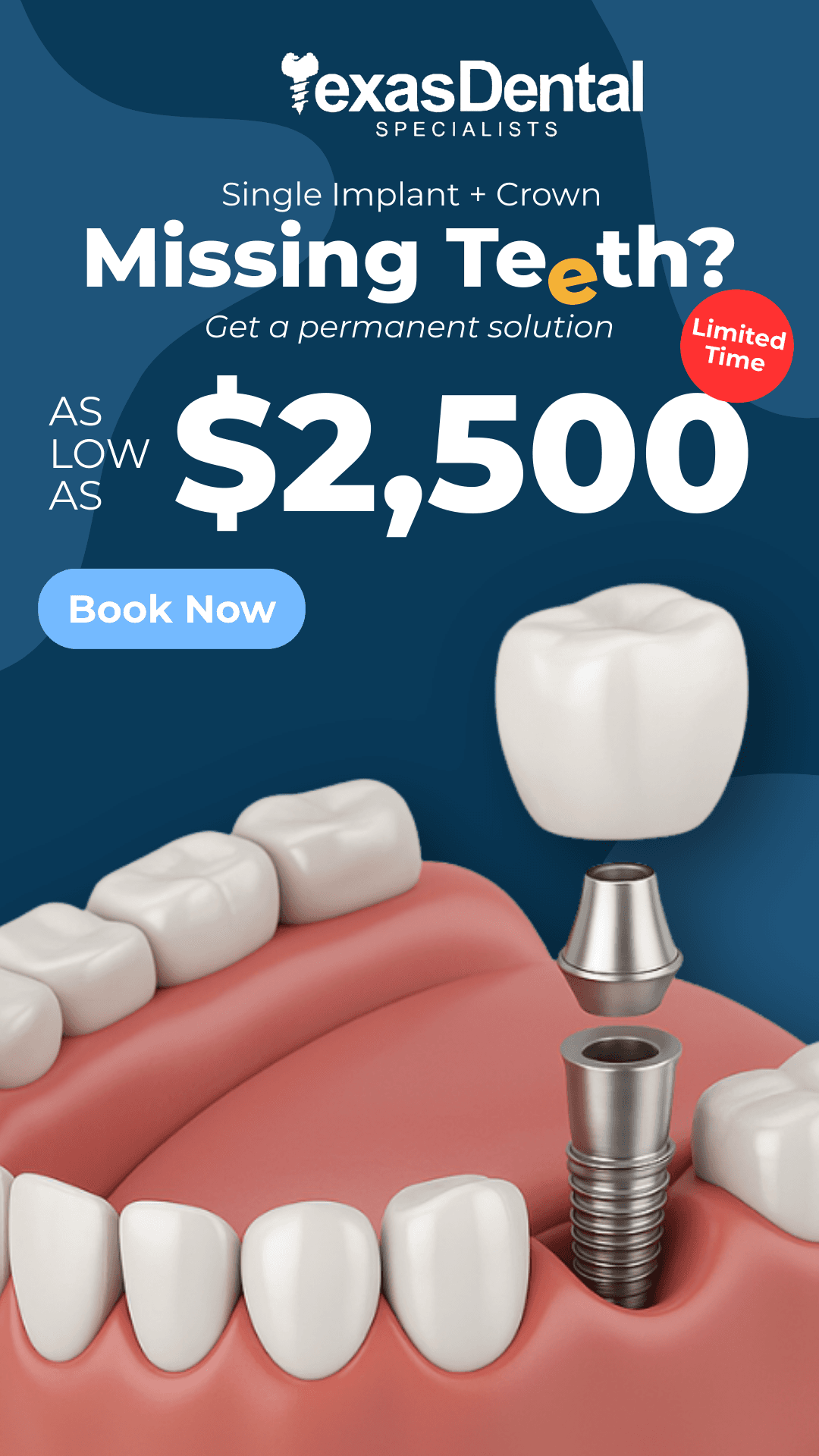
This ad leads with a problem (missing teeth) and a price point, then asks viewers to book. The creative shows implant anatomy clearly, though practices might test whether leading with price attracts serious patients versus price-shoppers.
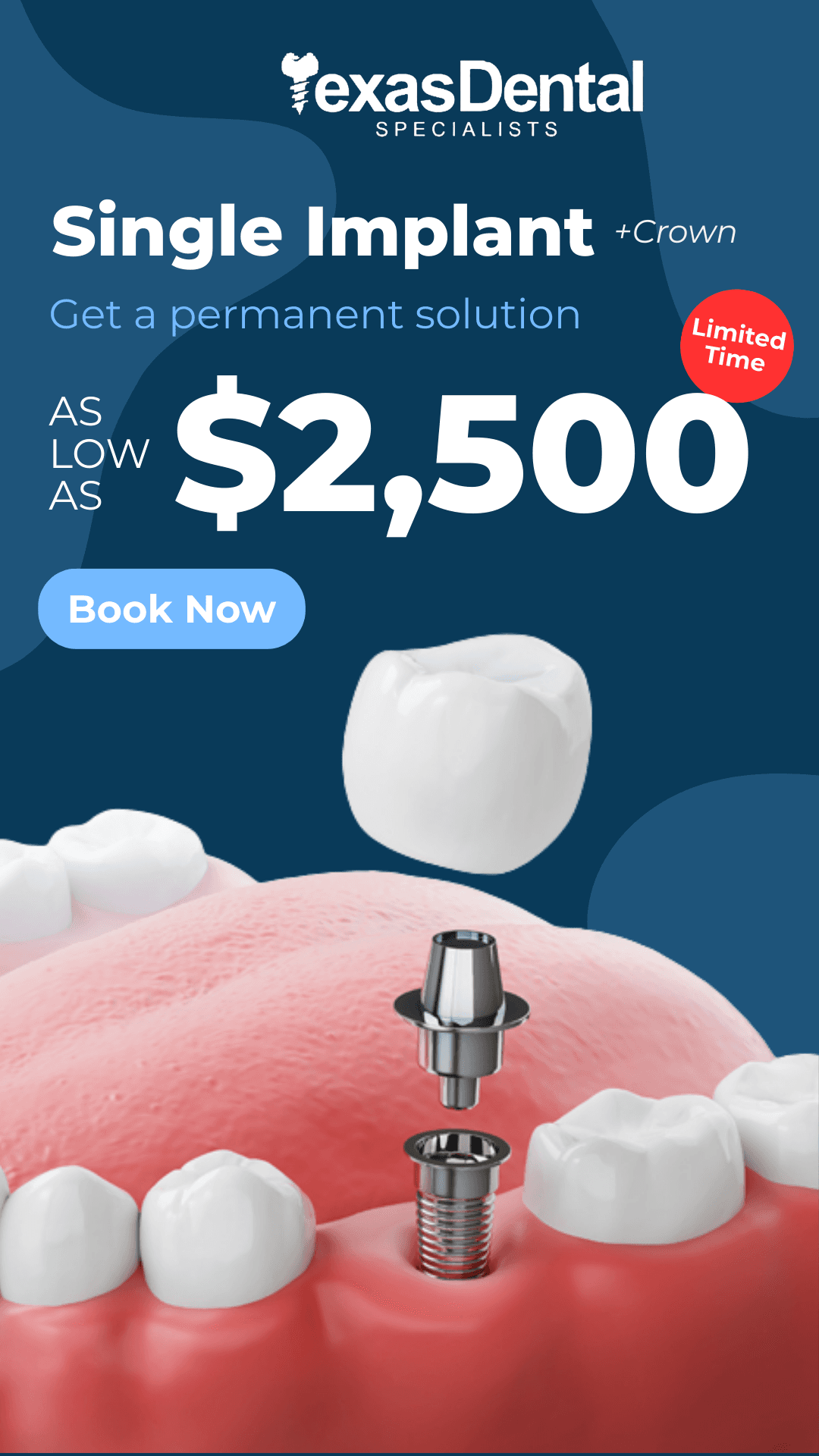
This ad leads with price and urgency, asking readers to book a consultation for a single implant with crown. The practice could test whether emphasizing the permanent nature of implants or patient testimonials might sustain interest beyond the limited-time angle.
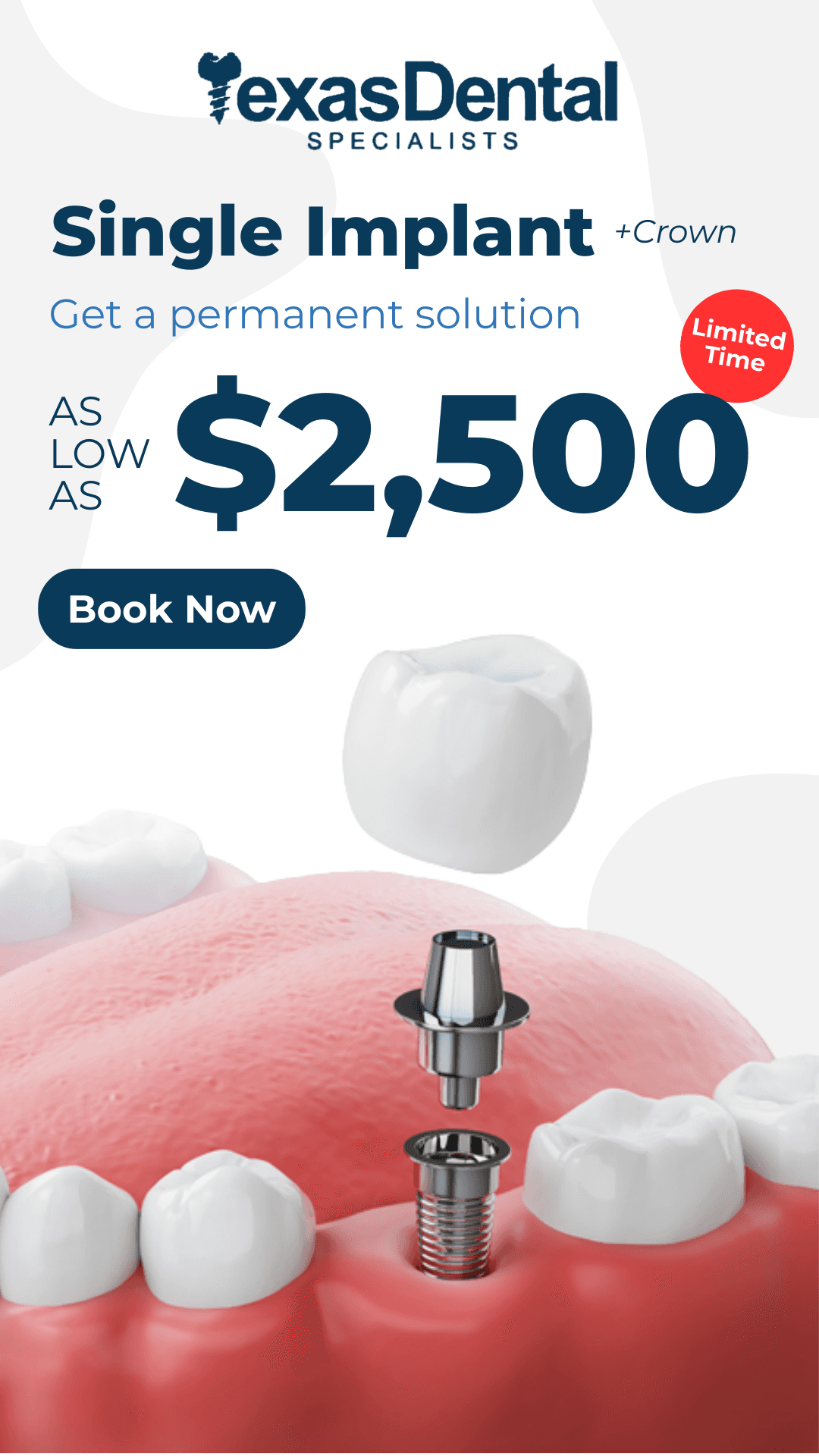
This ad leads with a fixed price for a single implant with crown, framed as limited-time, and asks viewers to book. The visual shows implant anatomy clearly, but the ad doesn't explain why someone needs an implant or address common concerns like bone loss or healing time.
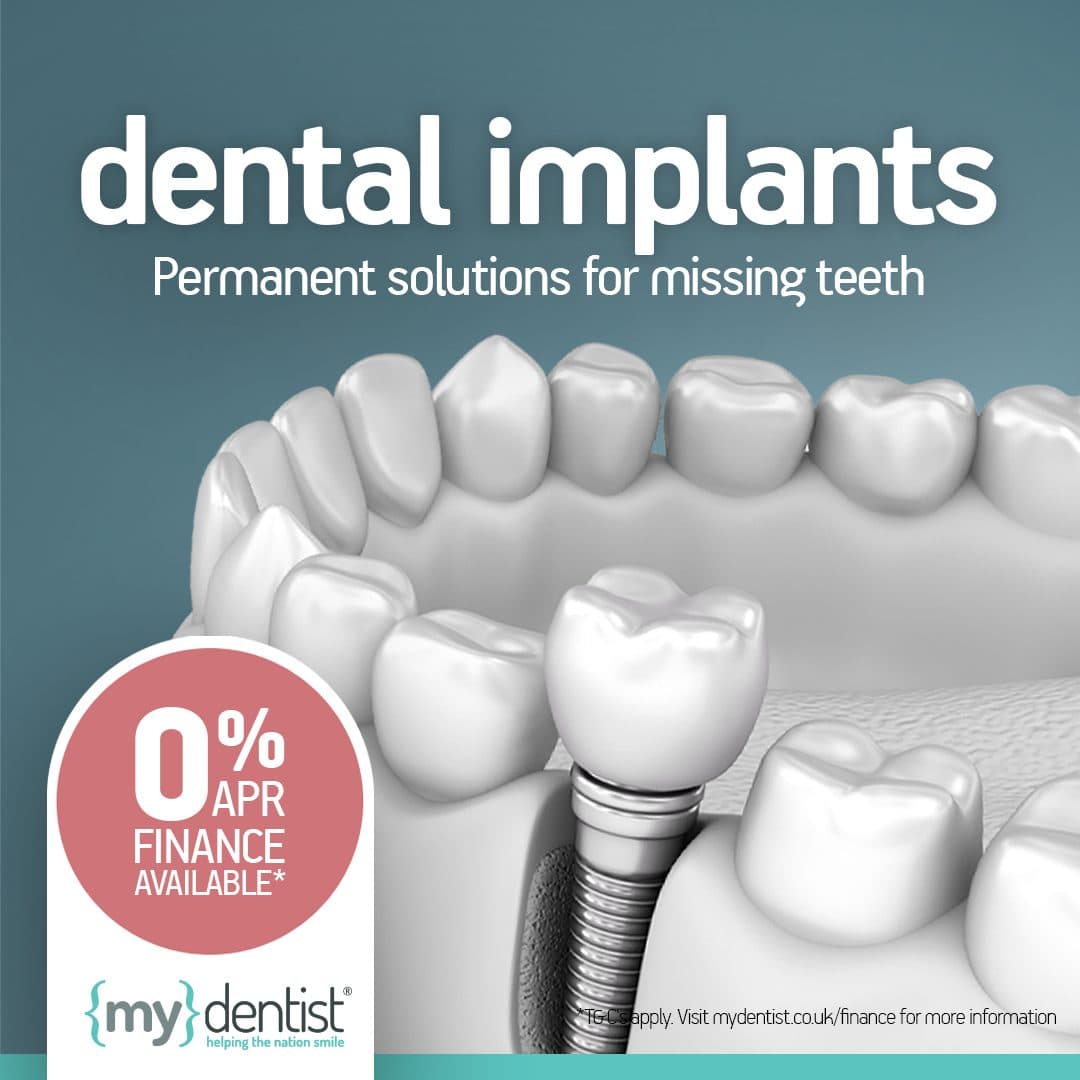
The ad leads with a 3D implant image and emphasises permanent replacement, then highlights 0% finance to lower the barrier to treatment. It runs long on a single offer; practices might test whether combining implants with other restorative options, or addressing patient fears beyond cost, shifts response.
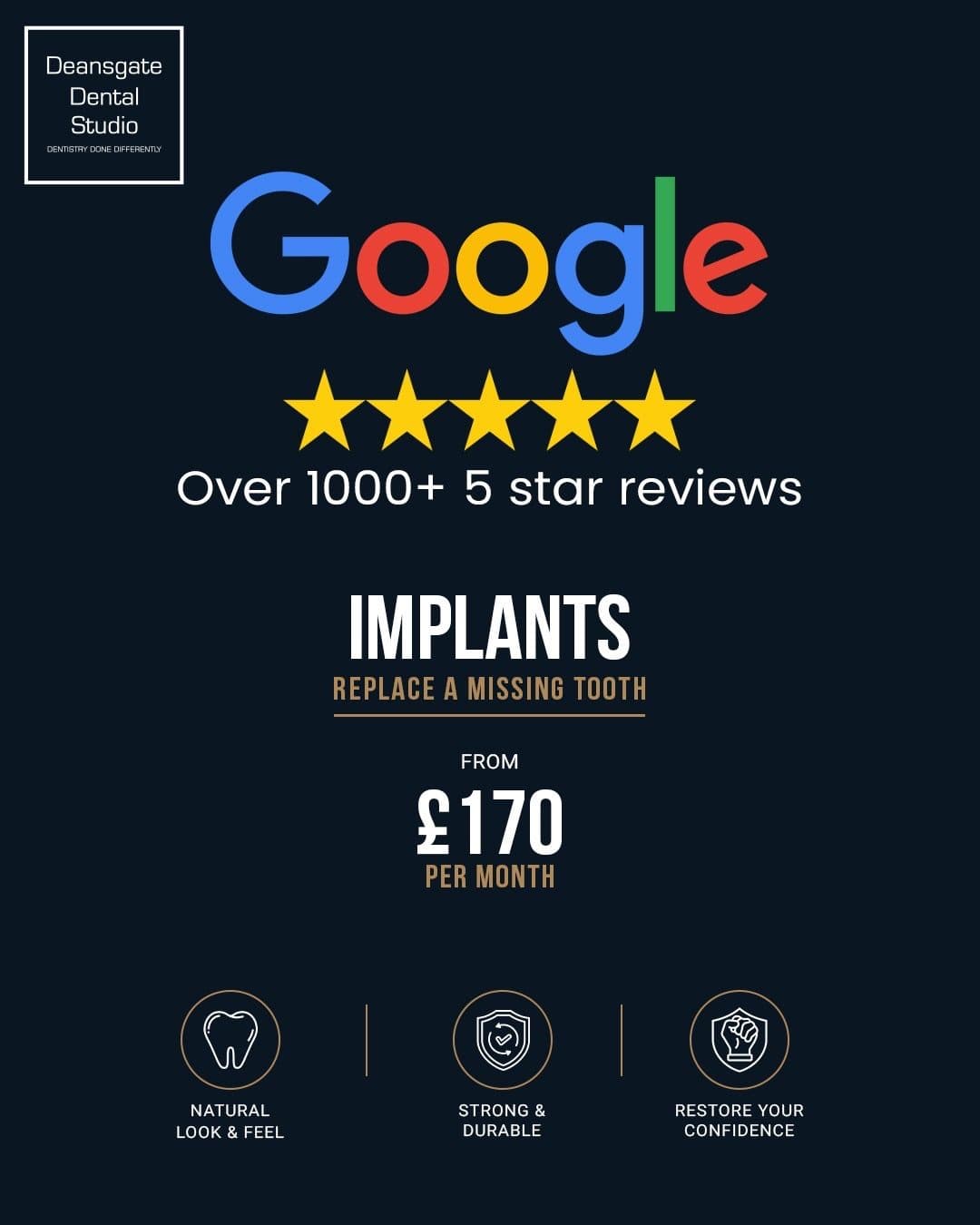
This ad leads with Google's five-star rating before mentioning implants, then anchors the offer to monthly cost rather than total treatment price. The practice could test whether showing the full implant cost, or emphasising the clinical outcome over reviews, shifts enquiry quality.
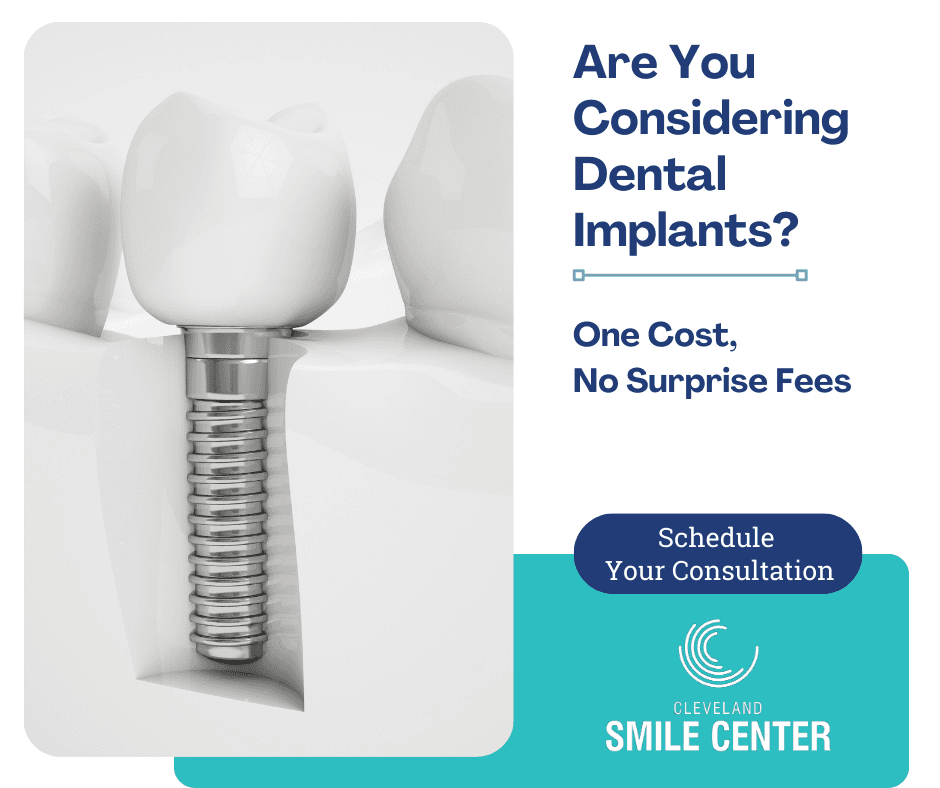
The ad leads with a close-up of an implant crown and addresses price anxiety directly, then asks readers to book a consultation. A practice could test whether naming a single flat fee (rather than just promising no surprises) drives more bookings than this approach does.
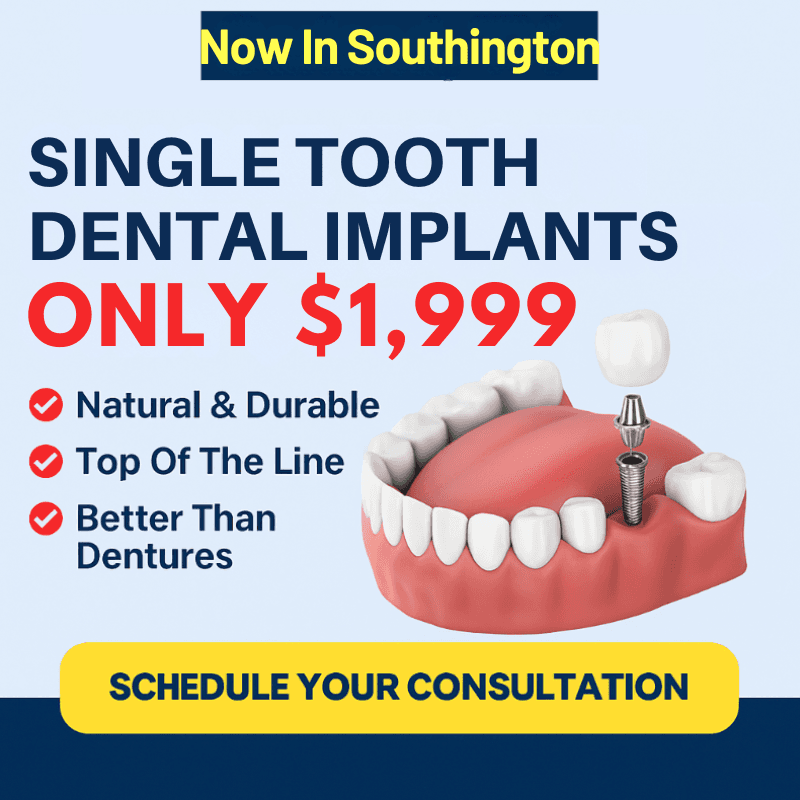
This ad leads with price and three product claims, then asks viewers to book a consultation. It spends no space on the practice itself, location details, or why someone should choose this clinic over others nearby.
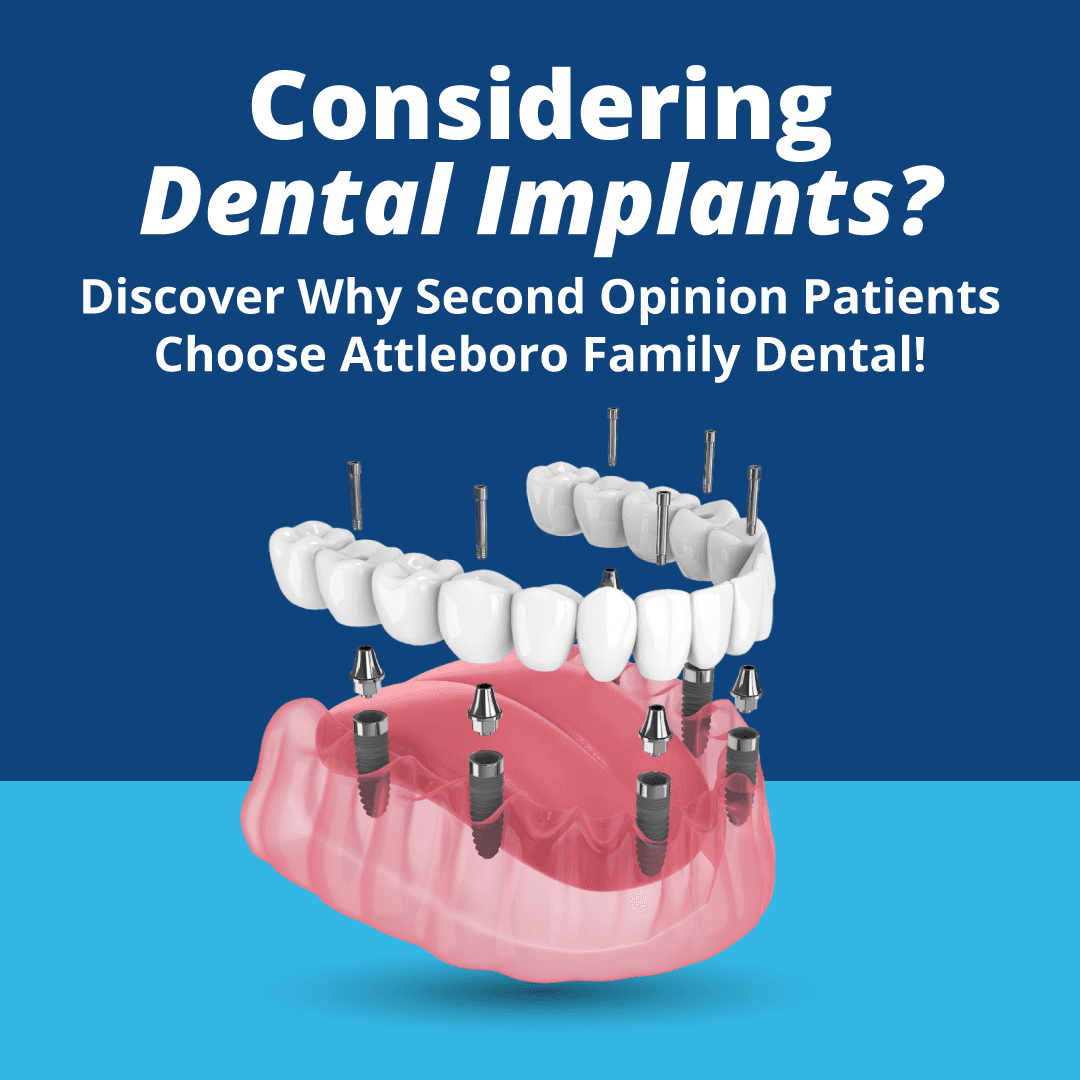
The ad leads with a question about implants, then positions the practice as a choice for second opinions, backed by a cross-section diagram. It frames implants as established fact rather than exploring why patients might want them, which leaves room for ads that address cost, recovery time or candidacy concerns.
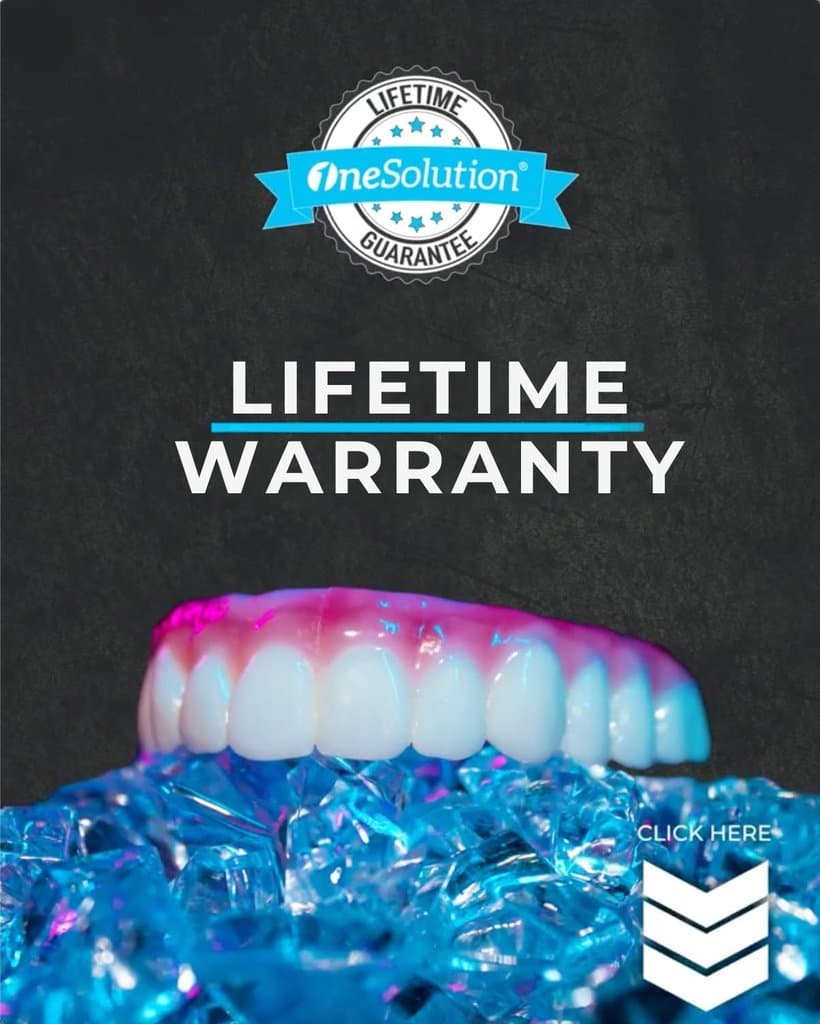
The ad leads with a lifetime warranty badge, then shows the product submerged in water to suggest durability, and asks viewers to click for more. It bets heavily on warranty assurance but says nothing about the implant's clinical benefits or why this particular product matters.
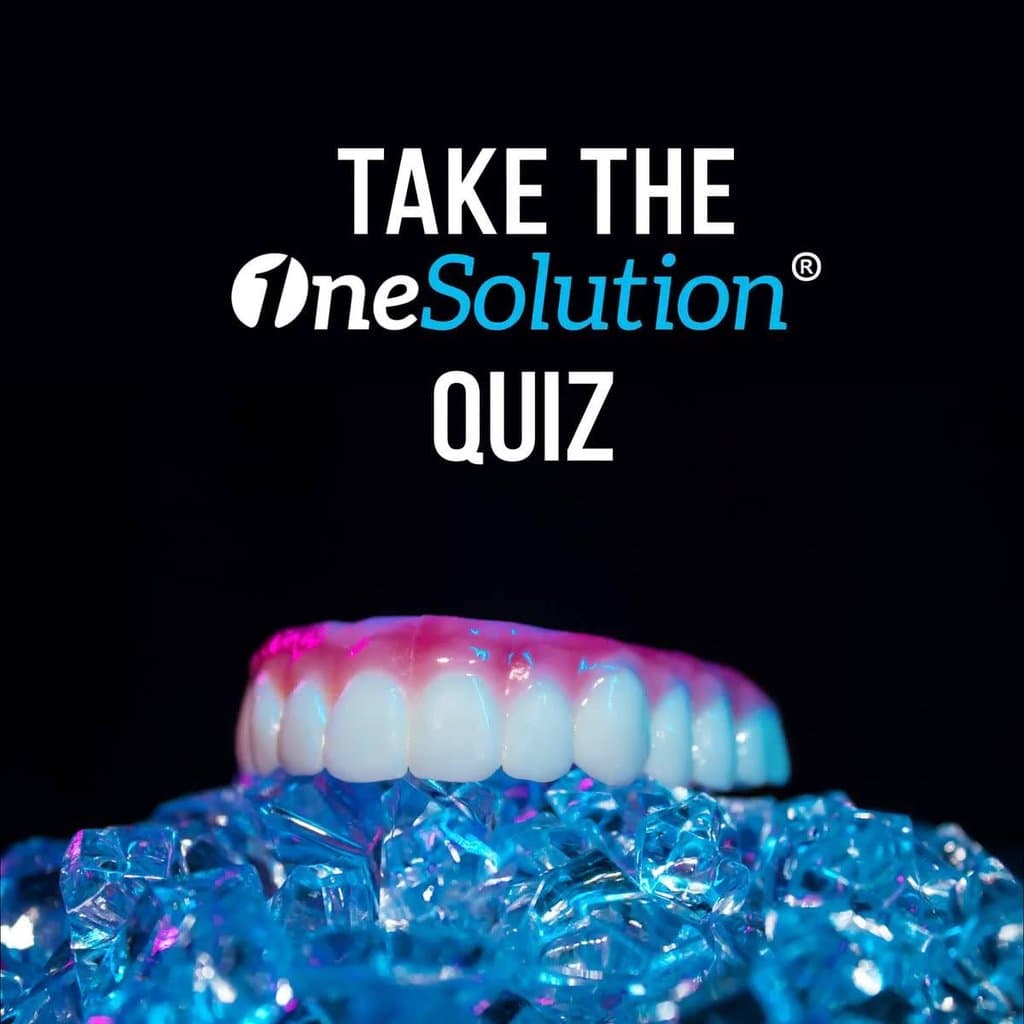
This ad leads with a quiz prompt, asking readers to engage with OneSolution's branded tool rather than pitching implants directly. The practice could test whether showing the actual implant result (visible on the quiz button) in the main image, rather than hiding it behind interaction, shifts who clicks through.
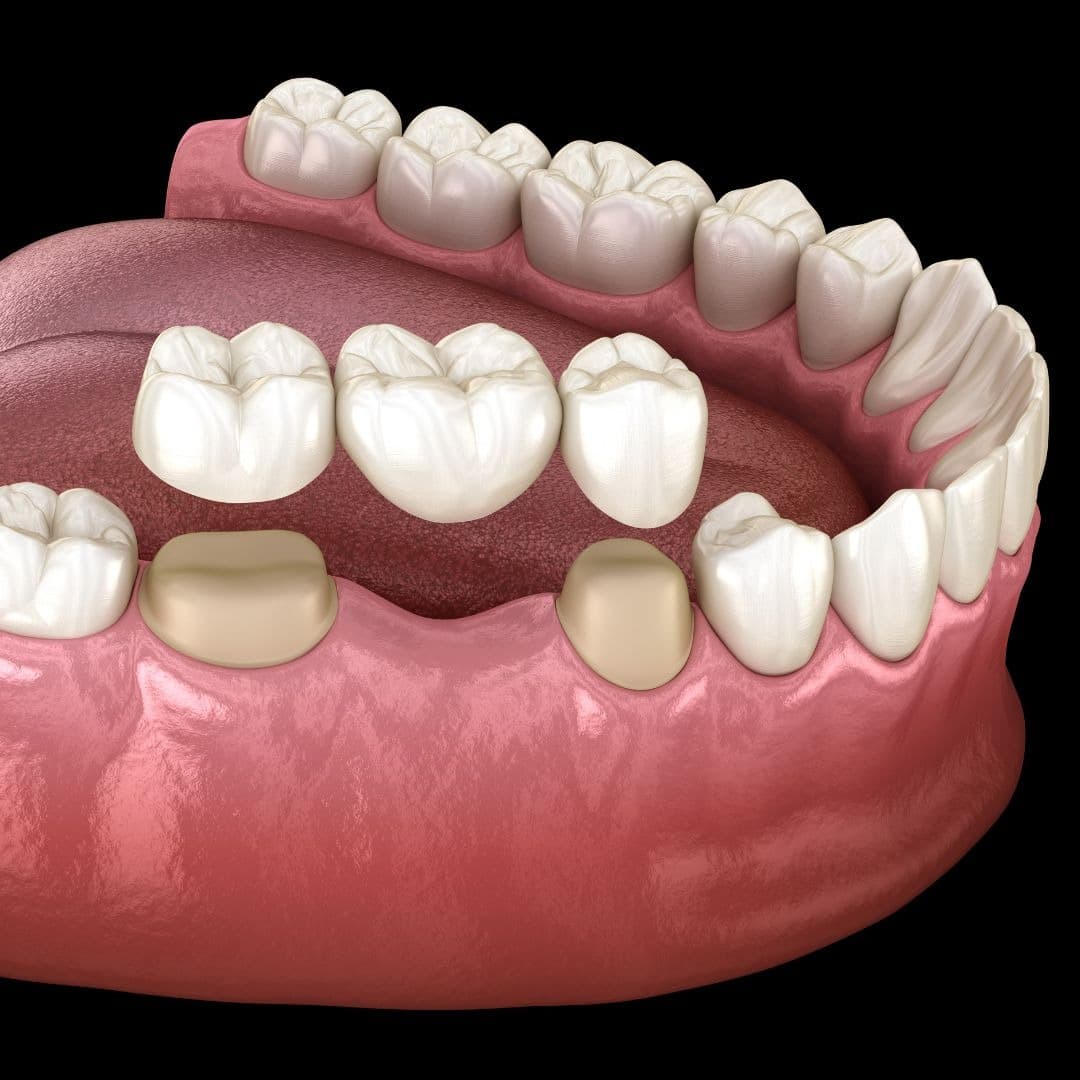
This ad leads with a 3D render of a single implant in situ, showing the gap it fills alongside natural teeth. The practice could add text explaining cost, time to placement, or candidacy to give viewers reason to inquire rather than scroll.
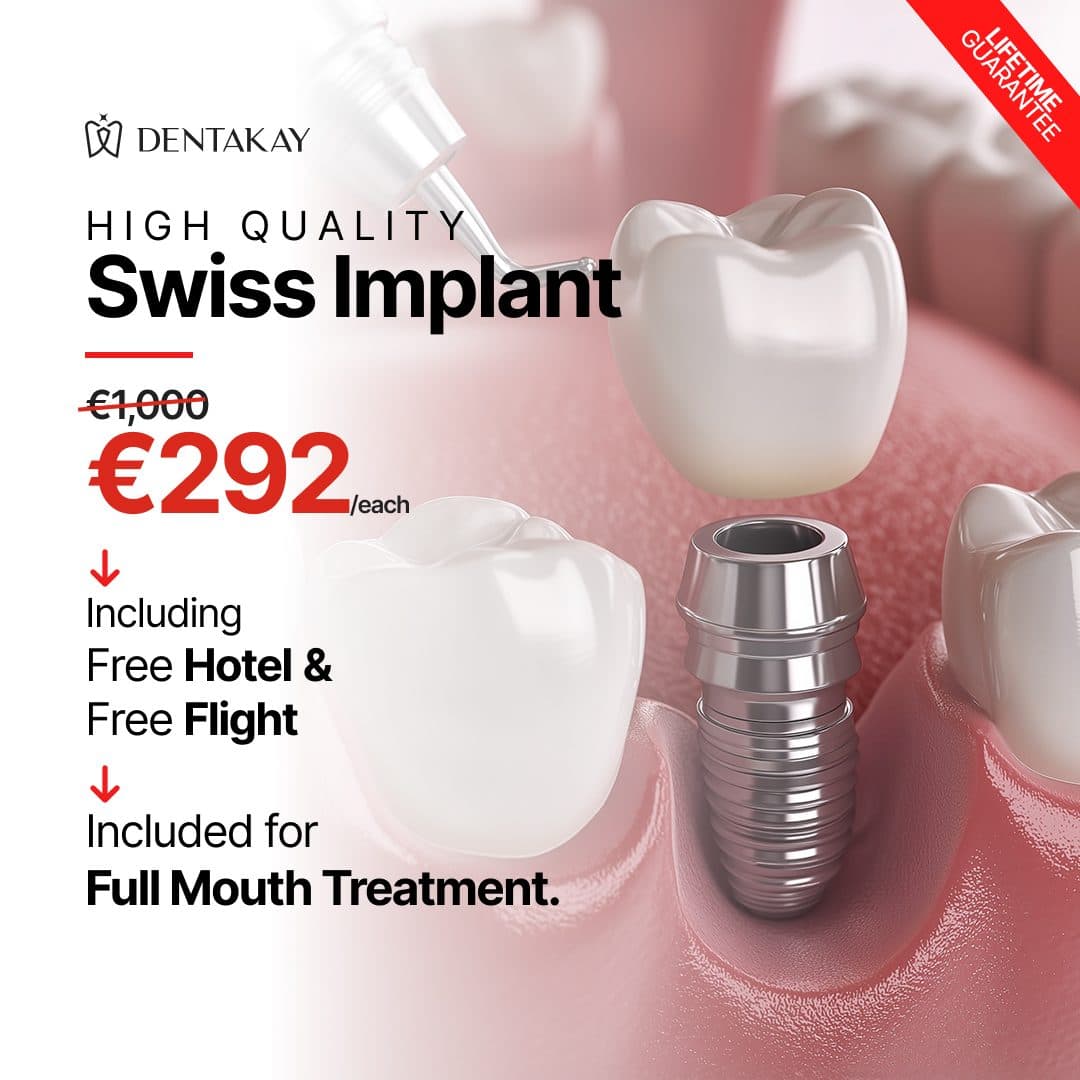
This ad leads with a discounted per-implant price and adds hotel and flight as bundled incentives, asking readers to commit to full-mouth treatment. A practice could test whether itemising costs separately draws more enquiries than stating only the per-unit price.
The ad opens with a question about implant possibilities, then invites viewers to see results. It avoids stating a price or process, leaving practices to decide whether naming costs upfront or showing before-and-after images would suit their audience better.
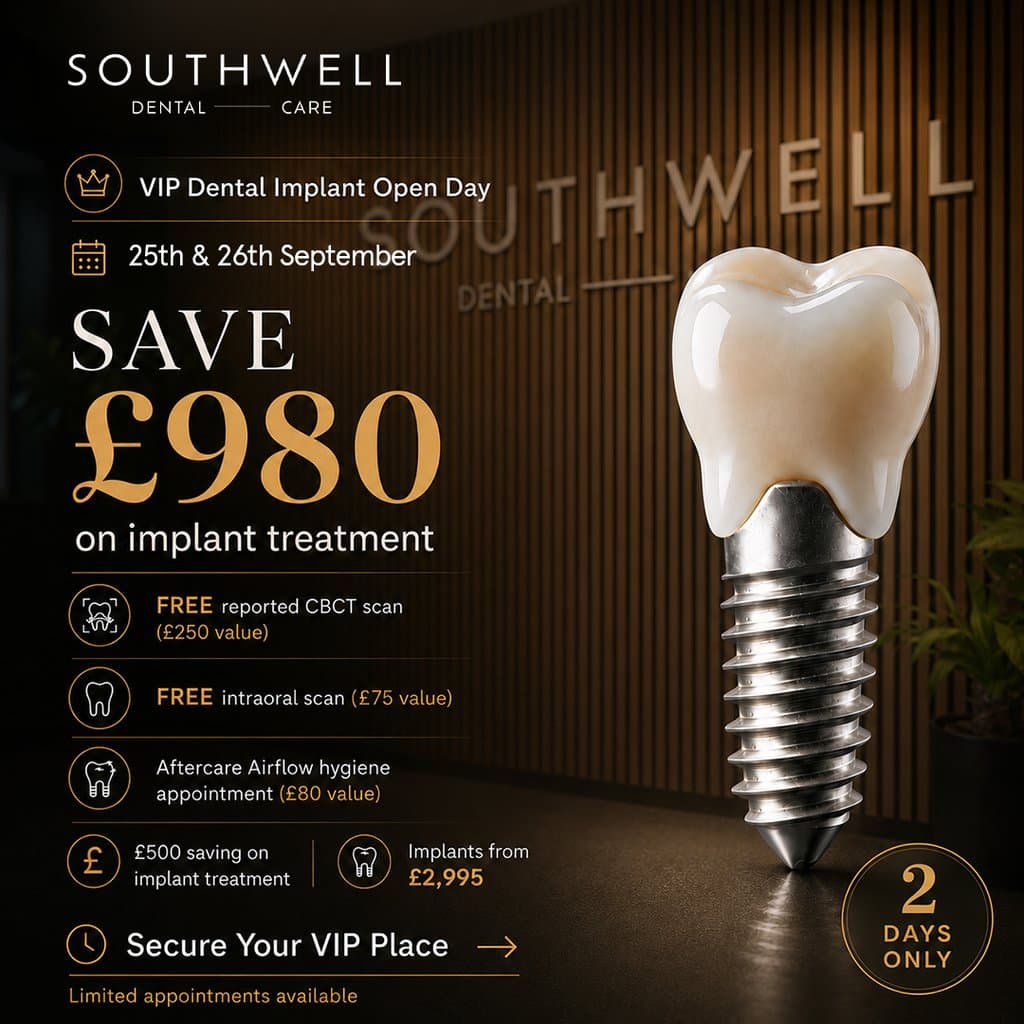
This ad leads with a single saving figure (£980) and urgency through a two-day event window, asking readers to book a VIP appointment. The ad stacks six value claims but doesn't explain why implants cost £2,995 or what sets this practice apart from competitors running similar offers.
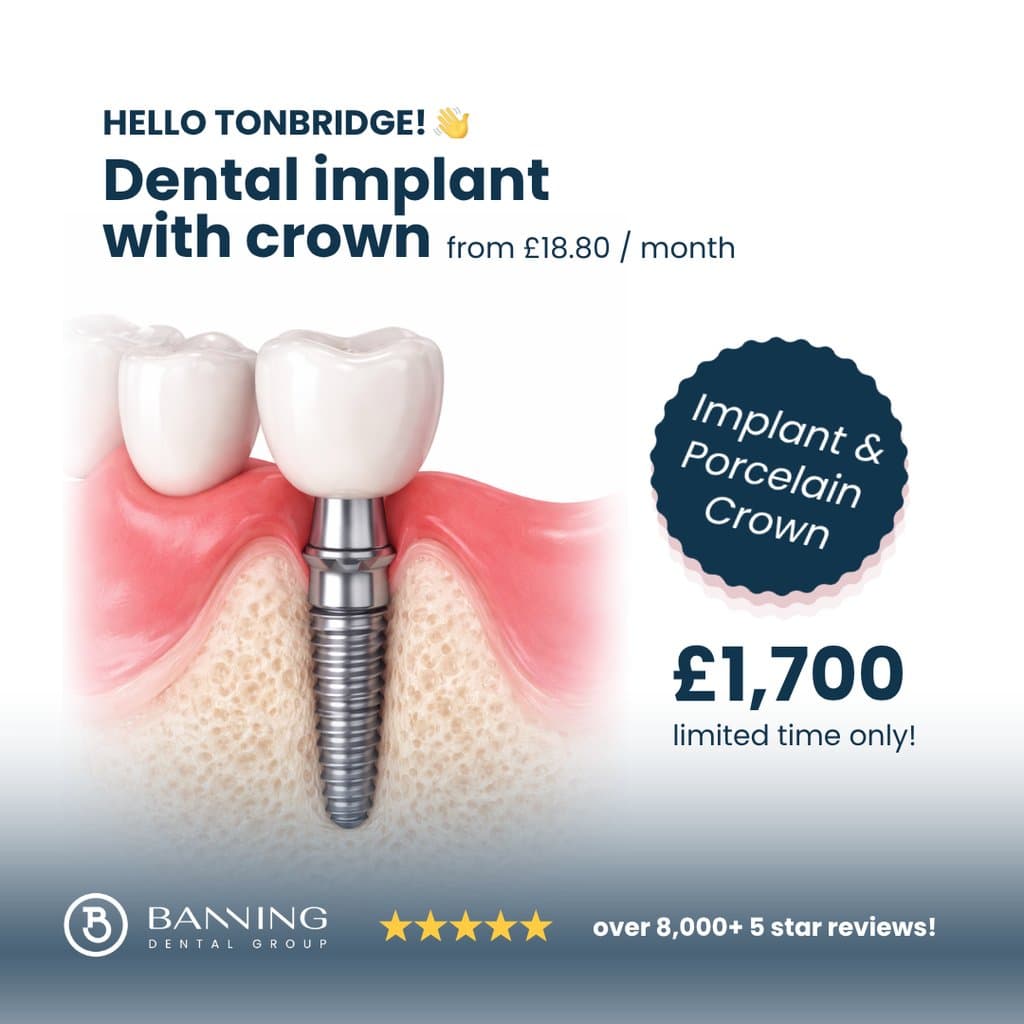
The ad leads with location and a monthly price (£18.80), then anchors attention to a fixed total (£1,700, limited time). A practice might test whether front-loading the full cost or emphasising payment plans drives more inquiries, and whether a local greeting improves response rates in their area.
Ortho and aligners21 of 21
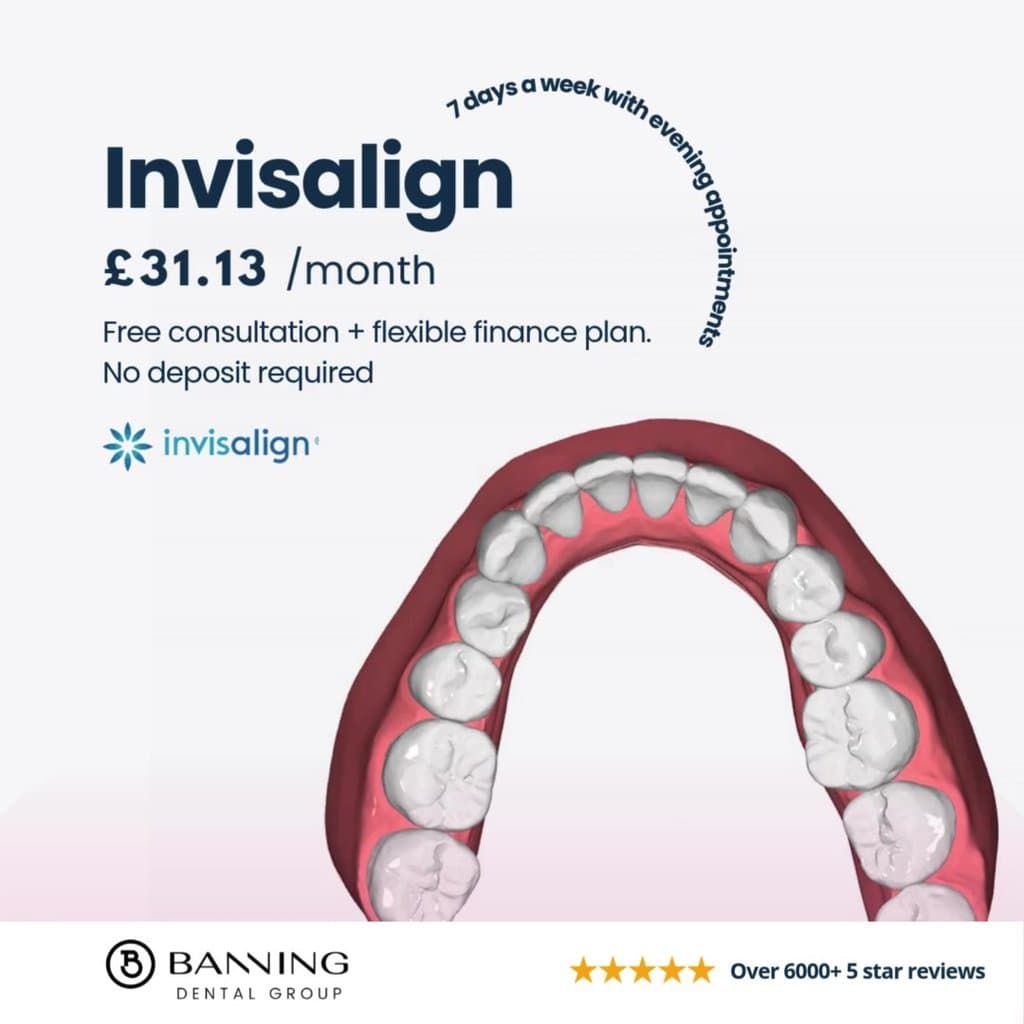
This ad leads with price and financing terms, then stacks reassurance through availability, reviews and free consultation. The practice could test whether emphasising the treatment outcome or aesthetic result, rather than cost structure, shifts enquiry quality or patient profile.
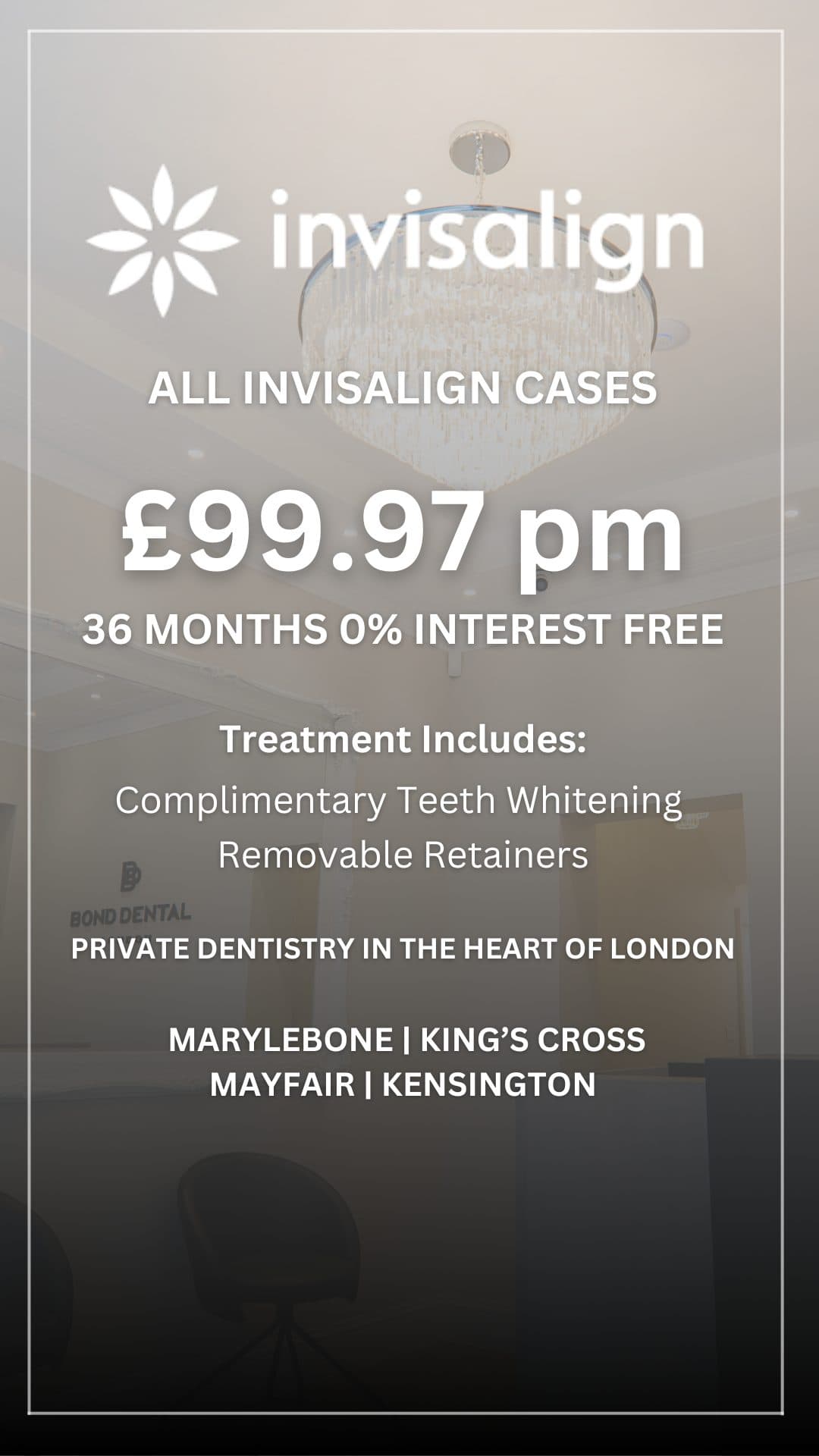
This ad leads with the monthly price and 0% finance option, positioning Invisalign as affordable rather than premium, and adds whitening and retainers to justify the offer. The practice could test whether emphasising clinical outcomes or smile timelines might broaden appeal beyond price-conscious patients.
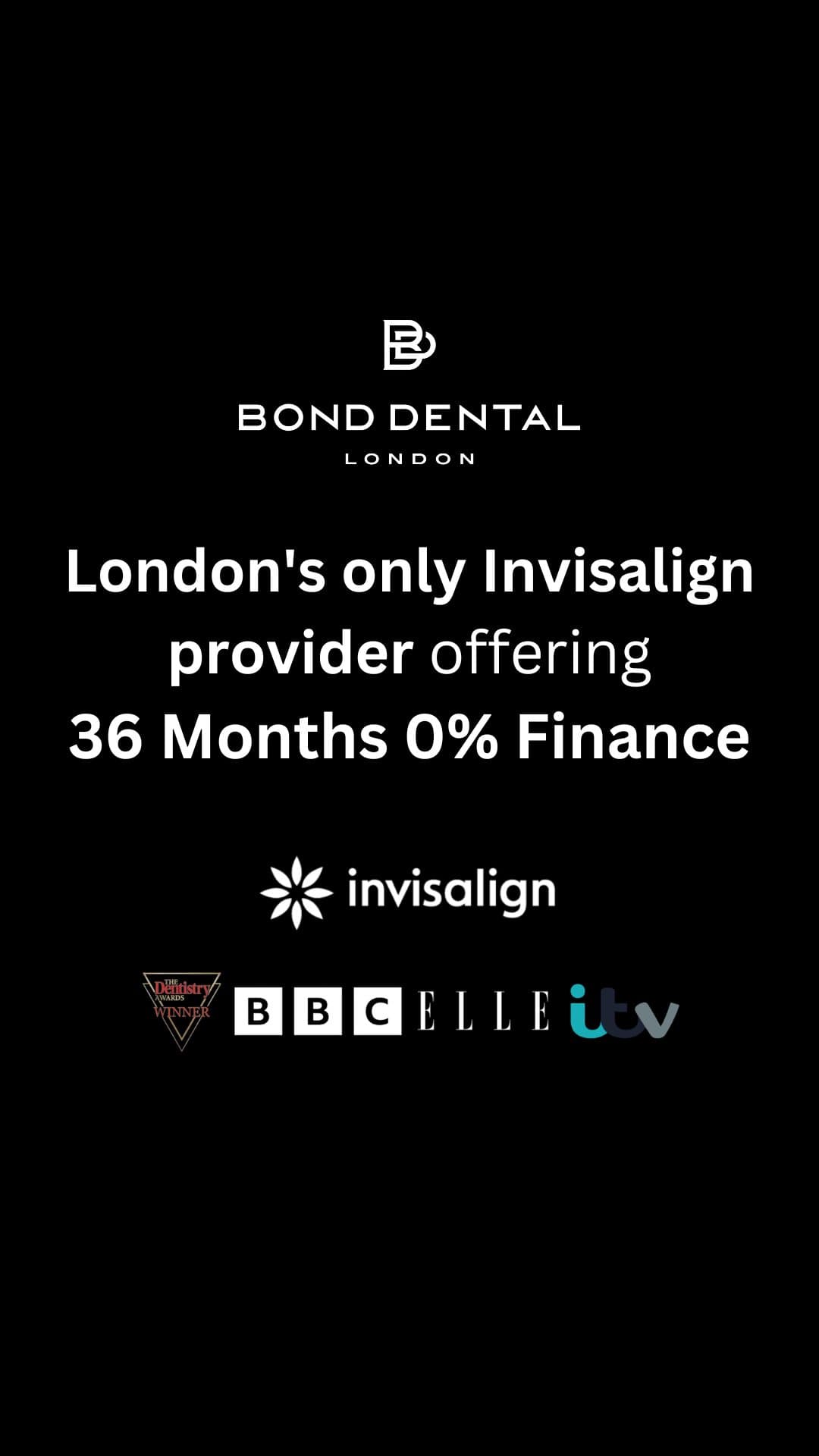
The ad leads with a local claim ("London's only Invisalign provider offering 36 months 0% finance") and the finance terms, asking readers to consider spreading the cost. A practice might test whether exclusivity or payment terms draw more interest than treatment outcomes or speed.
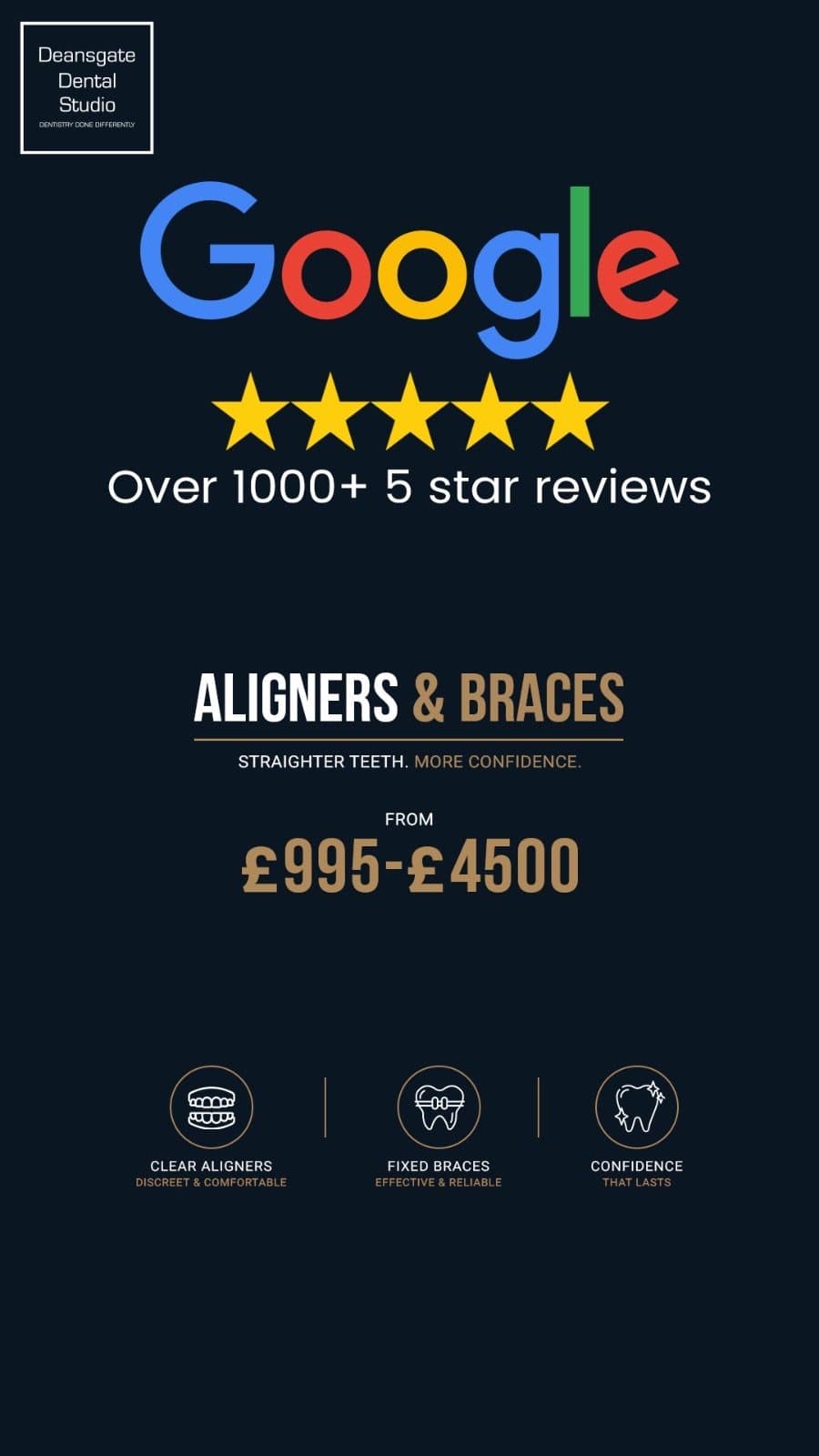
This ad leads with Google's five-star rating, then shows price range and treatment options. It relies on social proof and cost transparency but doesn't explain what aligners or braces actually do for patients.
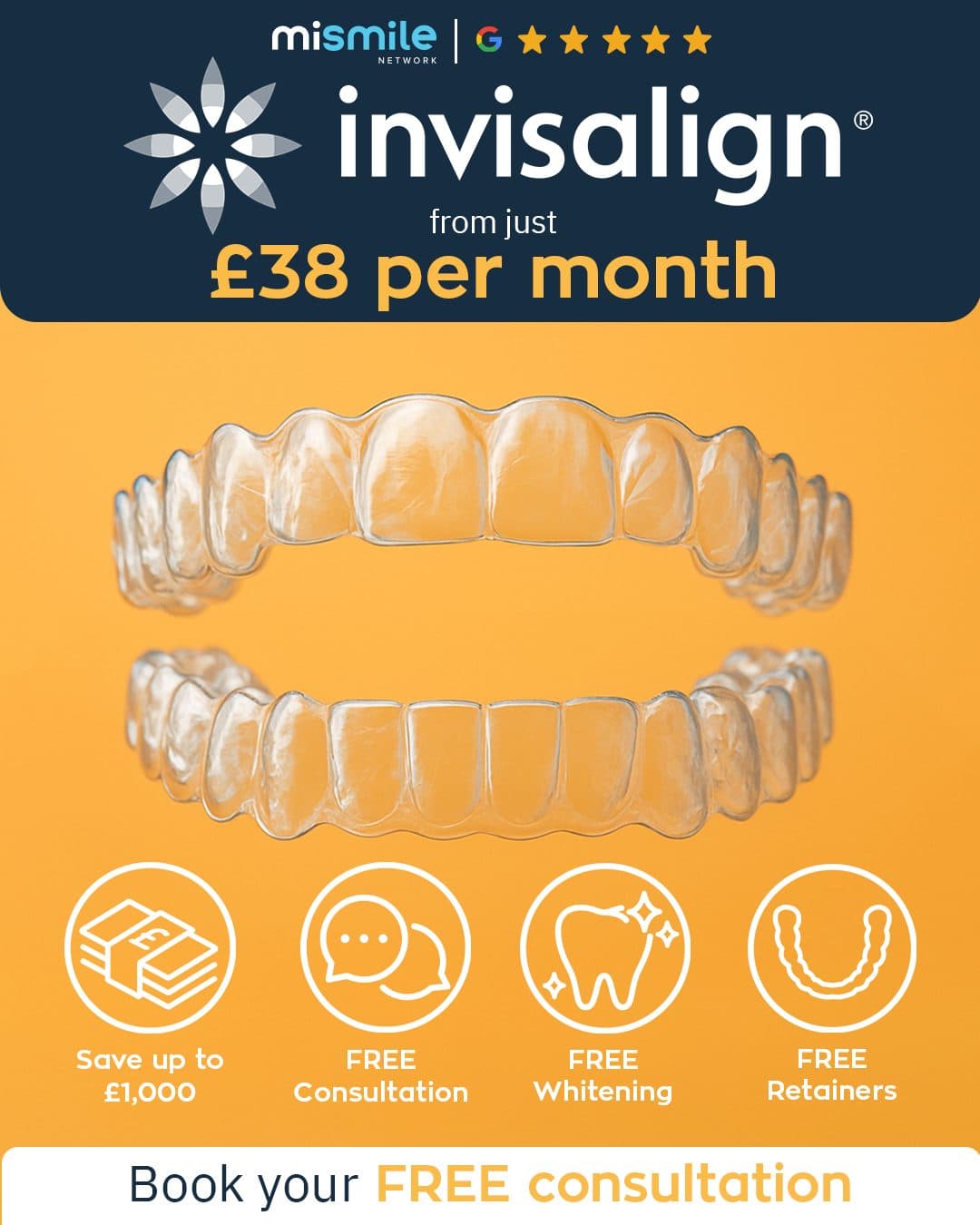
This ad leads with monthly price and five-star rating, then lists four tangible benefits before asking for a consultation. A practice might note the absence of treatment timelines or case examples, which could address common patient questions about Invisalign duration and results.
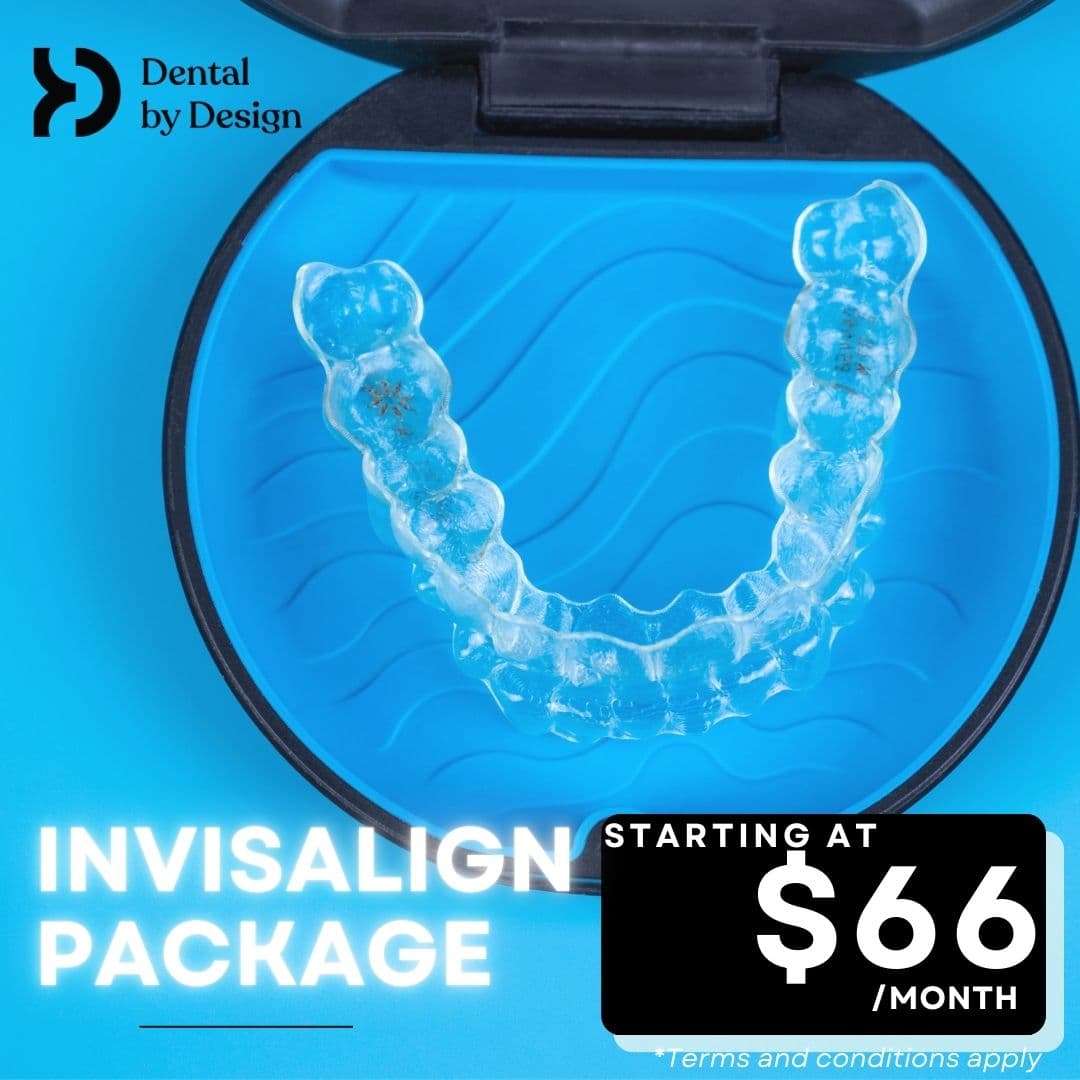
This ad leads with a clear monthly price and a product image, asking readers to consider affordability as the main reason to choose treatment. The practice could strengthen it by naming what makes their Invisalign offering different, rather than relying on price alone to stand out.
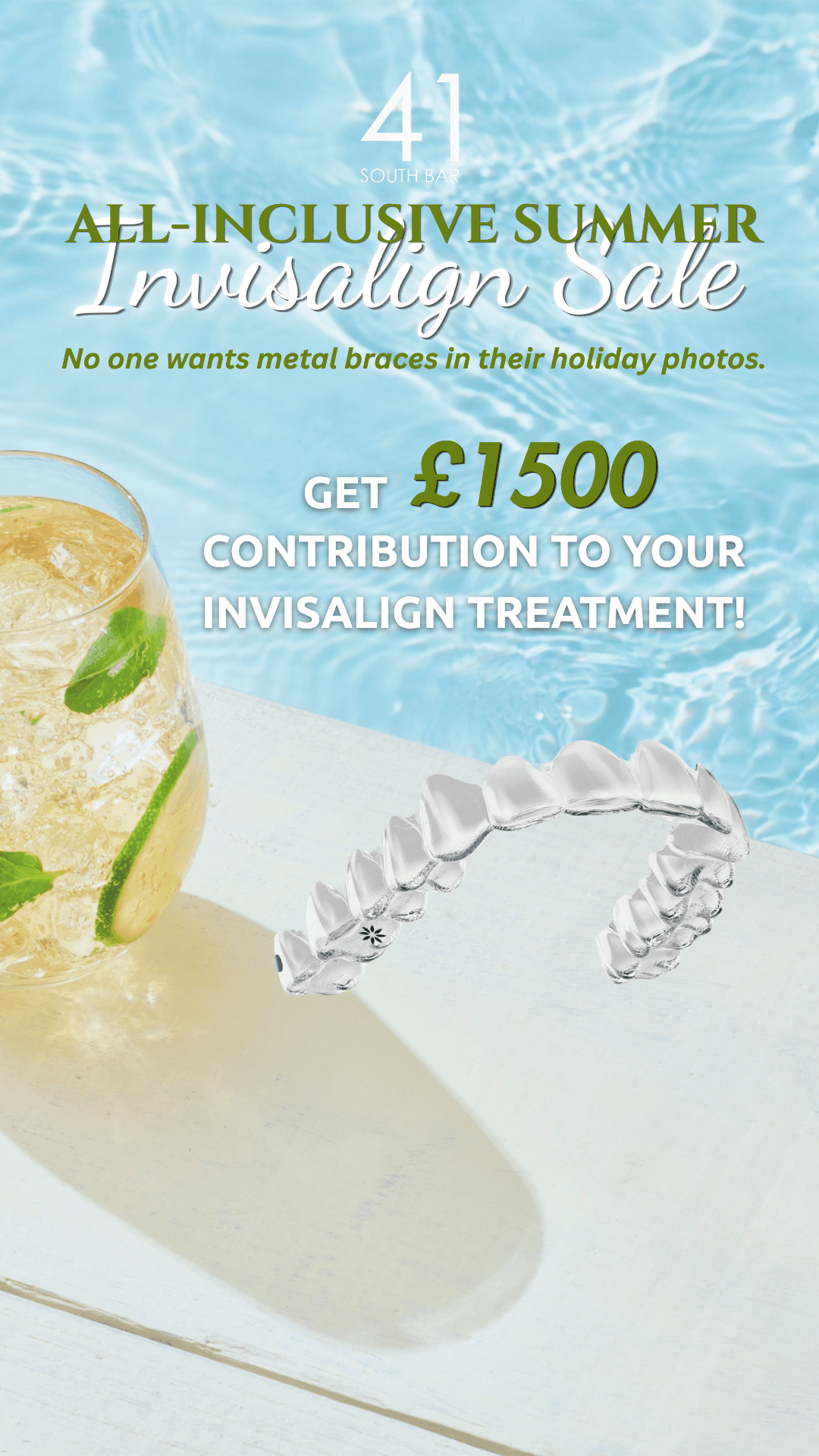
The ad leads with a summer season hook and a specific pound amount (£1500), framing Invisalign as a holiday aesthetic choice rather than a treatment need. A practice might note the absence of any clinical language, timeline, or eligibility details, which leaves room to test whether adding treatment duration or candidacy information affects response rates.
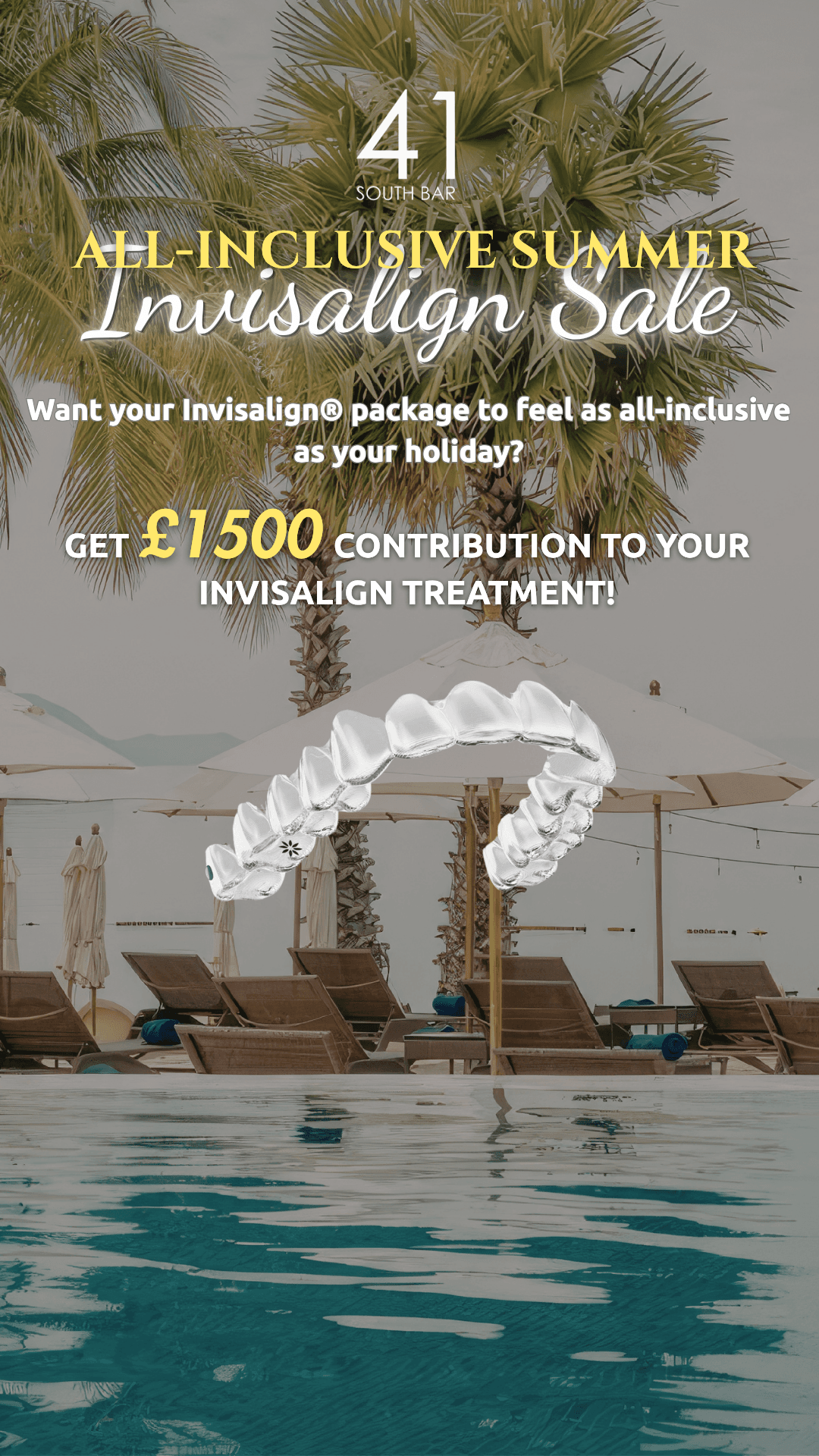
This ad leads with a holiday metaphor, positioning Invisalign as luxurious by comparing it to an all-inclusive resort, then offers £1500 off treatment. The practice could test whether the resort angle actually drives inquiries, or whether a straightforward price offer would perform as well over 60 days.
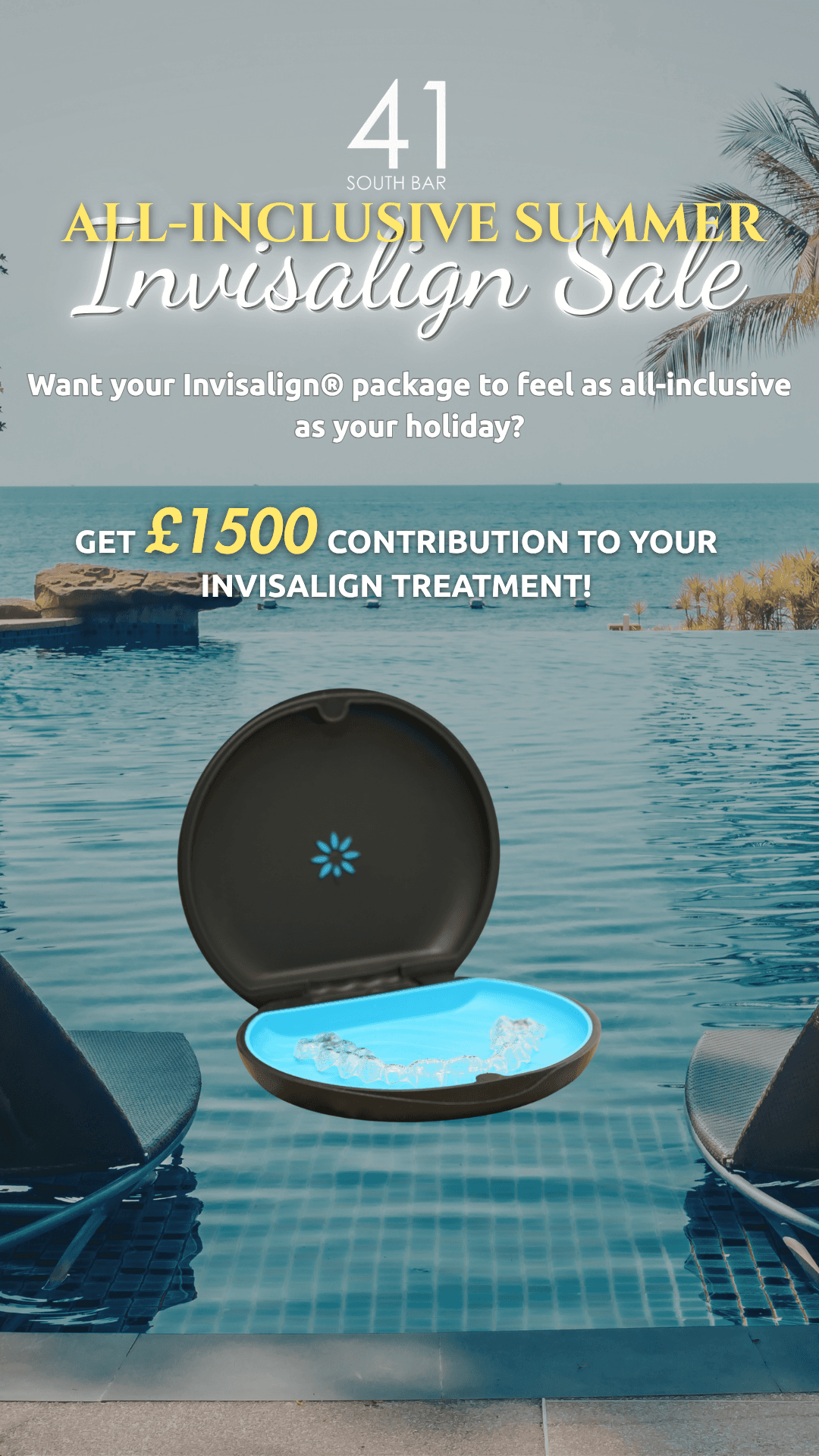
The ad leads with a holiday poolside scene and a specific £1500 contribution figure, asking readers to imagine Invisalign feeling as carefree as a summer break. A practice might note the seasonal angle and monetary anchor, though the ad doesn't show what clinical outcomes or treatment length that contribution covers.
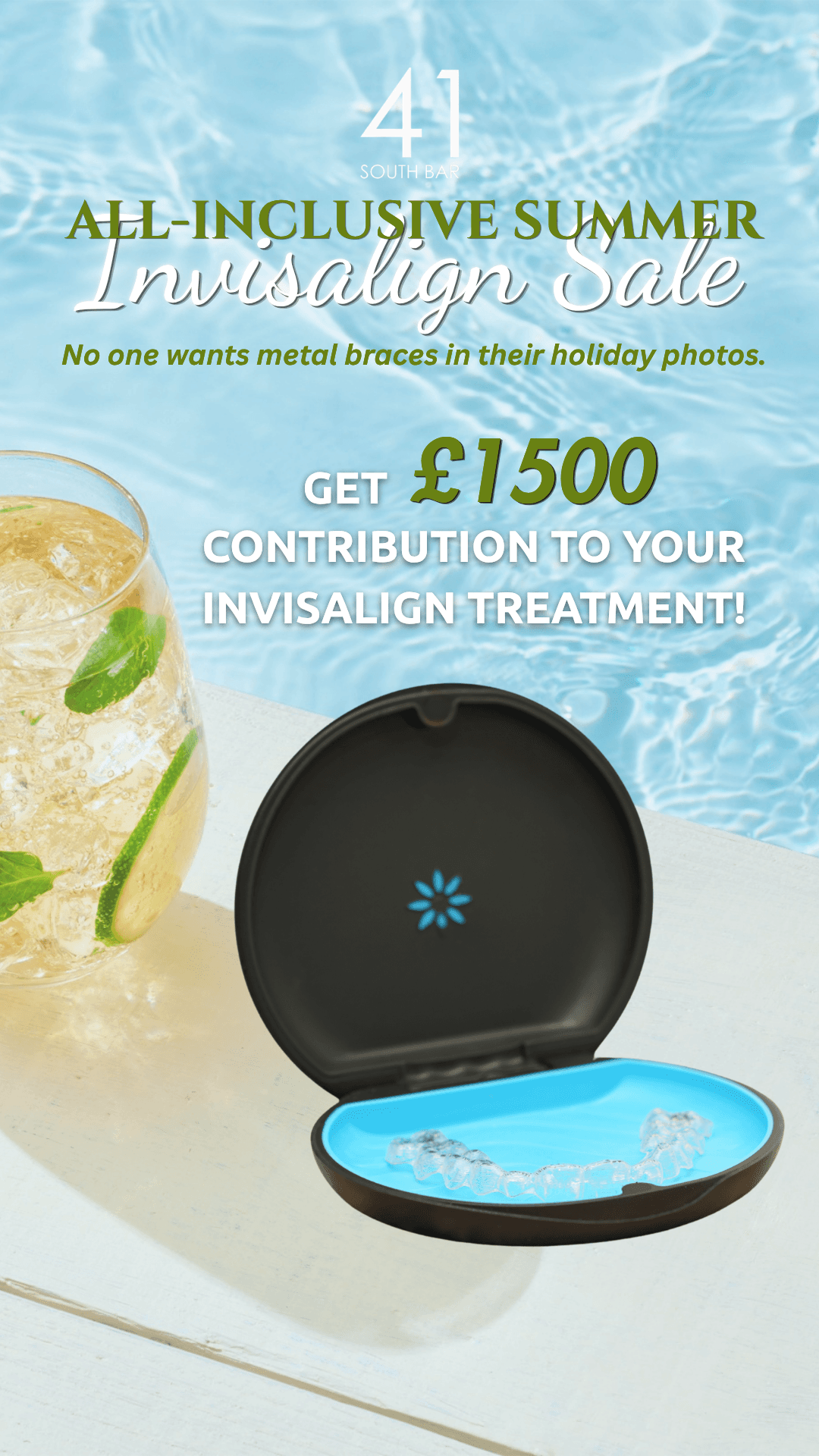
This ad leads with seasonal timing and a specific discount amount (£1500), framing Invisalign as a summer confidence choice against metal braces. A practice could test whether the contribution figure drives inquiries better than percentage discounts, or whether pairing ortho with whitening in one promotion shifts patient interest.
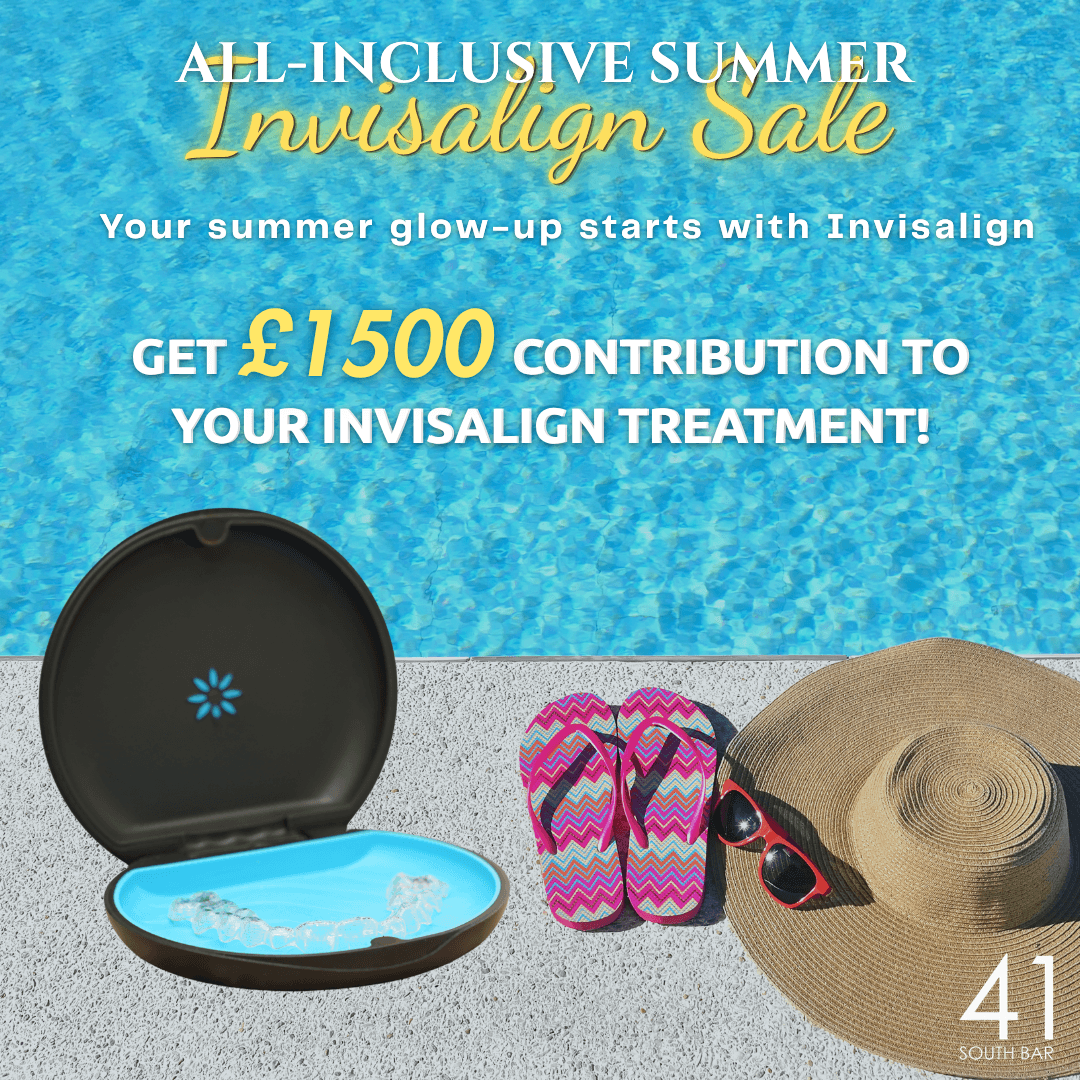
This ad leads with a summer lifestyle image and a specific price contribution (£1500) to lower the barrier to Invisalign. A practice might note the seasonal angle and financial incentive, though the ad shows no whitening offer despite naming it, which could confuse readers about what is actually on sale.
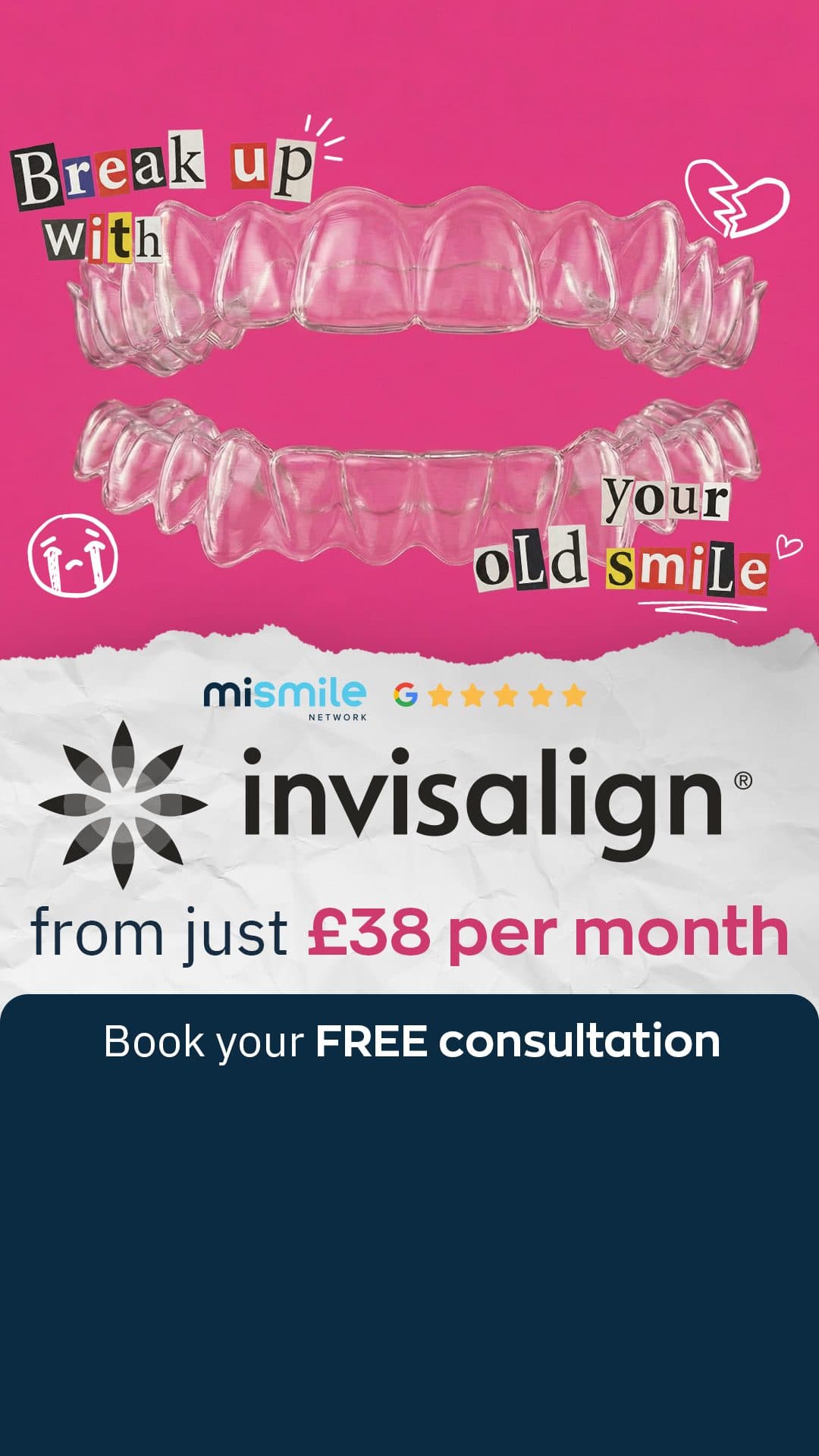
This ad leads with emotional rejection of a current smile, then moves to price and a free consultation. The creative relies on the Invisalign brand and monthly cost to drive action, but leaves untouched any reason why this practice's ortho care differs from competitors.
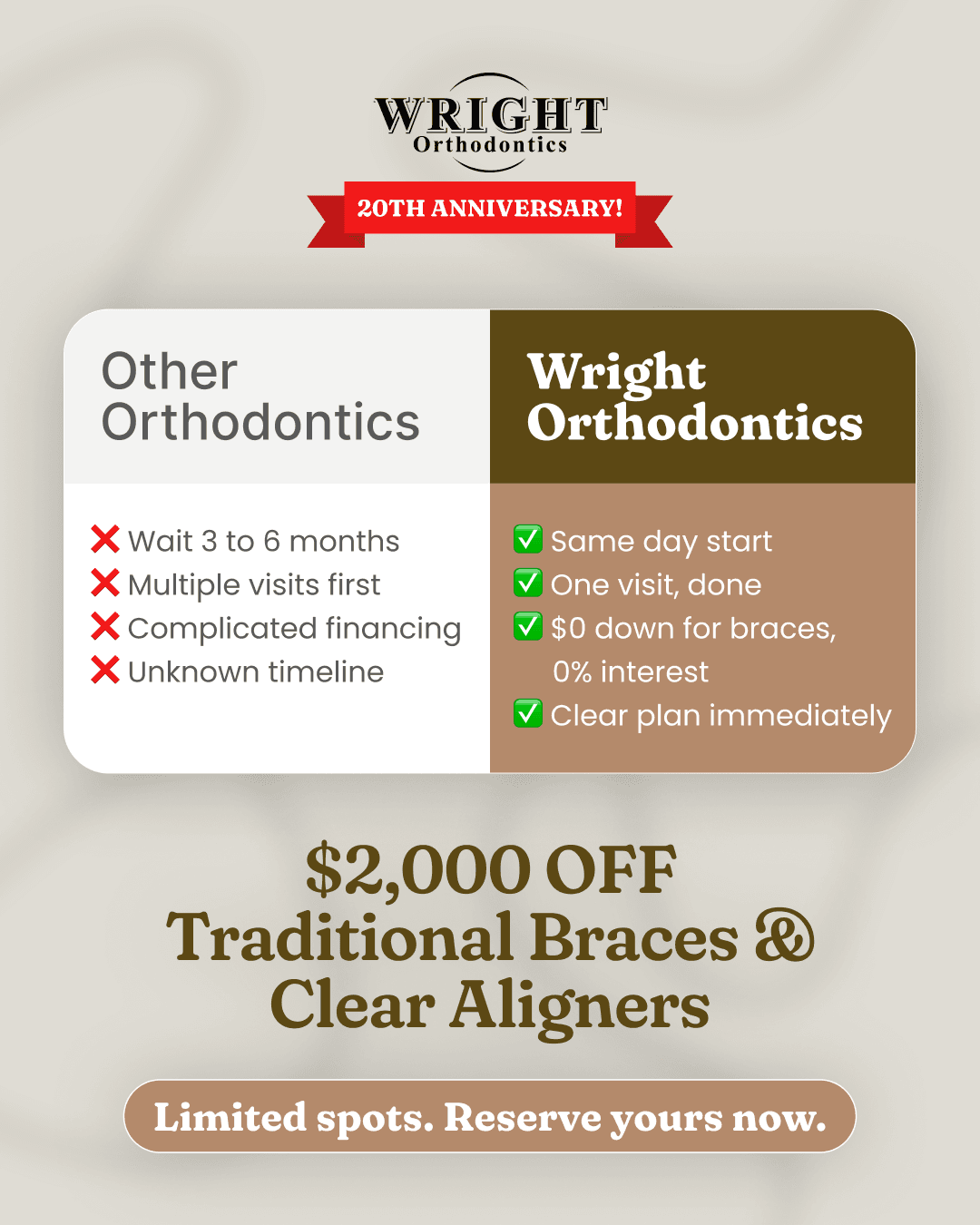
Wright Orthodontics leads with a direct comparison table, positioning their same-day start and zero-down financing against slower, more complicated competitors, then closes with a discount and scarcity message. The ad could strengthen by naming what makes their process faster or what "clear plan immediately" means in practice, rather than relying only on price and speed claims.
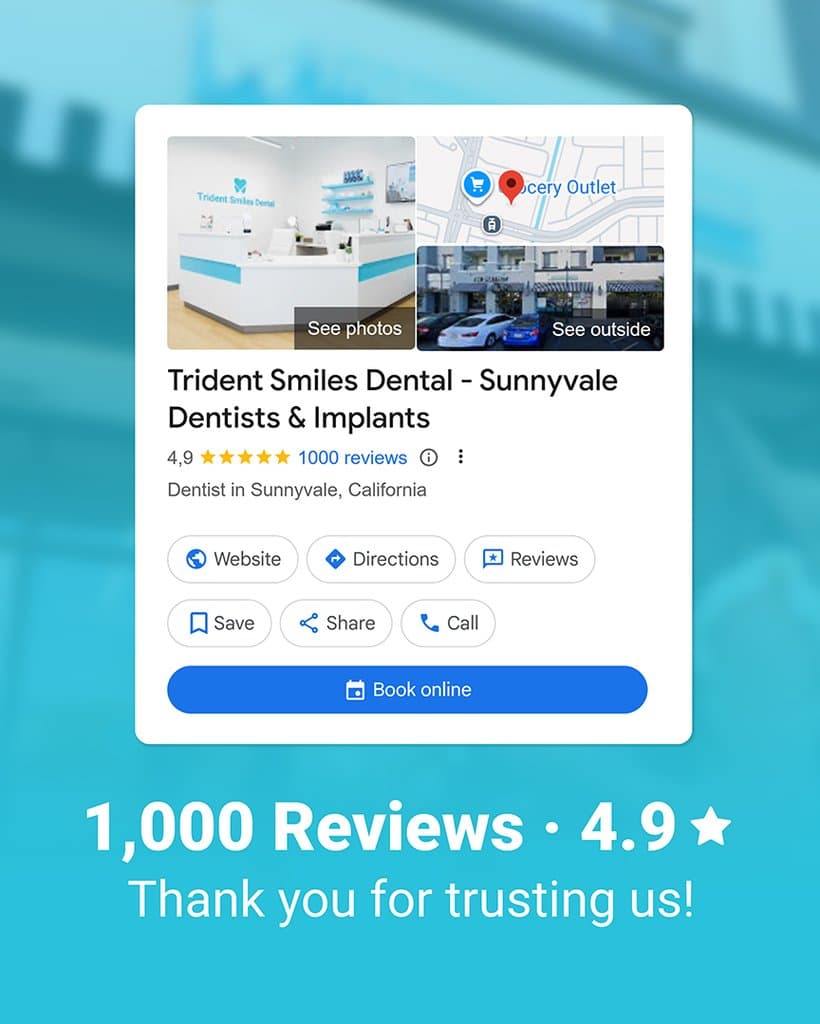
The ad leads with interior and exterior photos, then emphasises the 4.9-star rating and 1,000 reviews before offering a booking button. A practice running this long might test whether social proof alone can sustain performance, or whether adding specific treatment outcomes or patient stories could improve results.
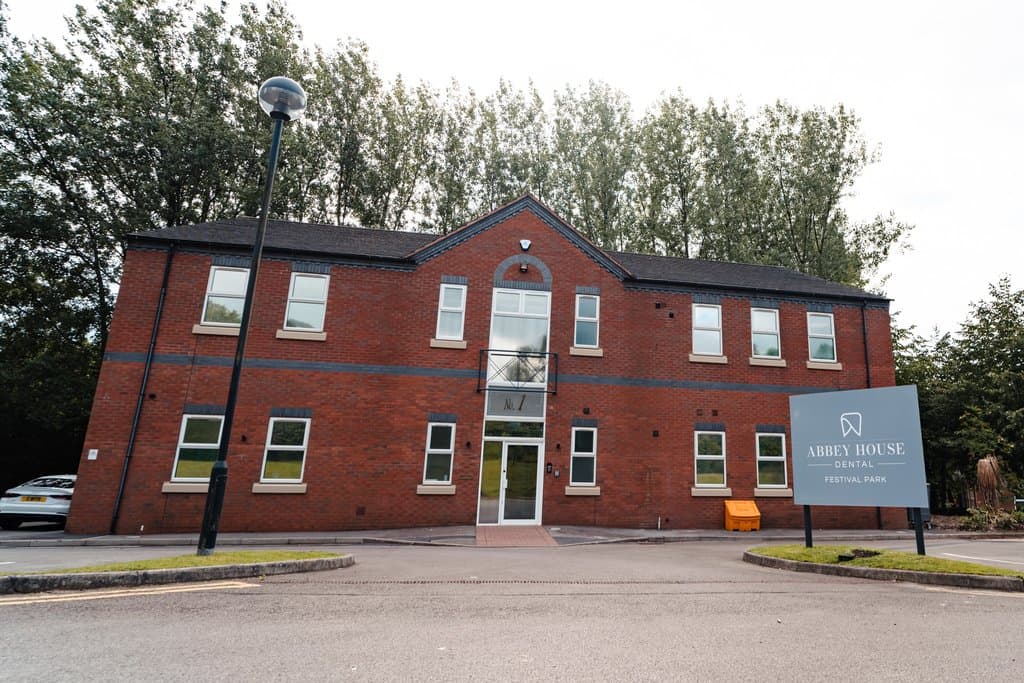
The ad leads with the building's exterior and clinic name, asking viewers to recognise the practice as established and professional. It mentions orthodontics but shows no treatment results or patient benefit, leaving room to demonstrate why someone should choose this provider.
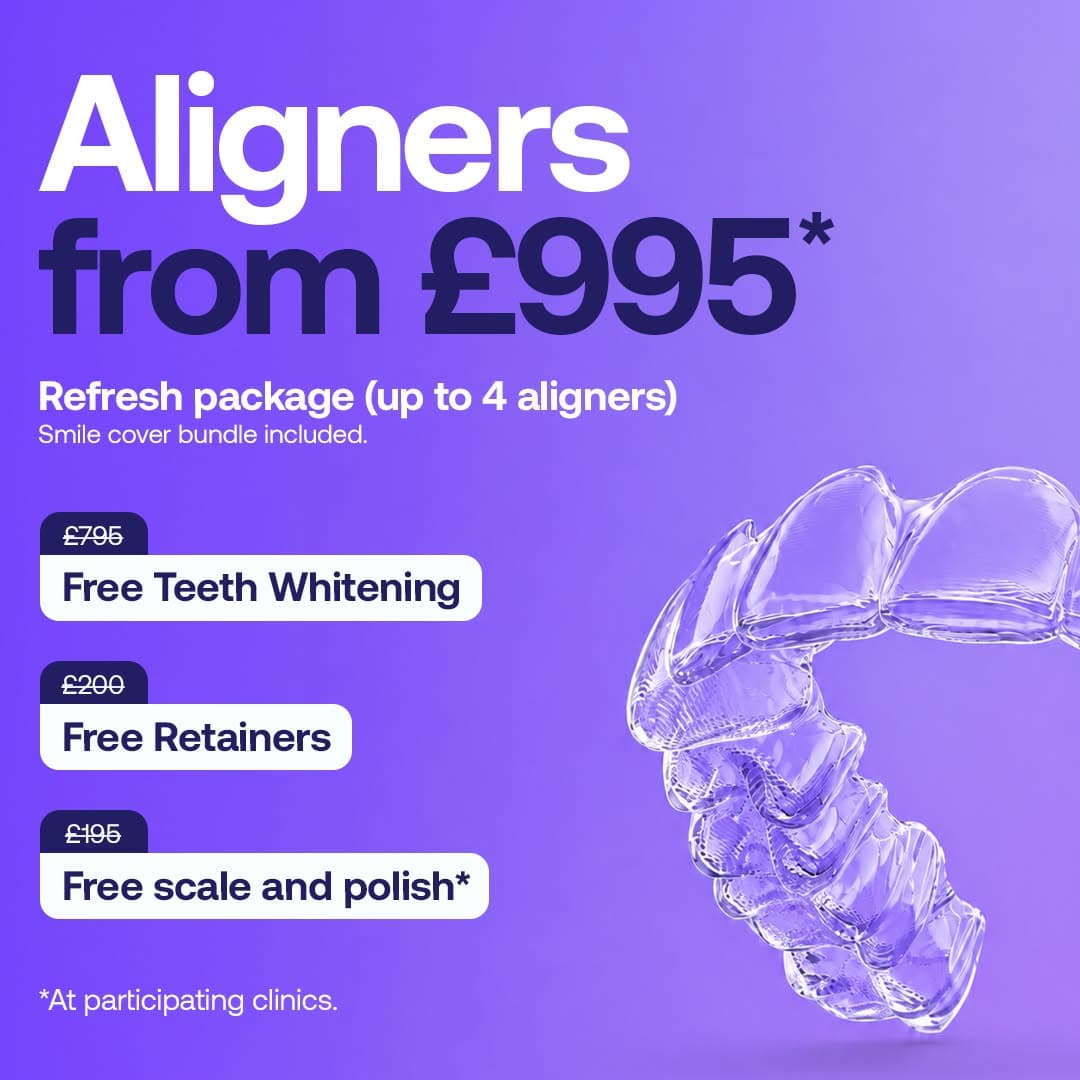
This ad leads with price and bundles complementary treatments (whitening, retainers, cleaning) into the refresh package offer, asking readers to compare value. The practice could test whether leading with the outcome (straighter smile) rather than the refresh positioning might broaden appeal beyond existing aligner customers.
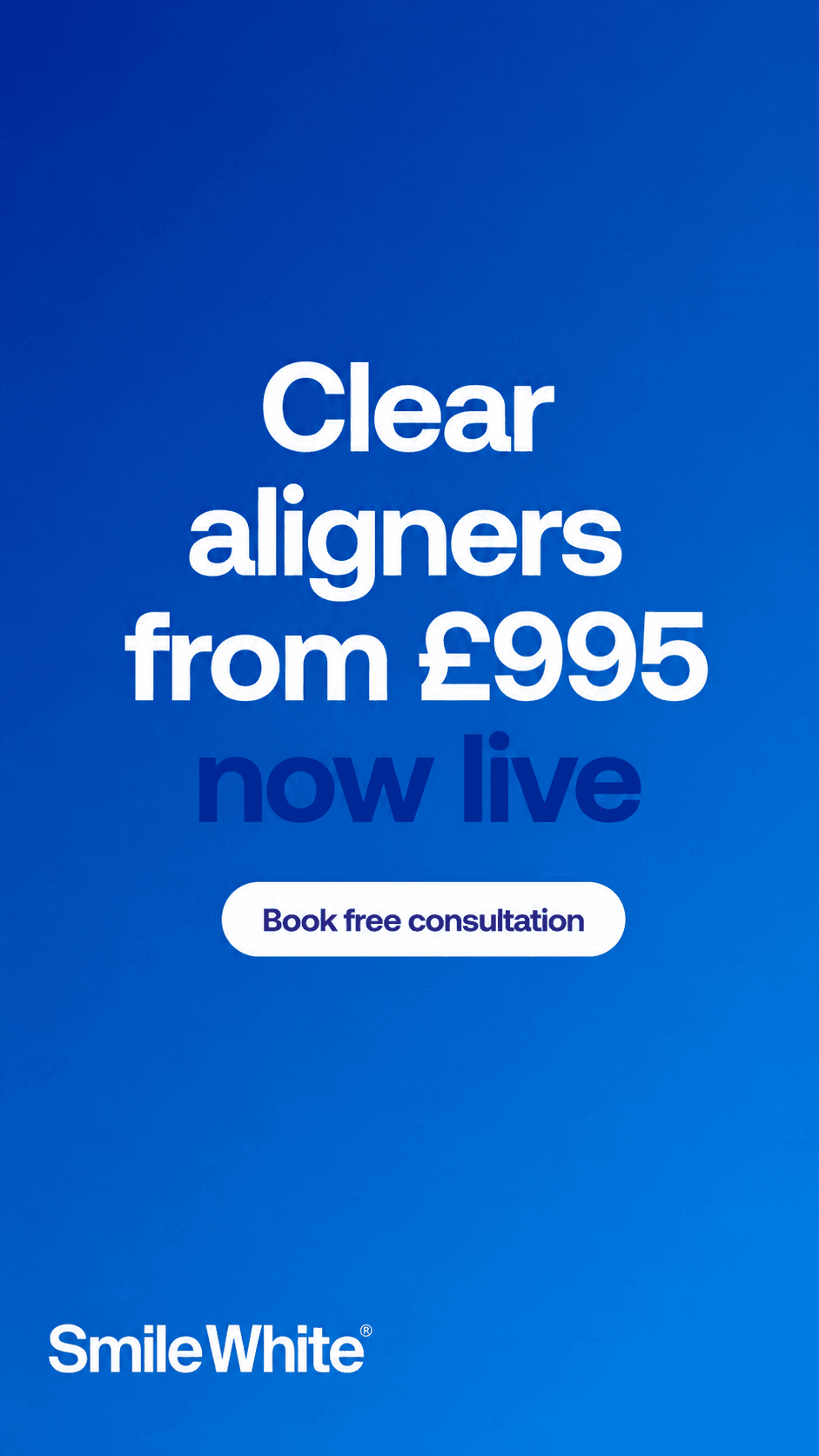
The ad leads with price and a call to book a free consultation, asking readers to commit to contact. It avoids showing results or naming the aligner brand, leaving room to add before-and-after images or specify which system is used.
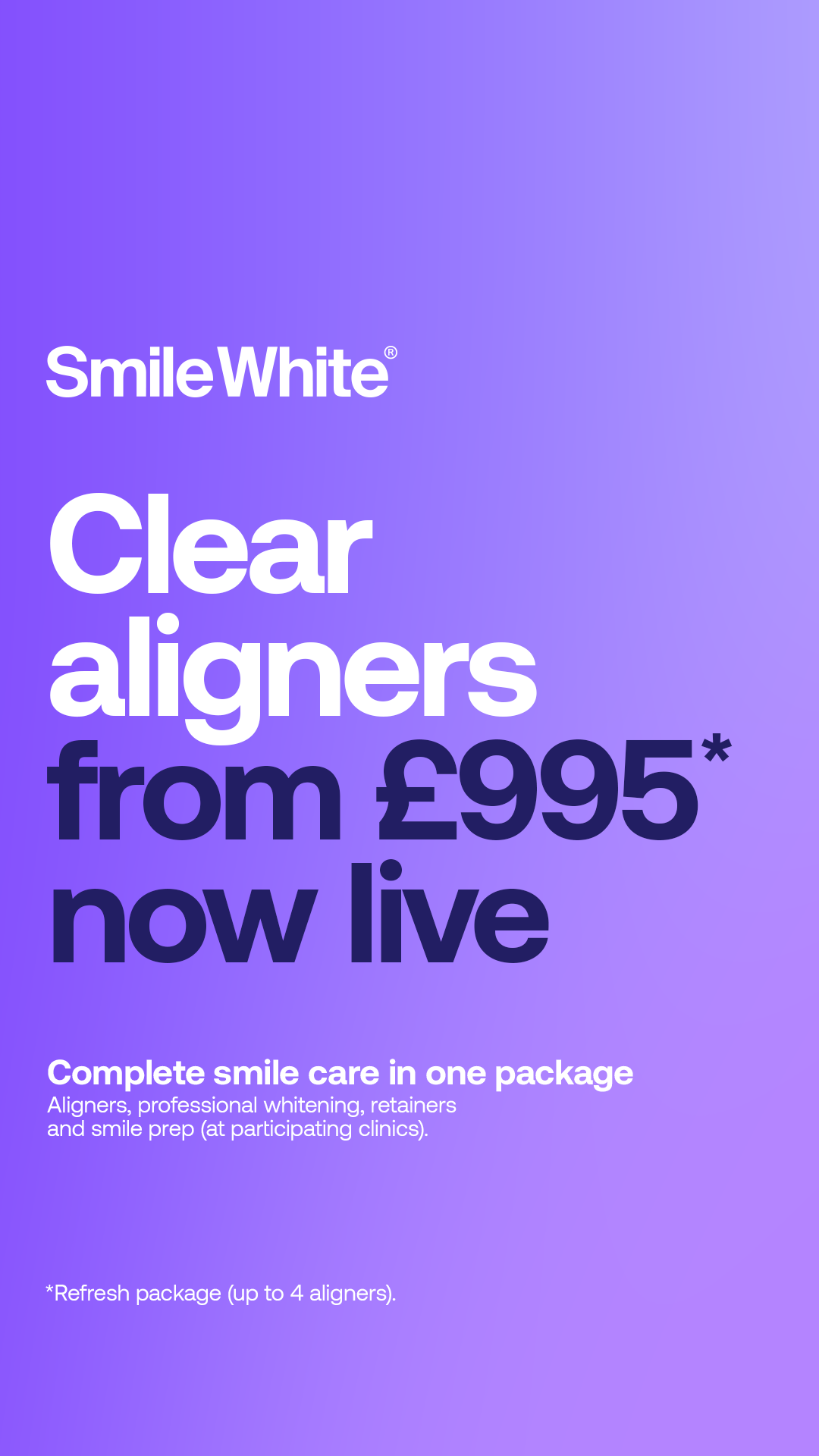
The ad leads with price and availability, asking readers to note a product is now live. It bundles aligners with whitening and retainers but doesn't explain what sets SmileWhite apart, leaving room to build brand identity or clinical credibility.
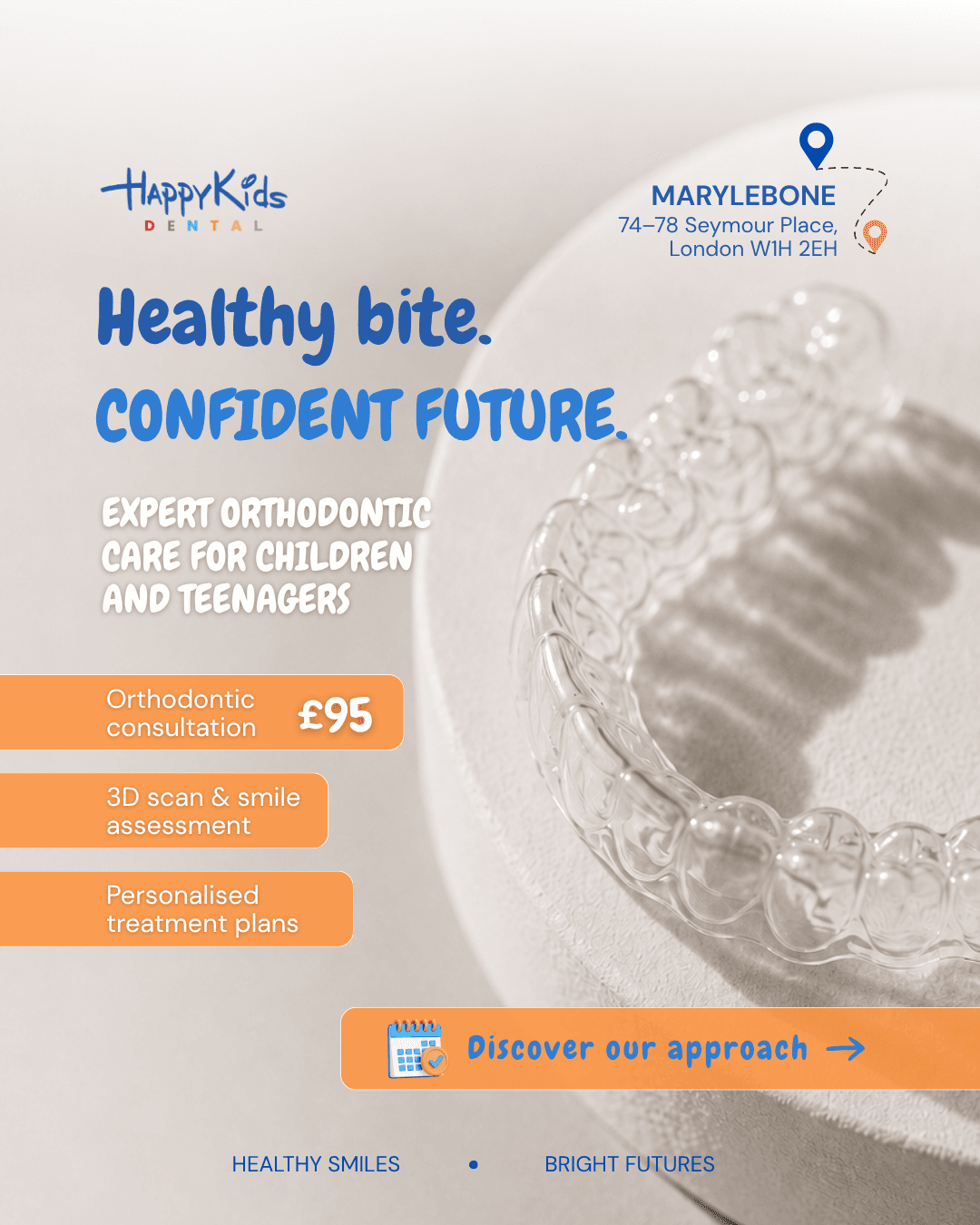
HappyKids leads with a confidence statement and emotional promise, then anchors the reader with a specific price (£95) and concrete next steps: consultation, scan, and treatment plan. The ad could strengthen by showing what makes their approach different, rather than listing standard services that any orthodontic practice offers.
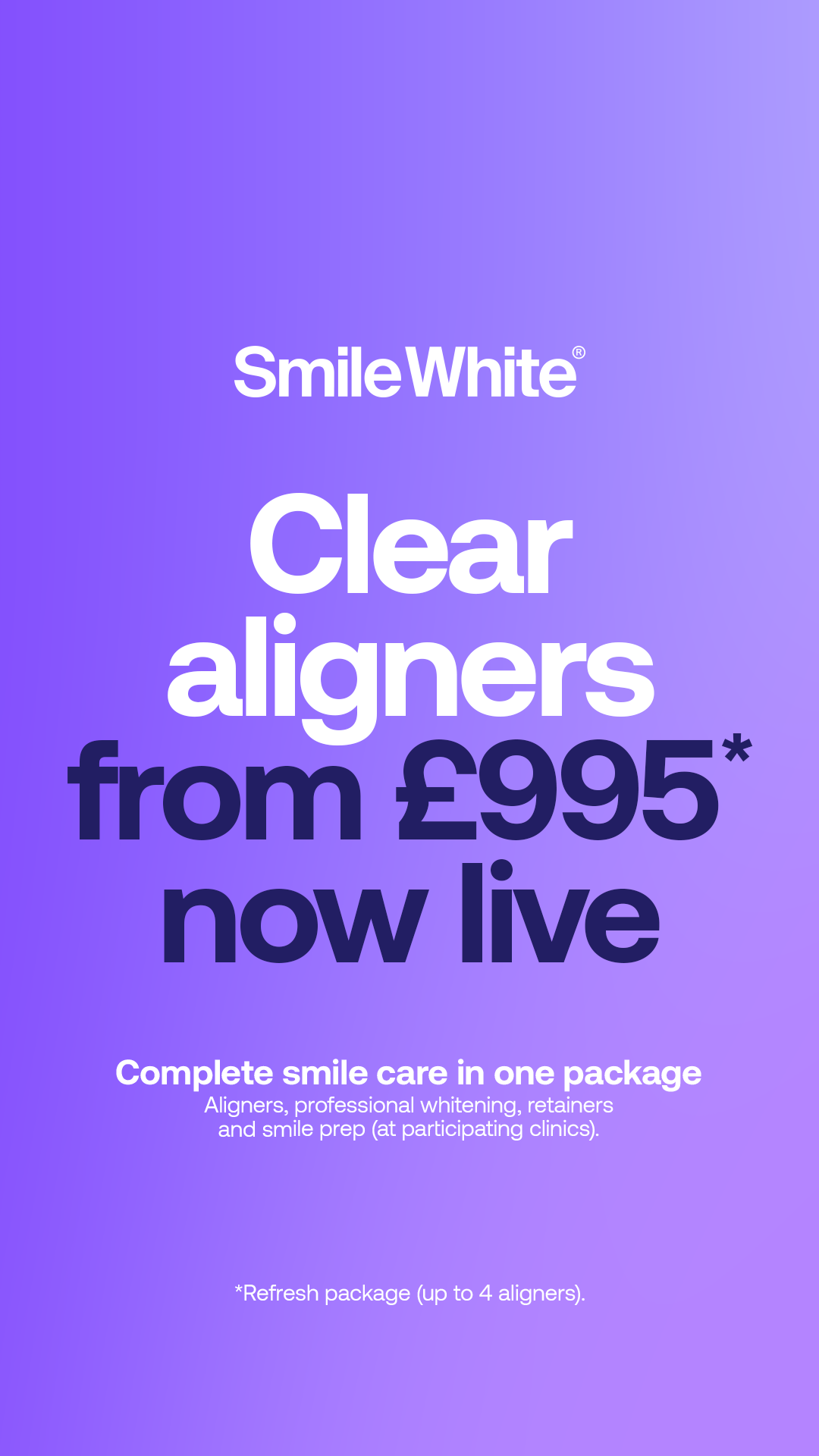
This ad leads with price and package scope, asking the reader to accept clear aligners as a complete treatment rather than a standalone product. The practice bundles whitening and retainers into the offer, though leaves unclear what "smile prep" involves or why the asterisk matters to a prospect.
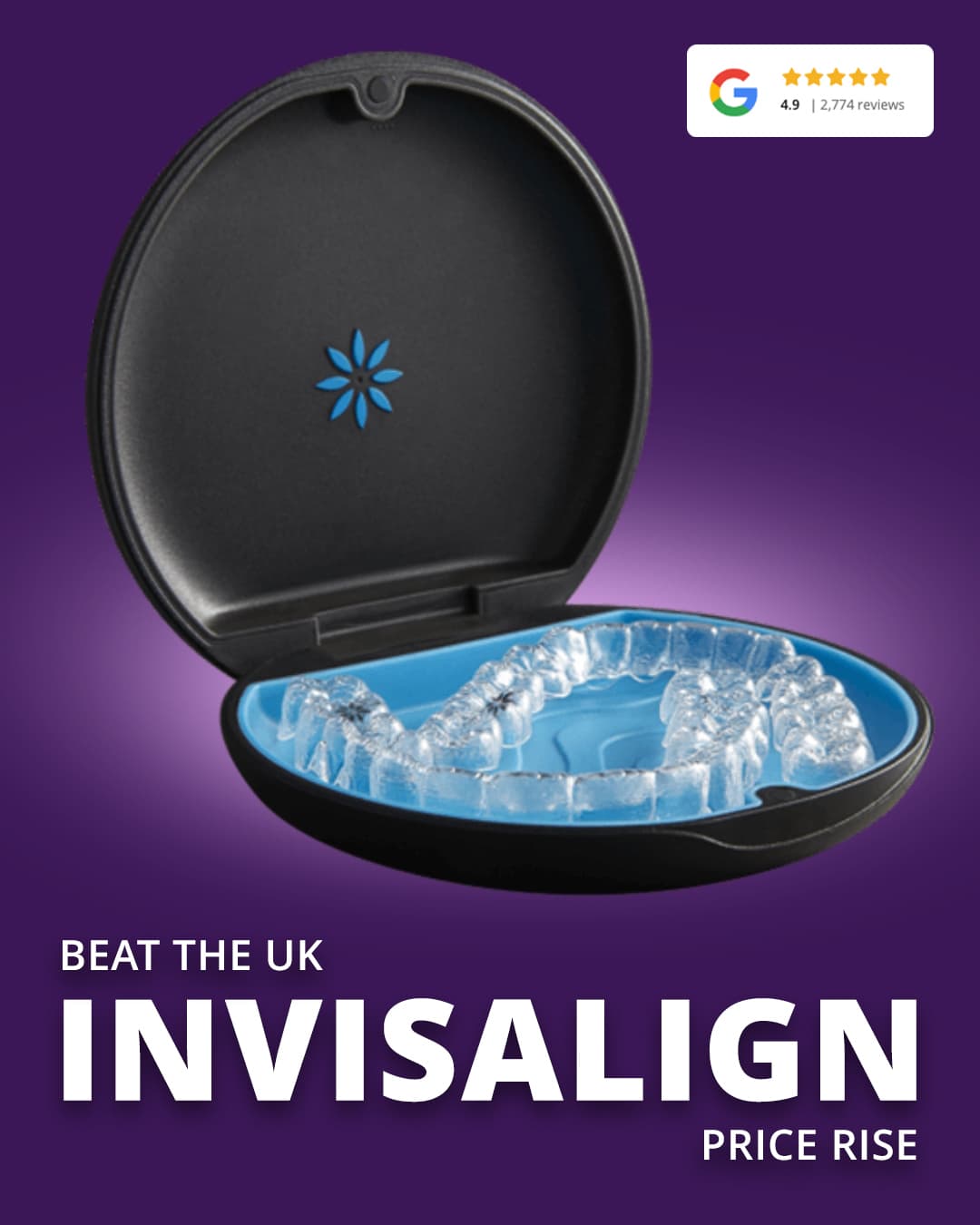
The ad leads with urgency around a price increase, showing the product in an open case. A practice using this approach might test whether a specific deadline shifts inquiry rate, though the messaging doesn't explain what makes Invisalign worth the higher cost.
Veneers and smile design1 of 1
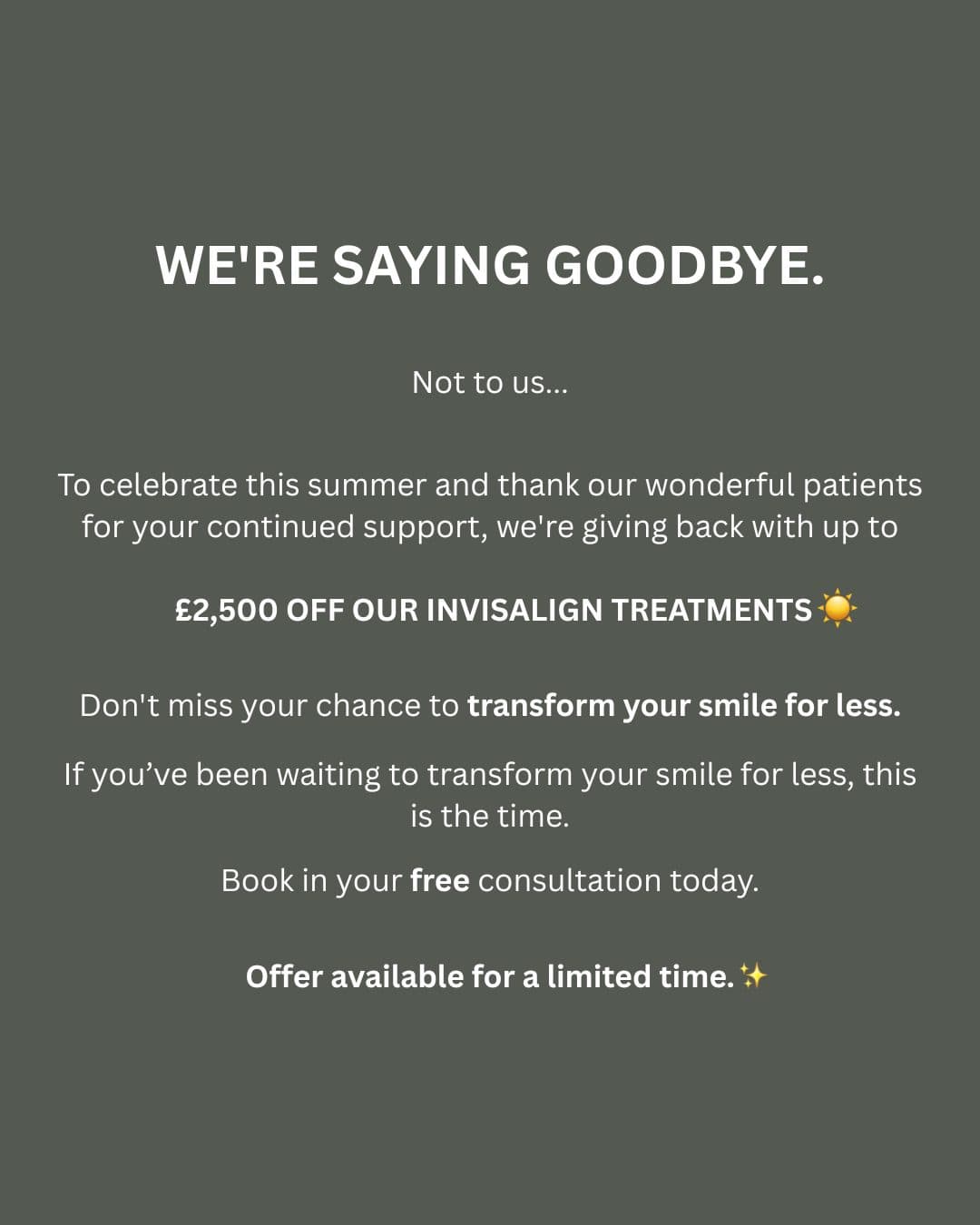
This ad opens with a farewell hook, then reframes it as gratitude to patients before announcing a discount on Invisalign and offering a free consultation. The practice could sharpen the offer by naming the specific discount amount upfront rather than burying it, and by clarifying whether the £2,500 applies to all cases or has conditions.
Whitening2 of 2
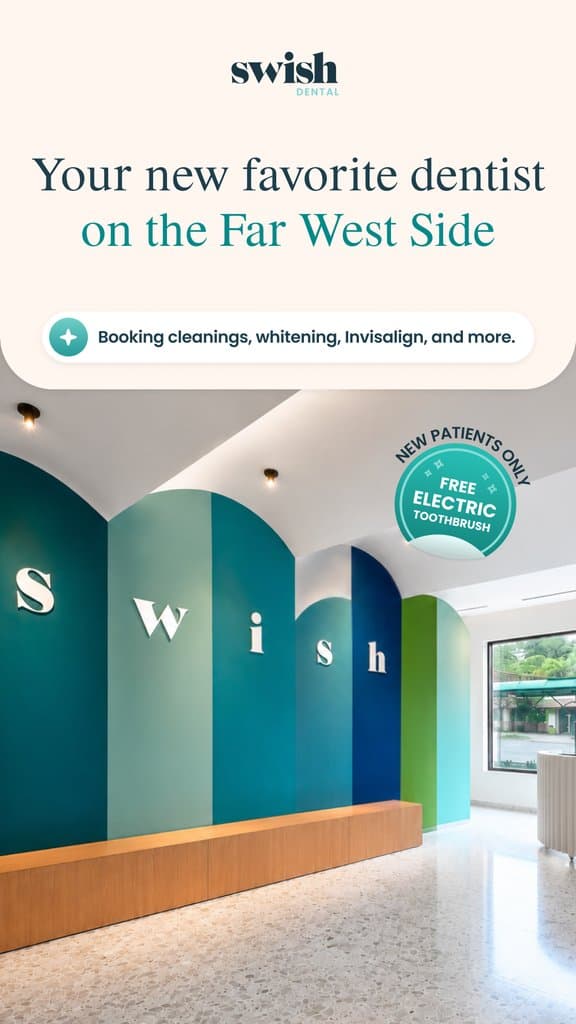
This ad leads with the clinic's interior design and brand name, asking new patients to book a service. The offer of a free electric toothbrush is specific, but the ad doesn't explain why Swish differs from other local dentists.

This ad leads with the emotional benefit of a smile, then immediately offers a discount price with a defined booking window. The practice could strengthen it by stating what whitening costs full price, or by showing before-and-after results to justify the expense.
Crowns and endo1 of 1
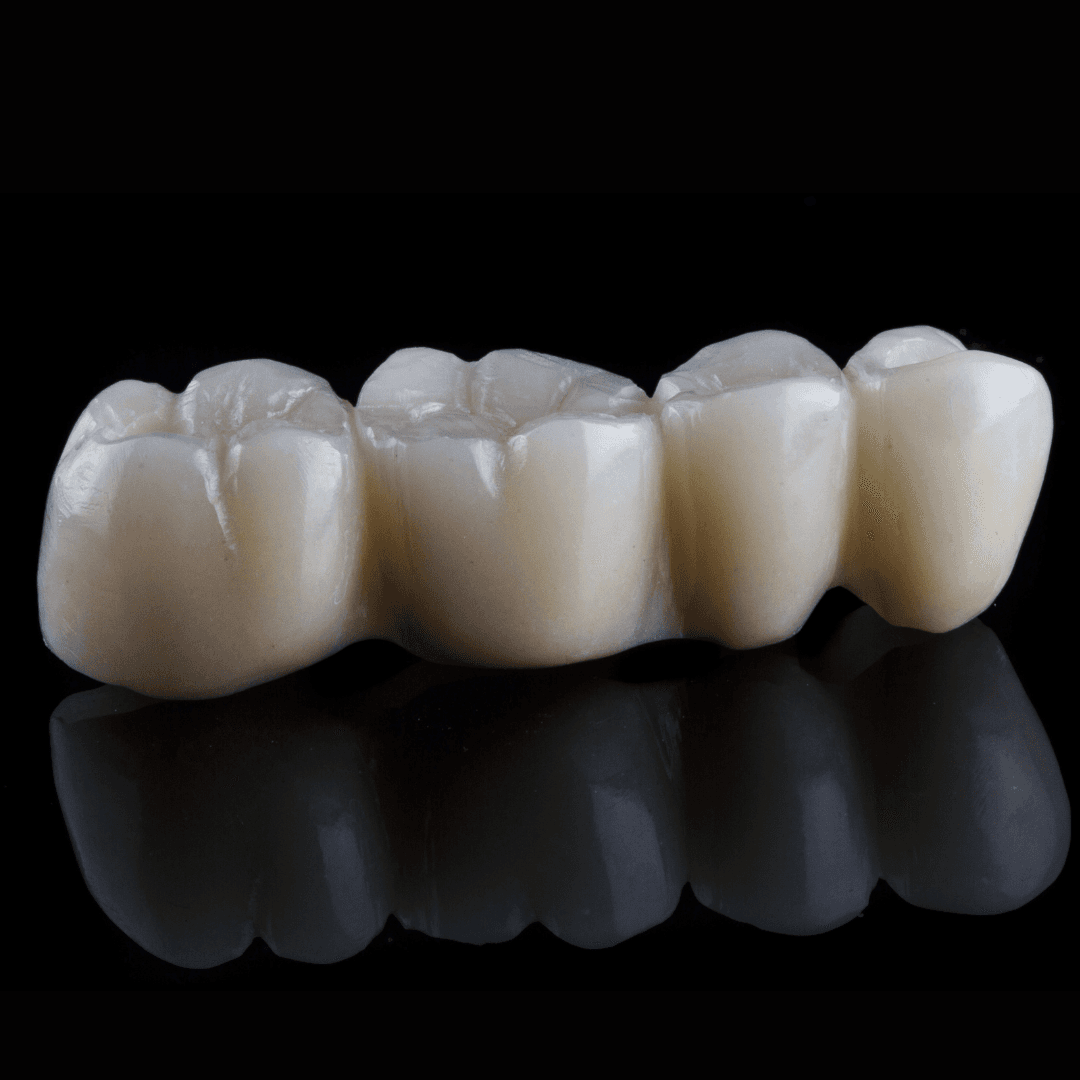
This ad leads with a close-up photograph of a four-unit porcelain bridge and asks nothing of the viewer except to look at the work. A practice might add patient testimony or before-and-after images to show what the restoration solves.
Emergency3 of 3
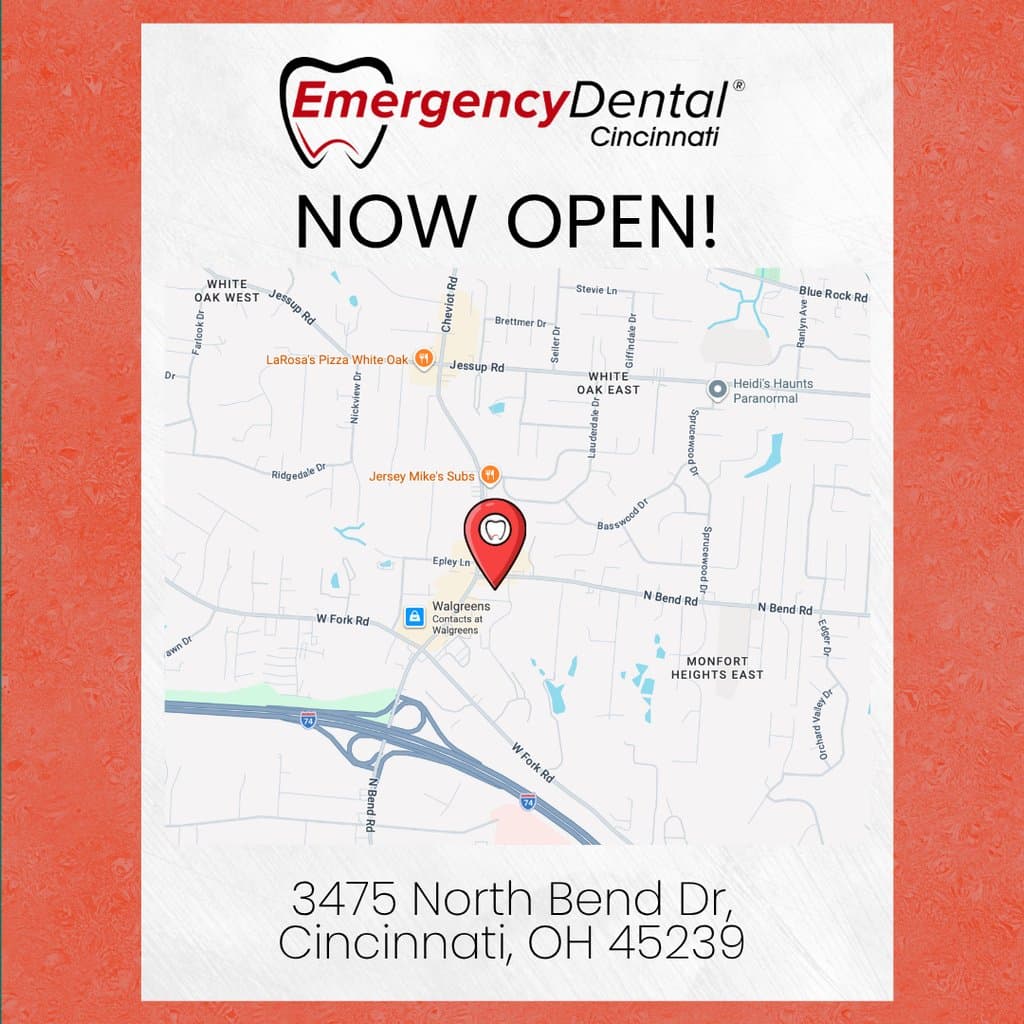
The ad leads with "NOW OPEN!" and a map, asking readers to note the new location on North Bend Drive. A practice could test whether the announcement alone sustains interest across 41 days, or whether adding hours, services, or a call-to-action might sharpen the message.
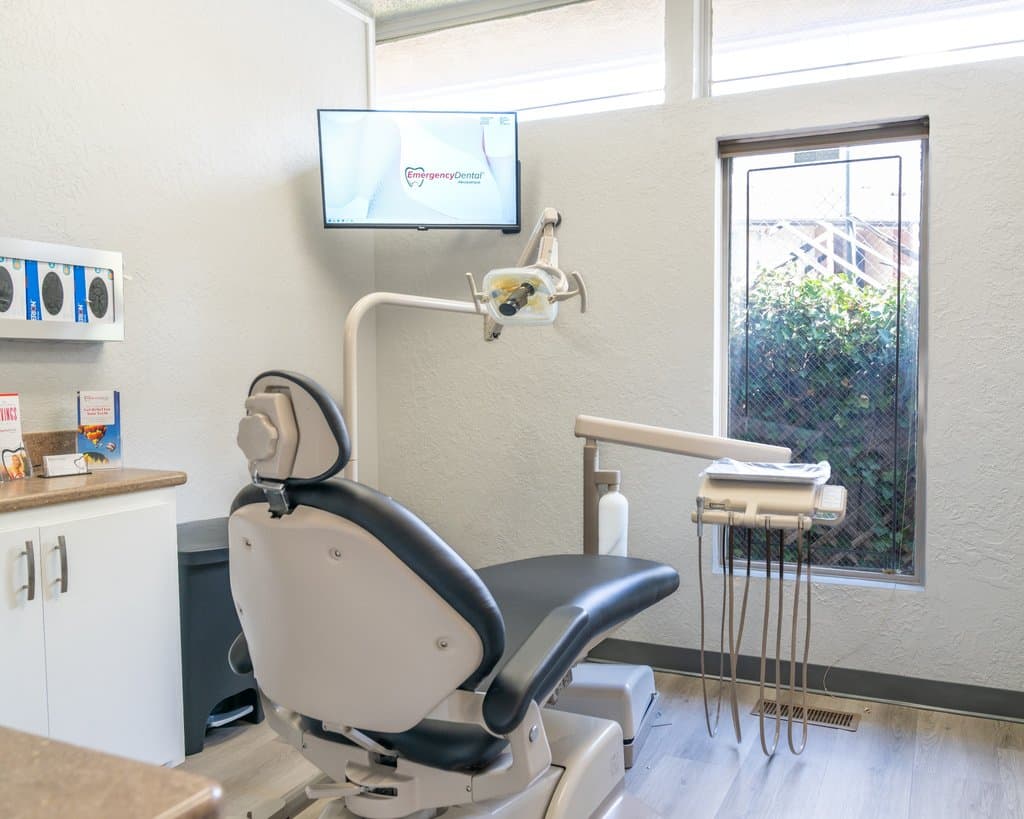
This ad leads with a photograph of the treatment chair and overhead light, relying on the clinical environment itself to signal competence for emergency cases. The practice could strengthen the approach by stating what emergency care it actually offers, since the image alone leaves potential patients uncertain what to expect.
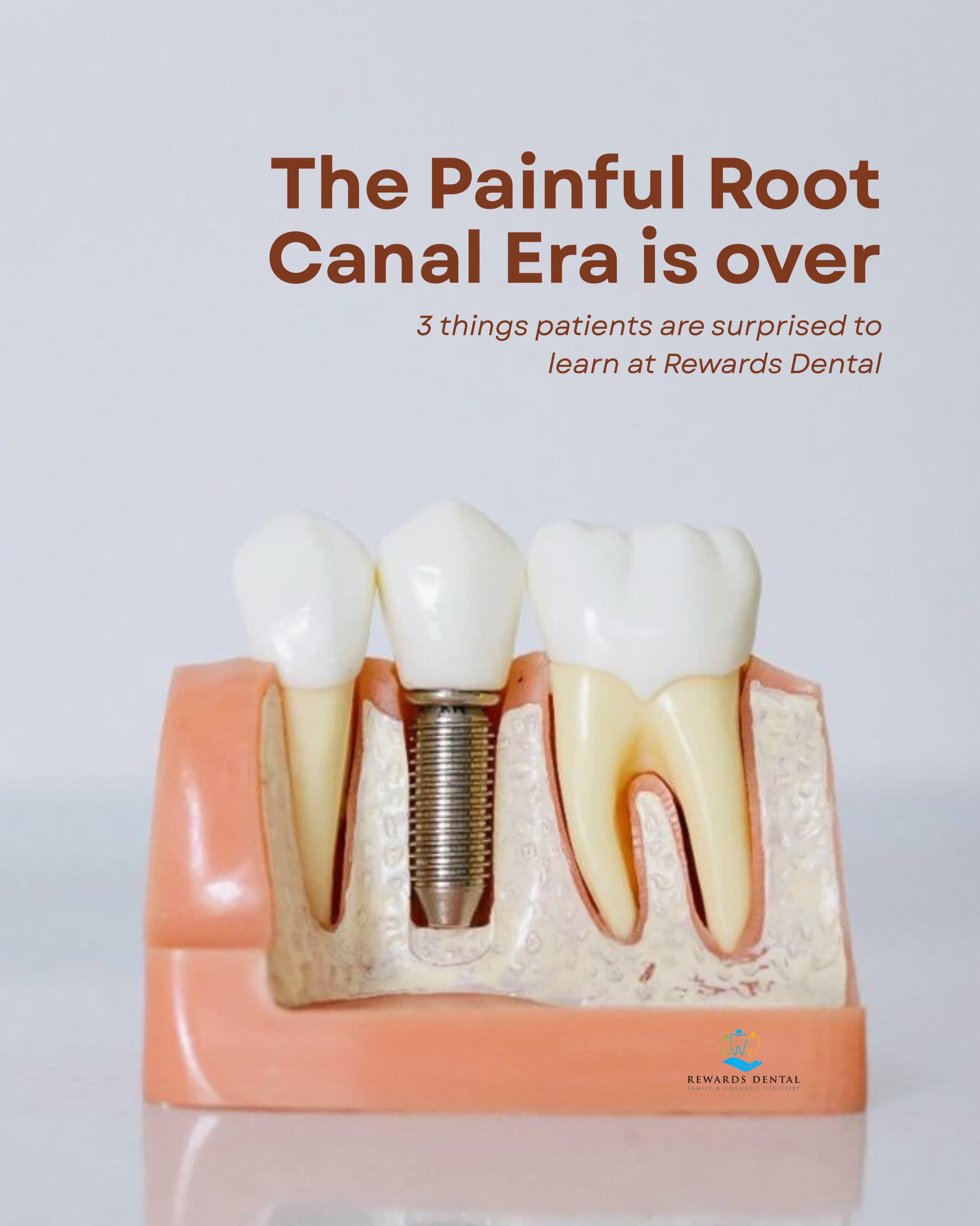
The ad leads with a bold claim (root canals are outdated) and shows a dental implant model, then offers three unnamed surprises to draw clicks. The practice could say what those three things are upfront; hiding them behind a click may cost traffic to practices willing to state their case directly.
Exams and hygiene7 of 7
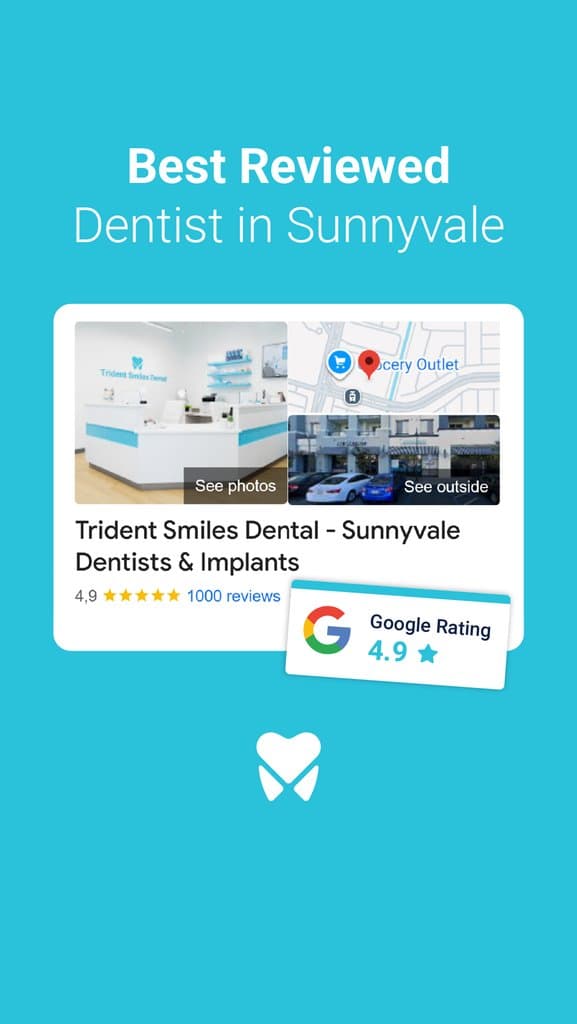
This ad leads with the clinic interior and rating badges, asking viewers to inspect photos and the exterior before mentioning the practice name or services. The practice could test whether leading with the dentist's name or a specific service offer (implants, exam) draws more engagement than visual credentials alone.
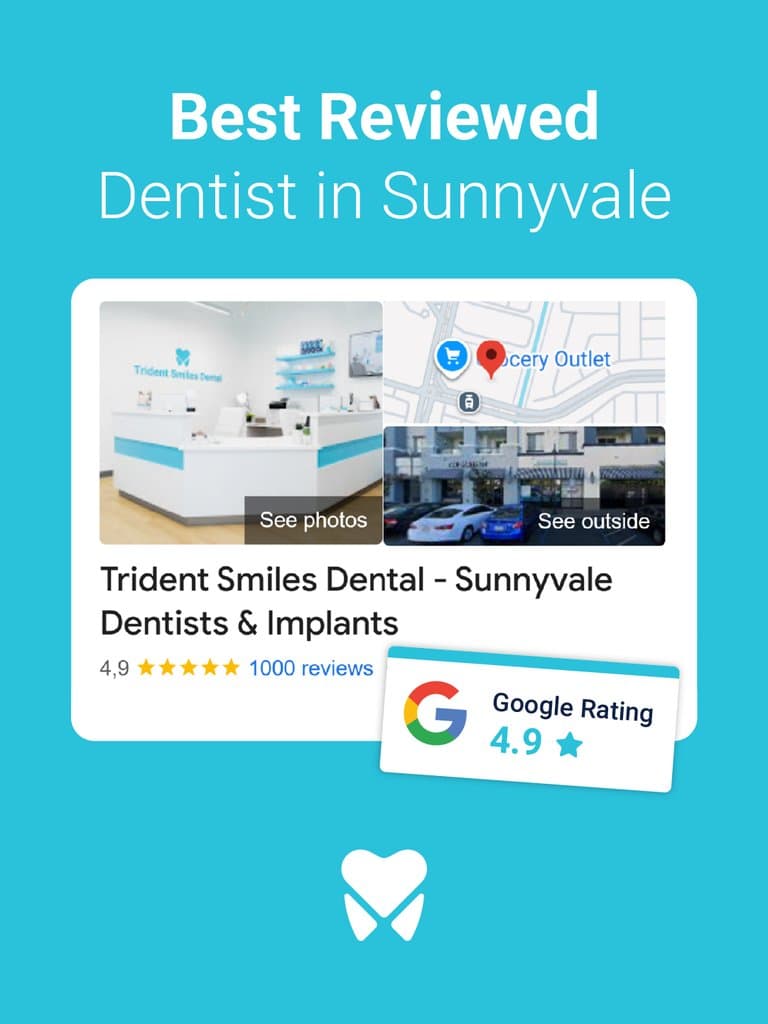
This ad leads with interior photographs and external views, then reinforces credibility through Google's 4.9-star badge and 1,000 reviews. A practice might test whether showing the clinic space first, before mentioning implants or hygiene services, shifts who engages with the ad.
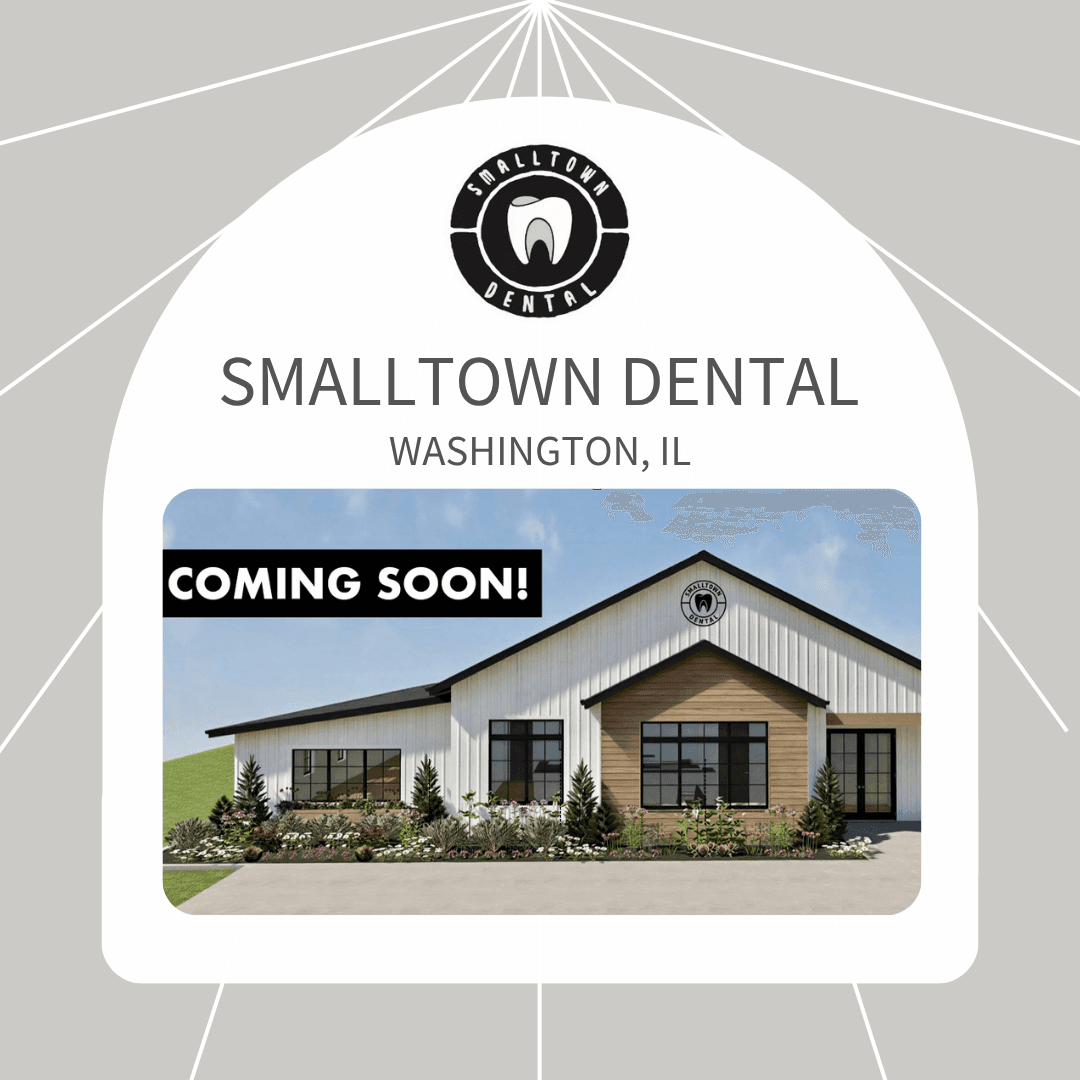
This ad leads with a building photograph and "Coming Soon" text, asking readers to anticipate an opening rather than book now. The practice runs this creative for months without showing the finished interior, missing a chance to display the actual clinic space patients will enter.
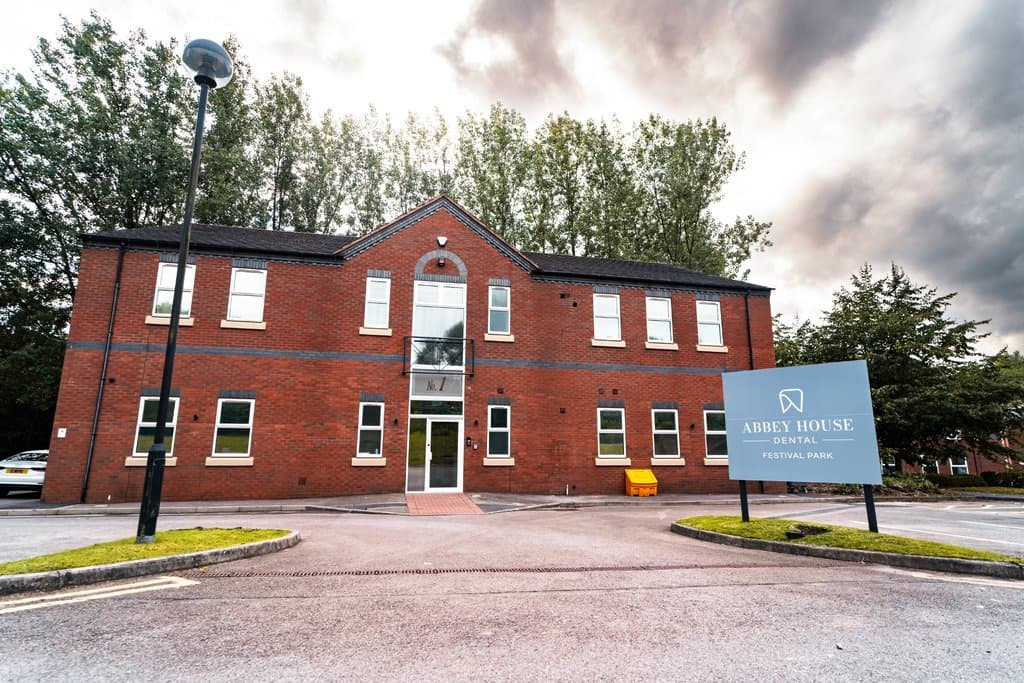
This ad leads with the building's exterior and signage, asking viewers to recognise the practice by its physical location. The approach relies on familiarity rather than treatment benefits, leaving room to show what patients actually receive inside.
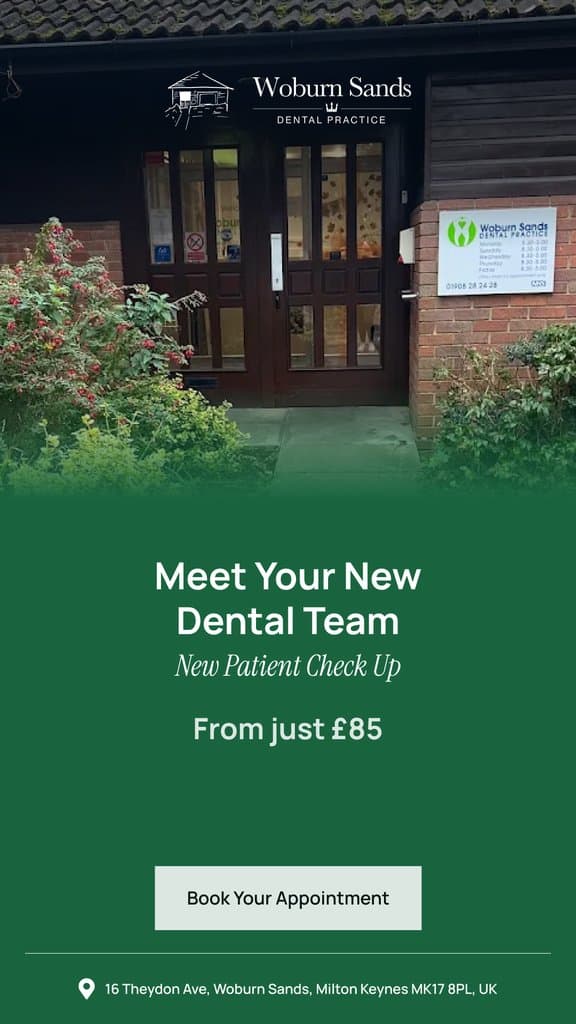
The ad leads with the practice entrance and positions a new patient check-up as an affordable entry point at £85, then asks for an appointment booking. It could strengthen the offer by naming what's included in that price or by addressing why someone should choose this practice over others nearby.
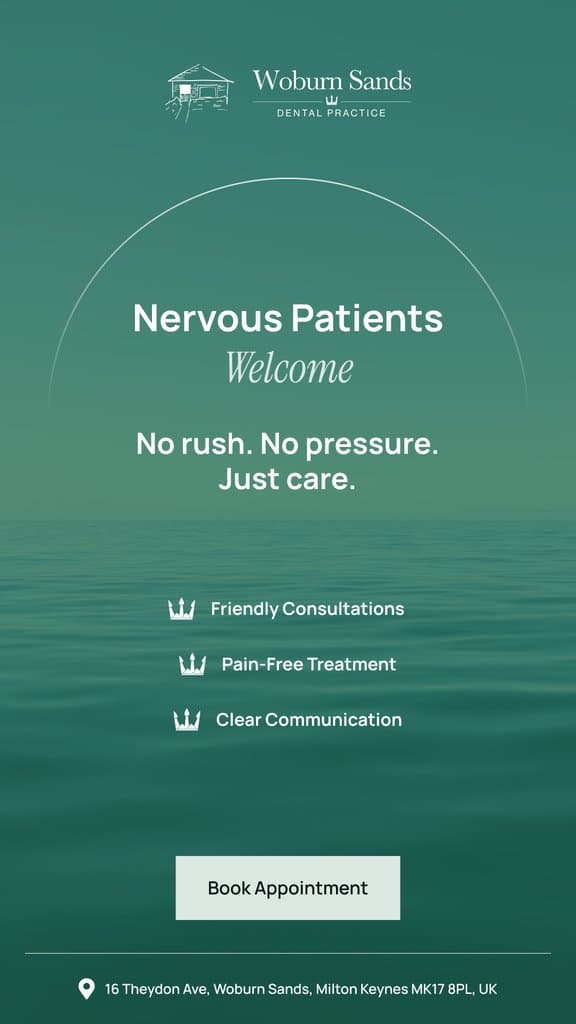
Woburn Sands leads with reassurance for nervous patients, listing three specific practice qualities and a call to book. The ad names a service (hygiene-exam) nowhere, leaving what patients actually receive unclear.
This ad leads with a question about what happens during an exam, then explains the dentist's process and the role of X-rays in finding hidden problems. The practice could strengthen it by saying why someone should book now, rather than simply describing what they'll experience.
No treatment named18 of 18
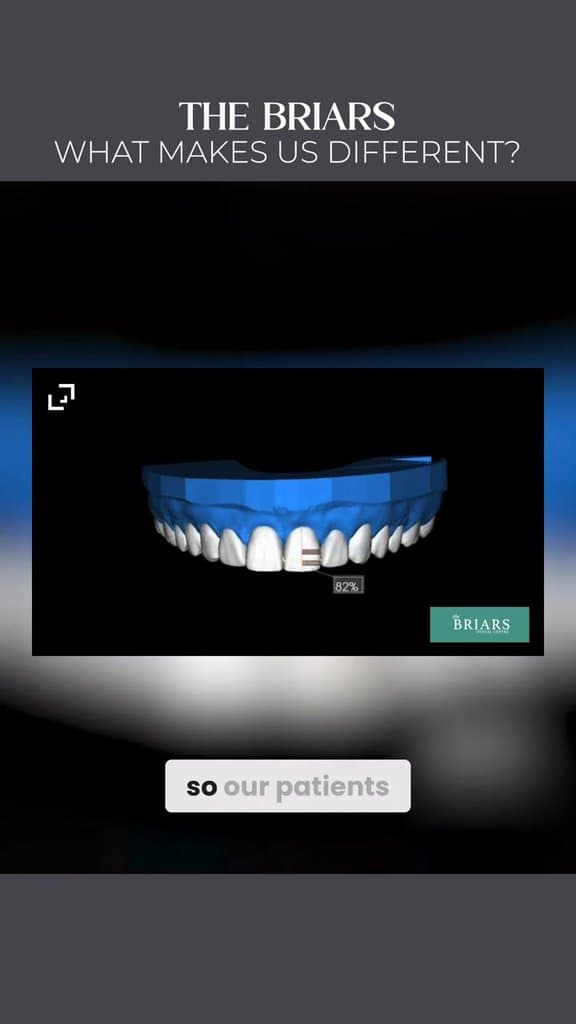
The ad leads with a close-up of veneers and asks viewers to consider what makes the practice different, though it doesn't complete that argument in the image itself. A practice could either finish the thought visually or test whether the incomplete question drives enough curiosity to click through.
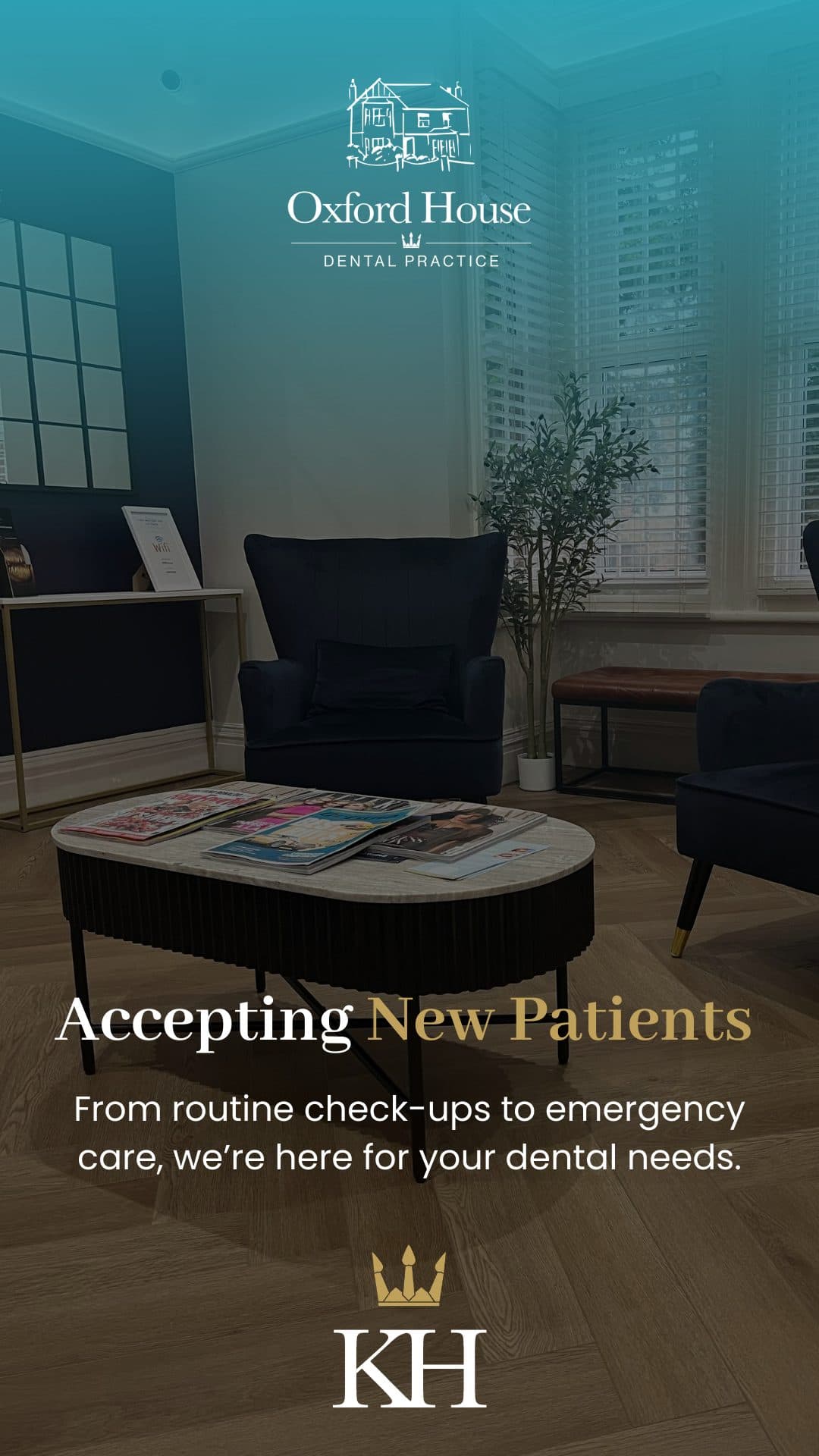
This ad leads with a welcoming interior and a simple statement that the practice takes new patients, asking nothing beyond consideration. It does not say what services set this practice apart from others accepting new patients nearby, which leaves the reader with no reason to choose it.
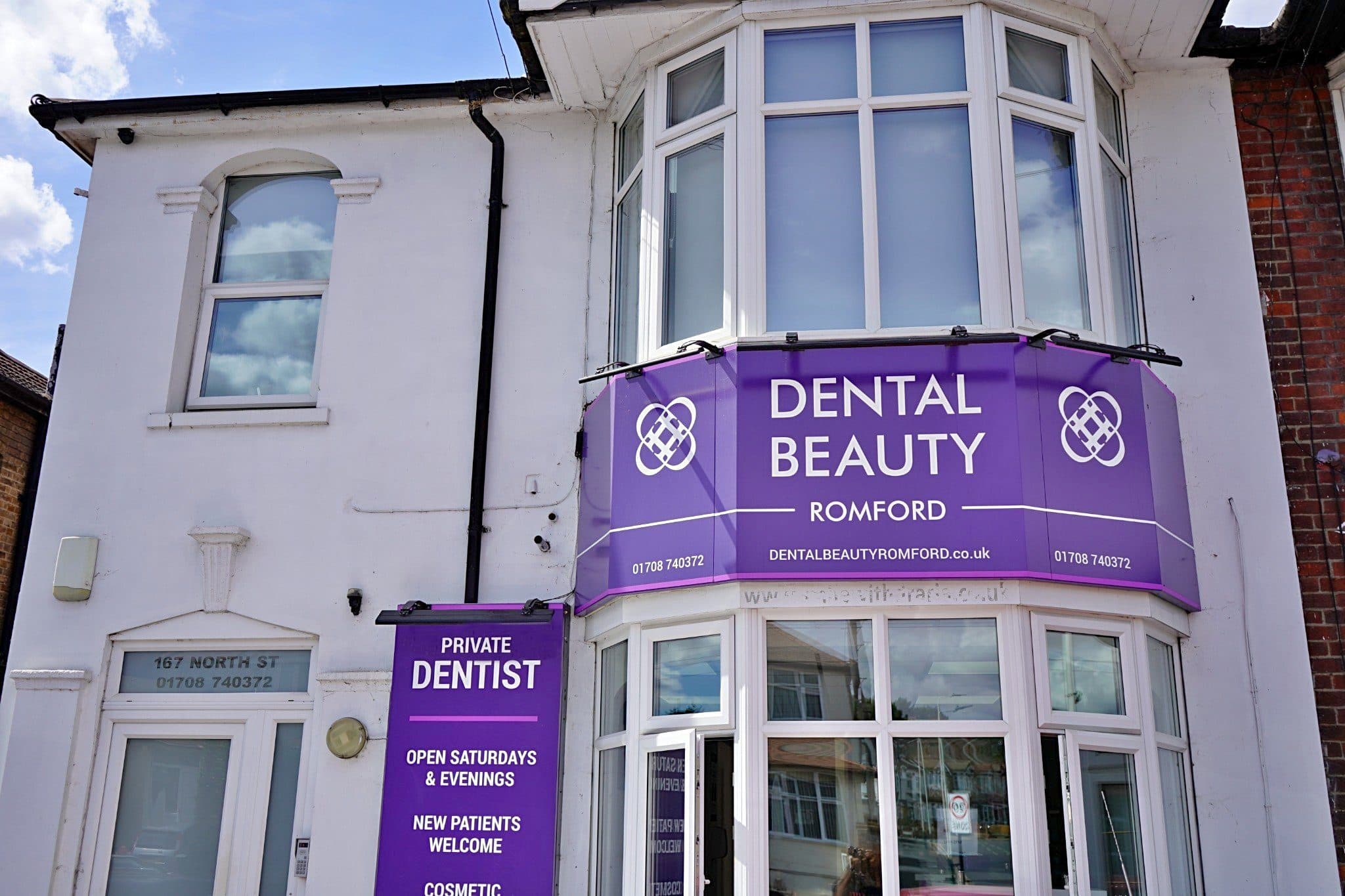
This ad leads with the clinic's exterior storefront and lists access points: Saturday and evening hours, new patient welcome, cosmetic services. The practice doesn't state what cosmetic work it offers, leaving potential patients guessing about specific treatments available.
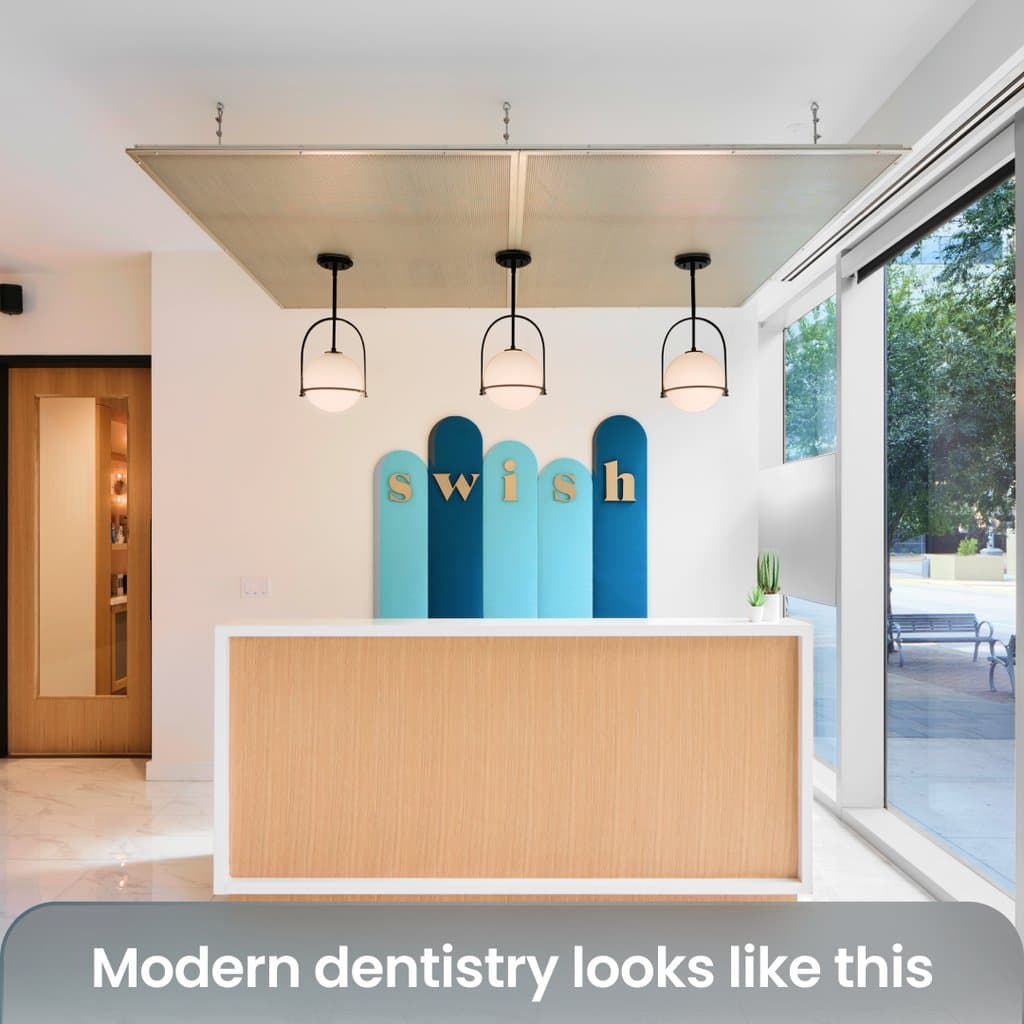
This ad leads with a bright interior photograph and a single declarative claim about modern dentistry, asking viewers to accept that aesthetic and design signal quality of care. The practice could have paired the image with a specific service offer or patient benefit, rather than relying on the viewer to infer what makes this dentistry modern.
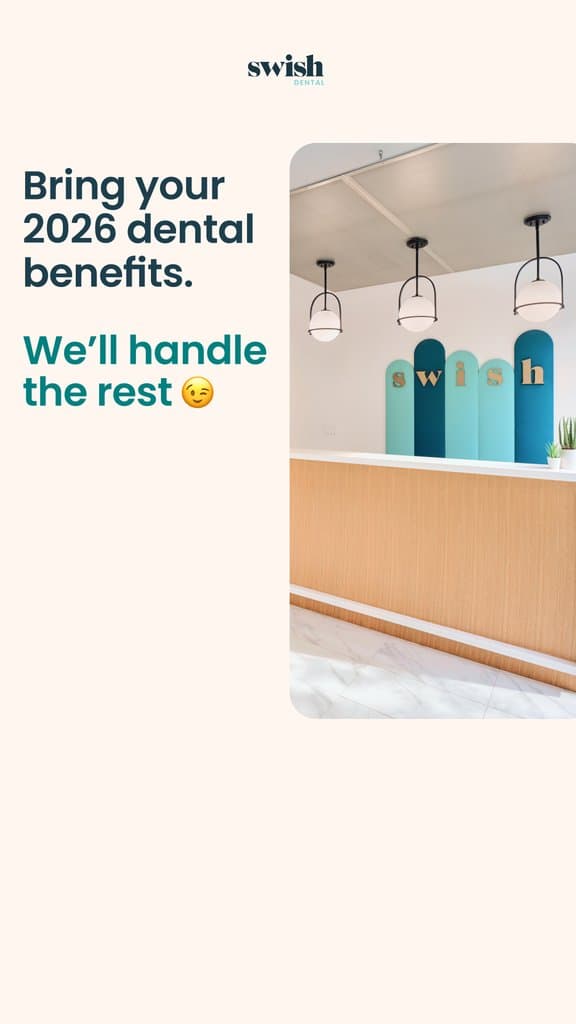
This ad leads with a practical appeal (use your 2026 benefits before they expire) and reassures patients that admin is handled in-house, backed by a calm interior shot. The practice names itself only in the logo, missing a chance to build local recognition or differentiate beyond the benefits angle.
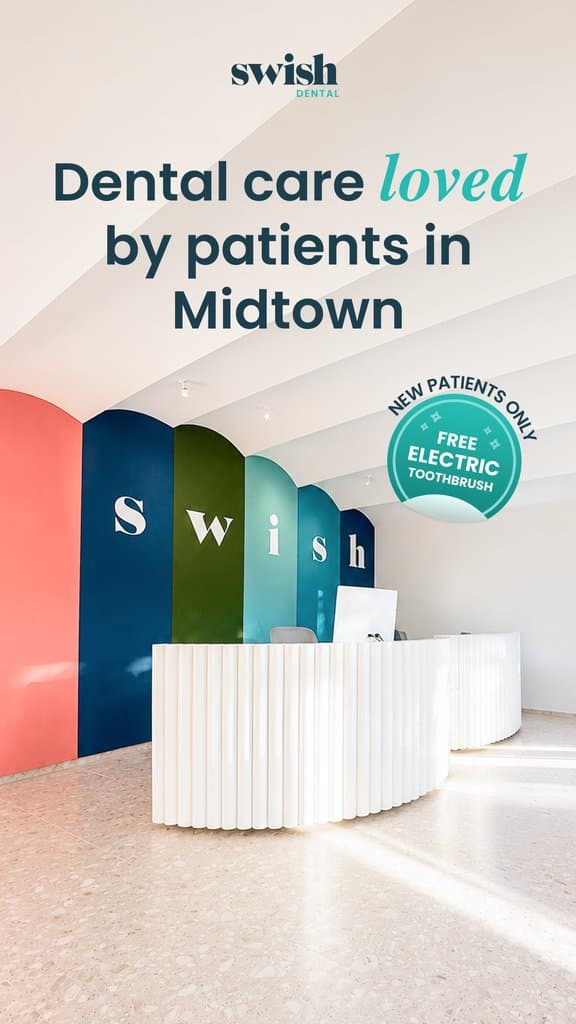
This ad leads with the clinic's interior design and a patient testimonial, then offers a free electric toothbrush to new patients. It doesn't name what dental services the practice provides, which leaves potential patients guessing about scope.
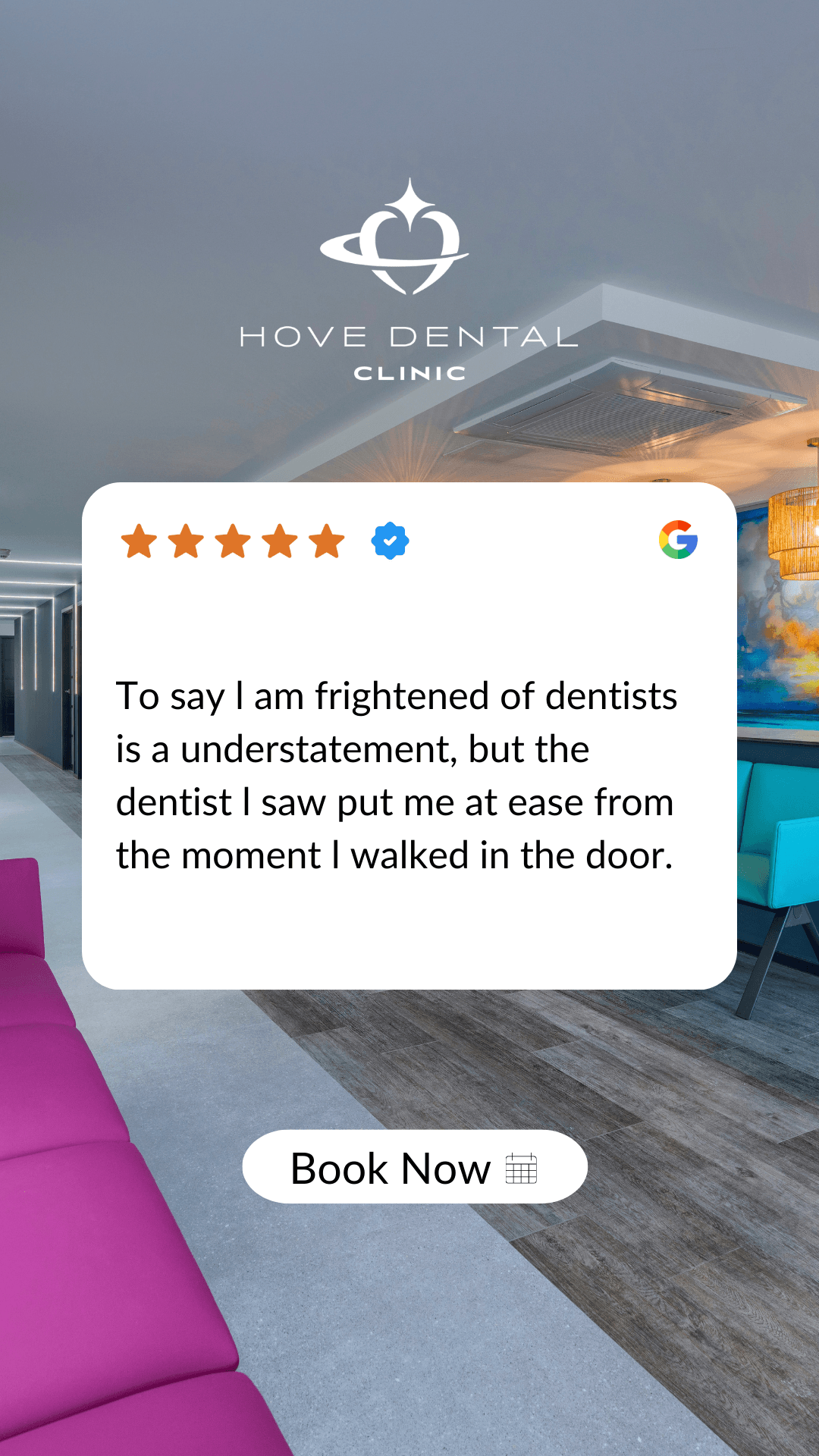
This ad leads with a patient testimonial about feeling at ease, shown over clinic interior photography, and asks viewers to book. The practice could test whether naming a specific service or concern (anxiety treatment, nervous patients) would narrow its audience more sharply than general reassurance.
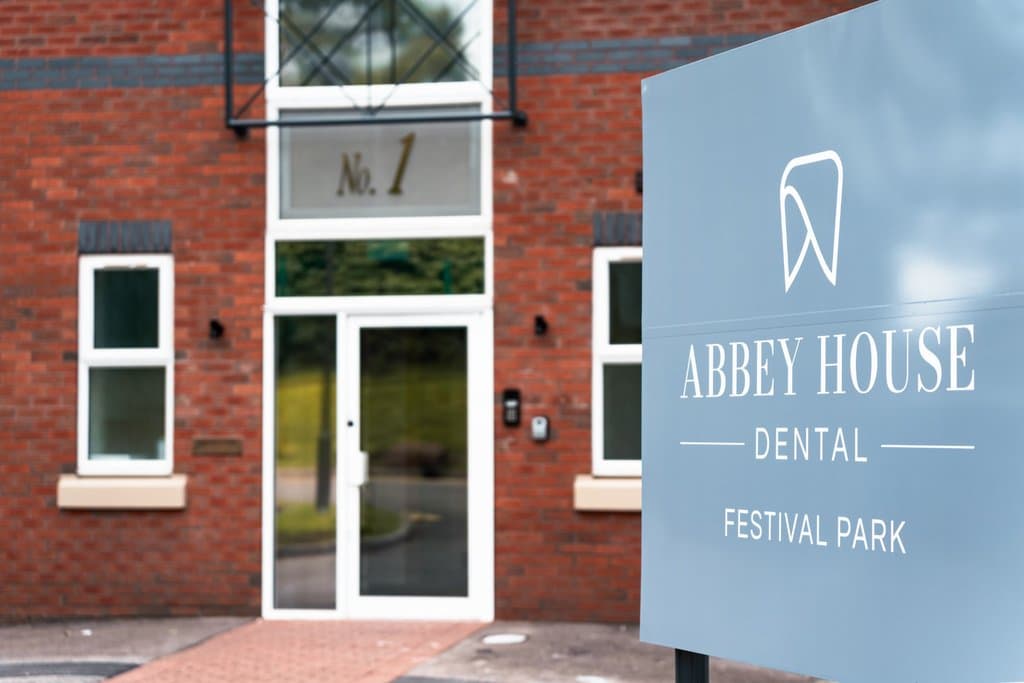
This ad leads with the building entrance and practice name, asking viewers to remember the location. It forgoes any statement of what the practice offers or why patients should choose it, leaving that work entirely to brand recognition or local knowledge.
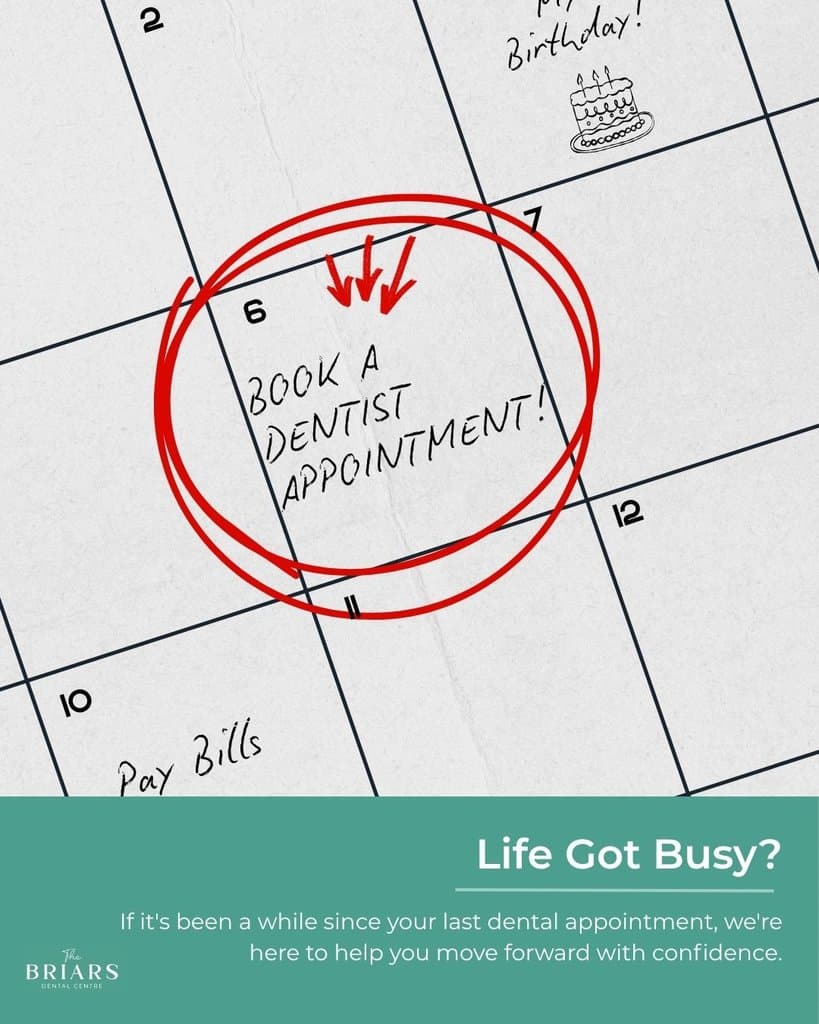
The ad leads with a calendar image marked with a red circle, then asks lapsed patients to book an appointment by naming life's busyness as the reason they've stayed away. The practice could strengthen this by saying what happens at an appointment, rather than assuming patients know what to expect after a gap.
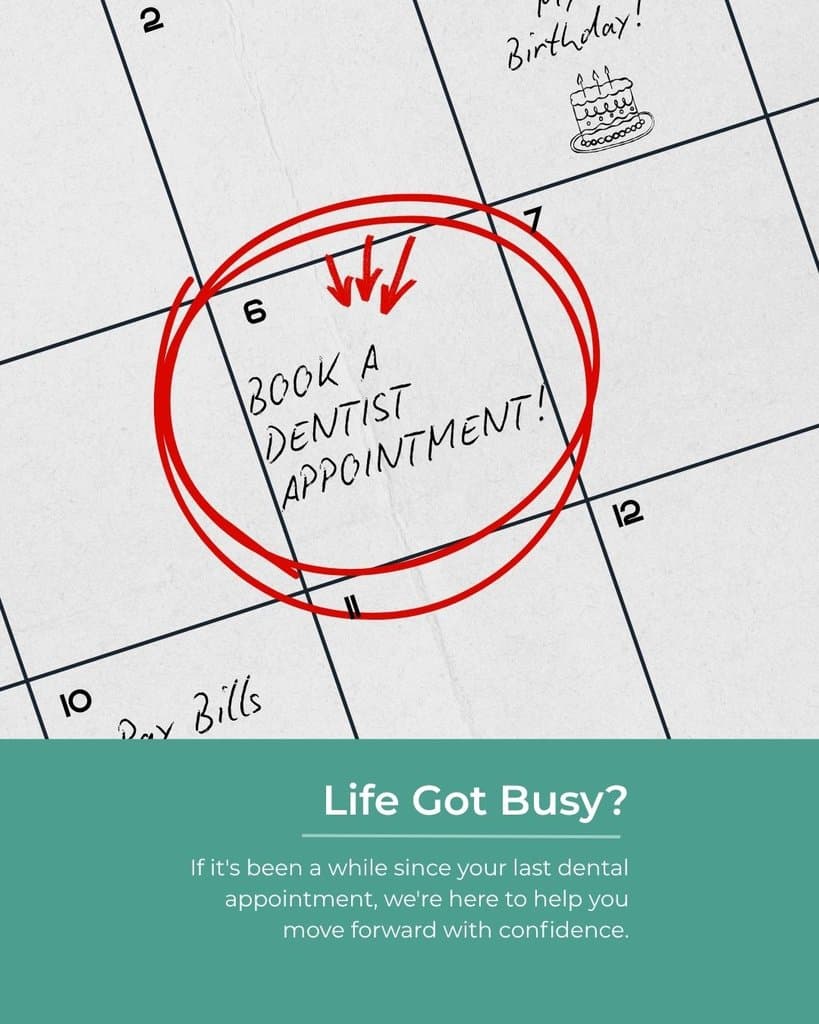
This ad leads with a calendar image marked with a circled appointment reminder, then asks readers to book a check-up by saying life has got busy and the practice will help them return with confidence. The emotional hook about time passing works, but naming a specific service or benefit (cleaning, check-up, pain relief) might make the ask feel more concrete than "move forward with confidence."

This ad leads with a credit problem to create urgency, then offers same-day financing without credit checks to remove barriers. The practice could test whether naming the specific treatment (smile design) earlier would clarify what the $1,500 covers.

The ad opens with a direct jab at credit problems, then pivots to offer a same-day payment option (£1,500) with financing for the rest, no credit check. The practice does not say what the treatment is or what it costs in full, so the offer rests on access to finance rather than on clinical detail.
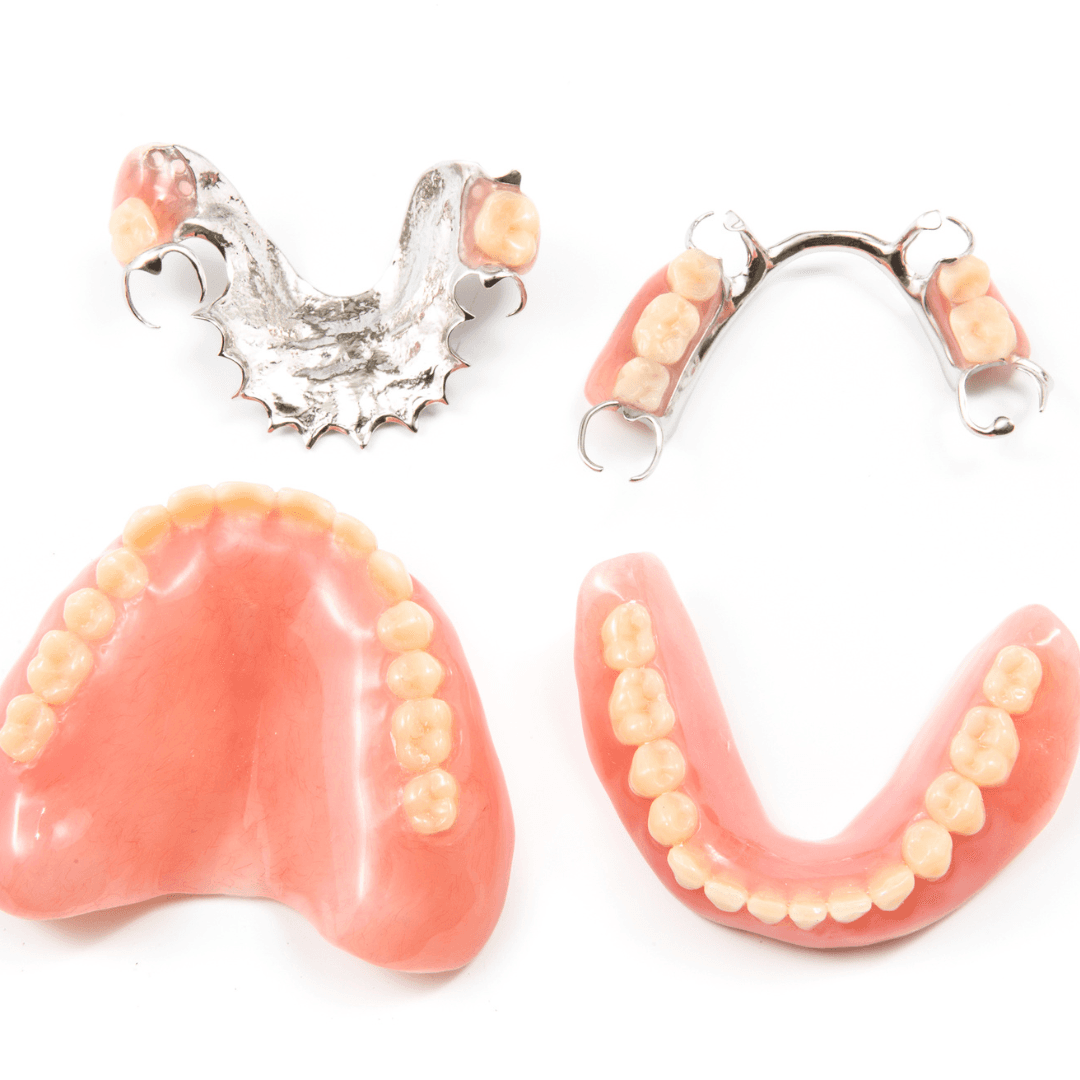
This ad displays four types of removable denture and partial denture solutions in clean product shots, asking viewers to consider the practice for prosthetic work. The absence of text or pricing leaves room for a practice to add its own messaging, though showing these devices alongside fixed alternatives or before-and-after cases might strengthen the case for treatment.
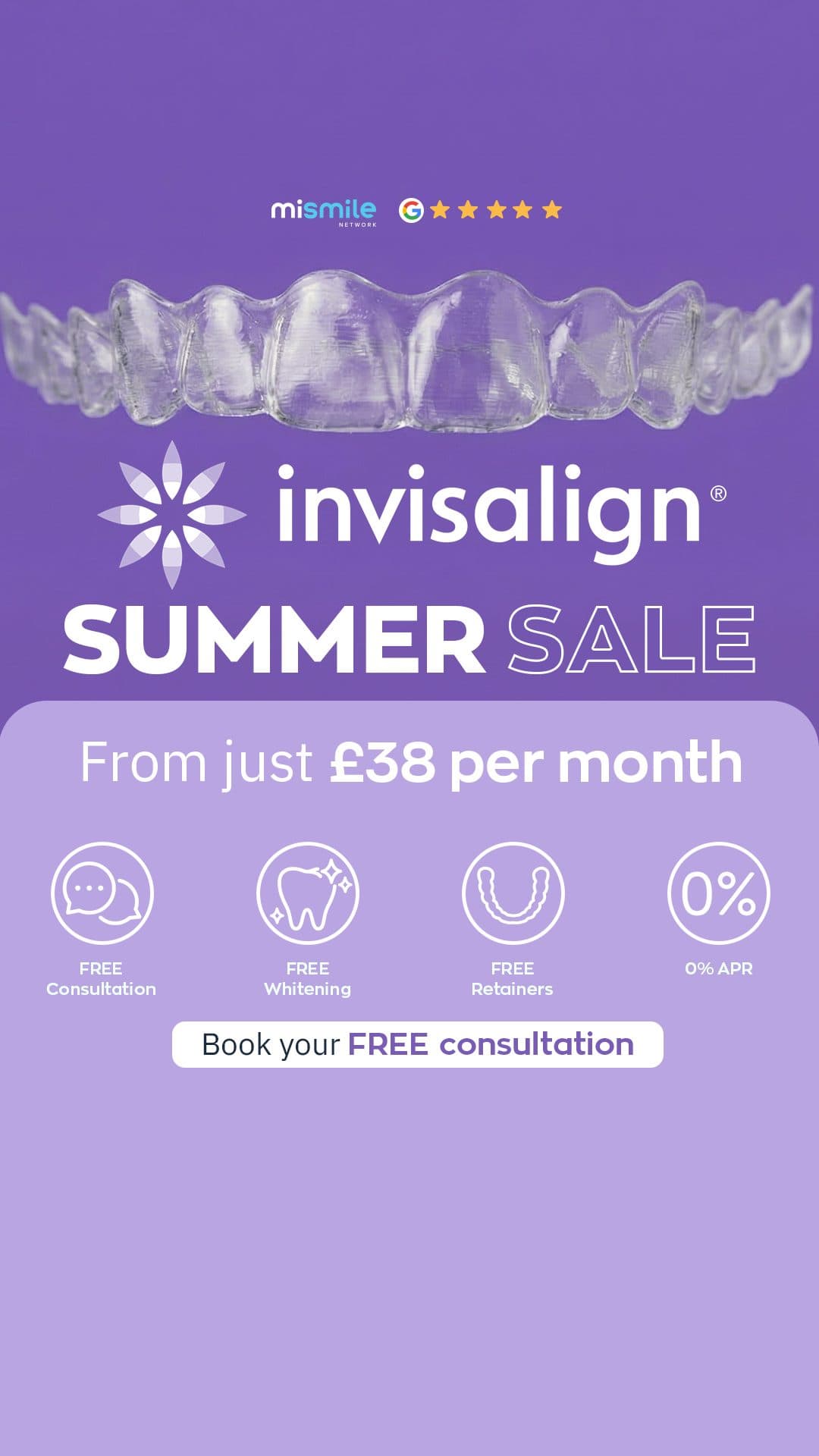
This ad leads with price and bundles it with free treatments, asking readers to book a consultation. The practice could test whether leading with the clinical benefit of straighter teeth, rather than cost and offers, shifts the type of enquiry it receives.
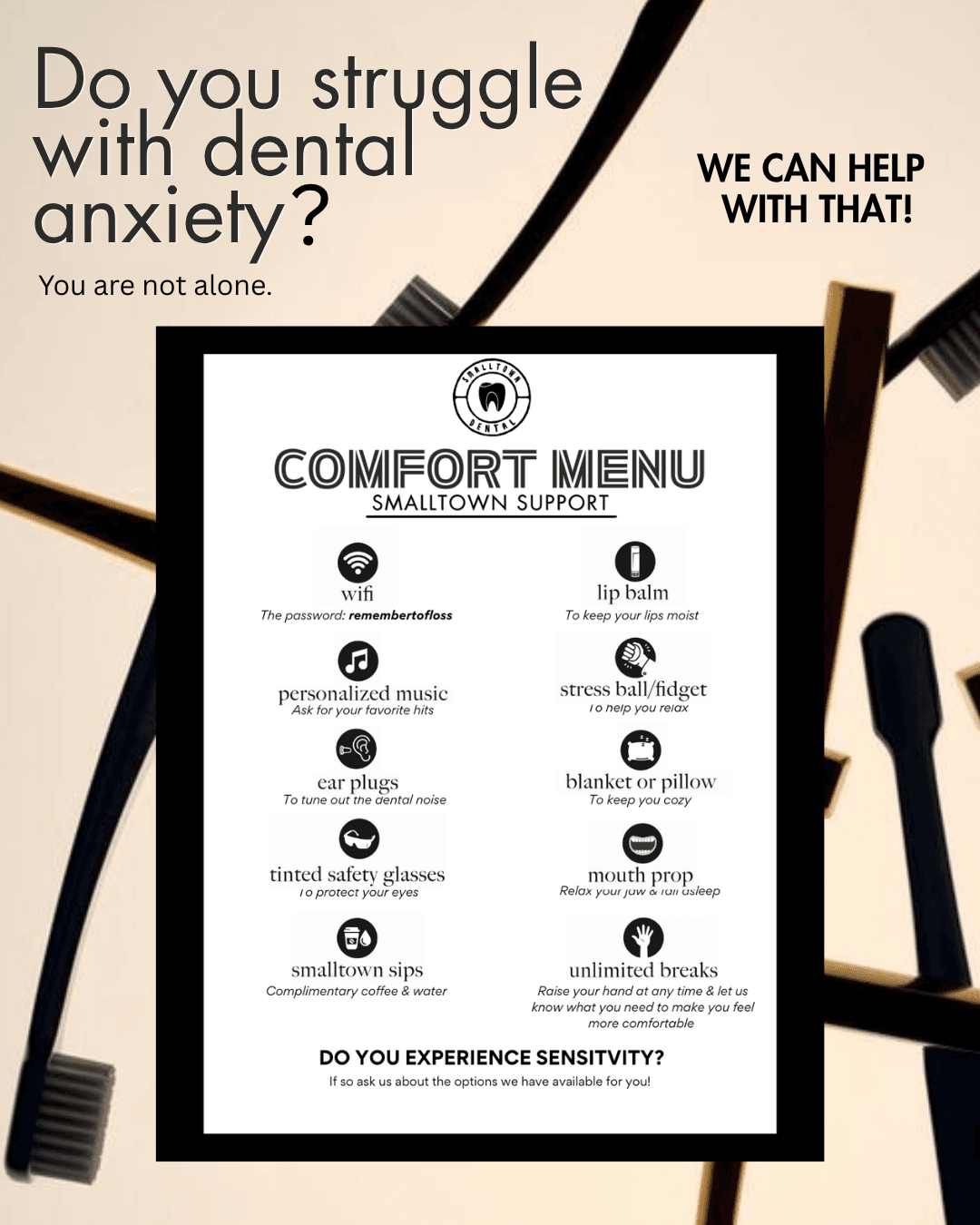
This ad leads with a question about dental anxiety, then lists comfort options as proof the practice takes the concern seriously. The practice names nothing it sells, which risks attracting patients who expect services it may not offer.
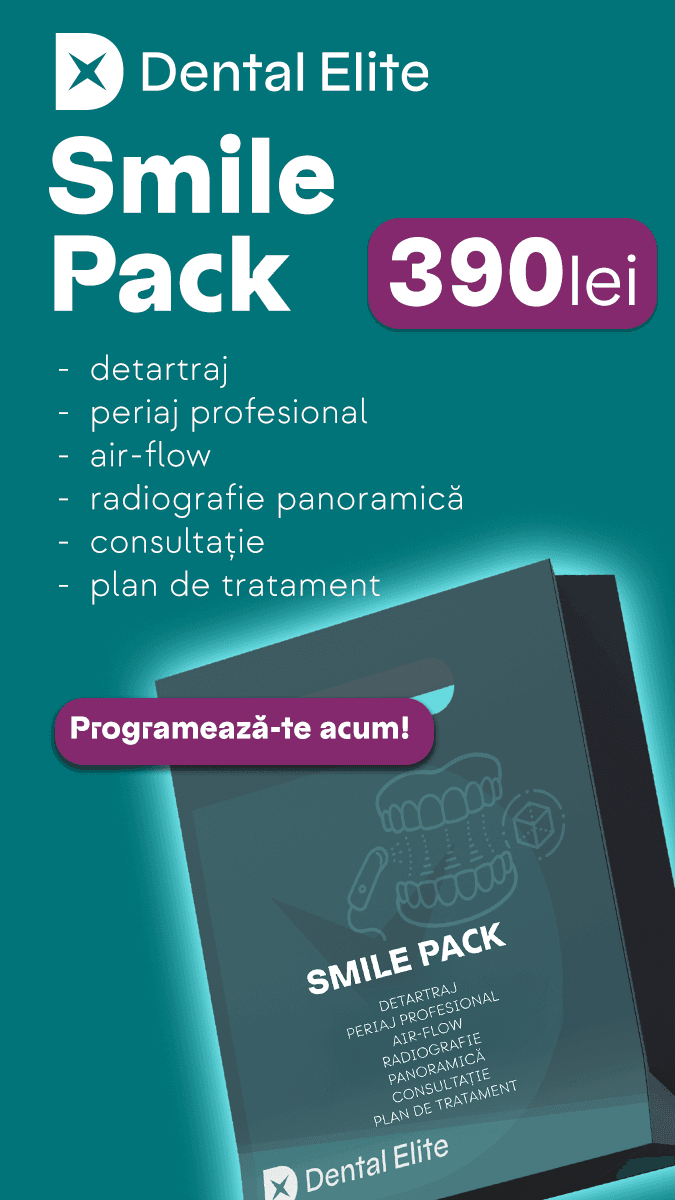
This ad leads with a bundled price (390 lei) and lists six specific treatments, then asks readers to book now. The practice names the package but not what problems it resolves, missing a chance to mention issues like staining or gum health that might prompt a patient to act.
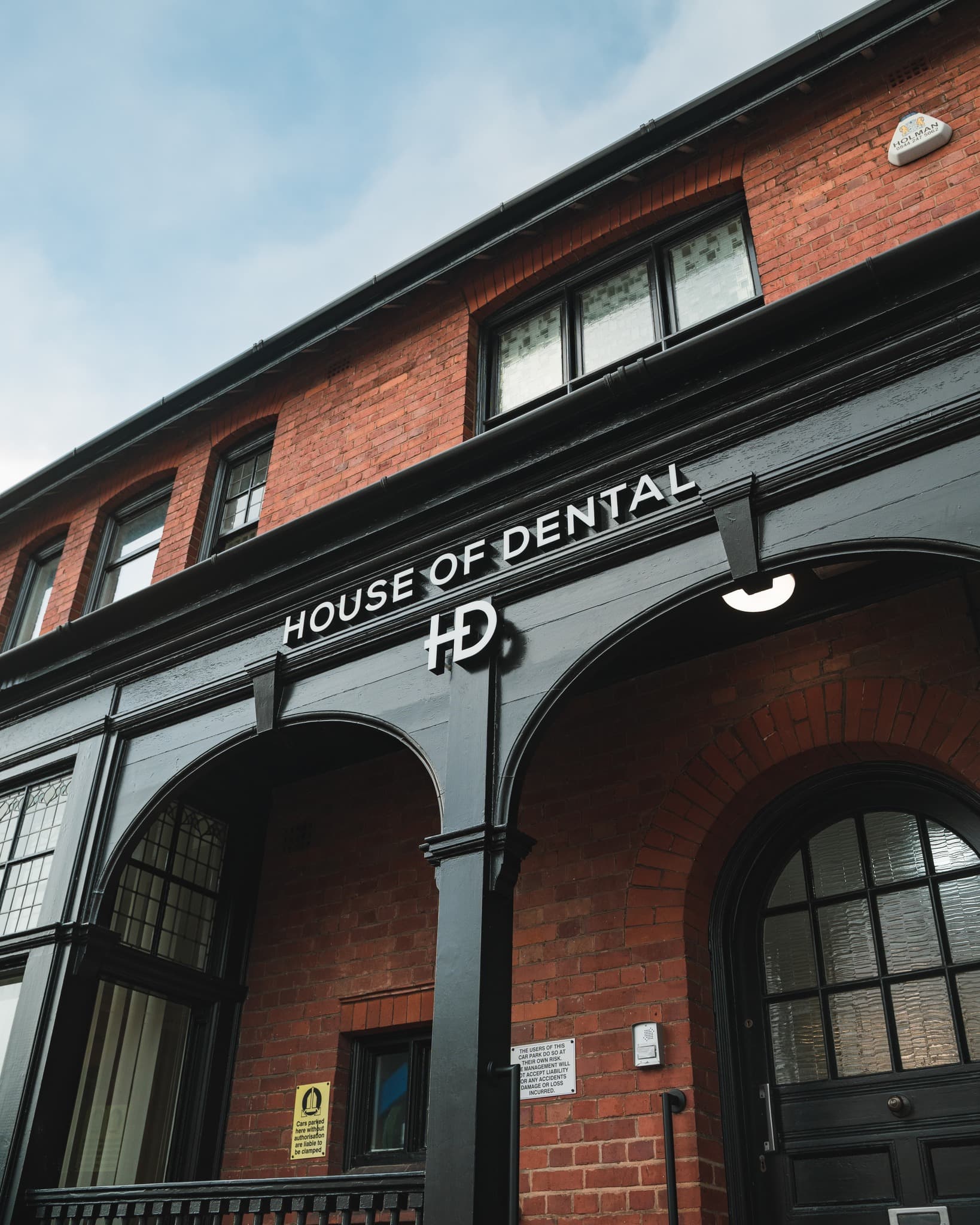
This ad leads with the clinic's exterior and branding, asking viewers to recognise the practice by its look and name alone. It forgoes any statement of what the practice offers, leaving potential patients without a reason to click beyond visual familiarity.
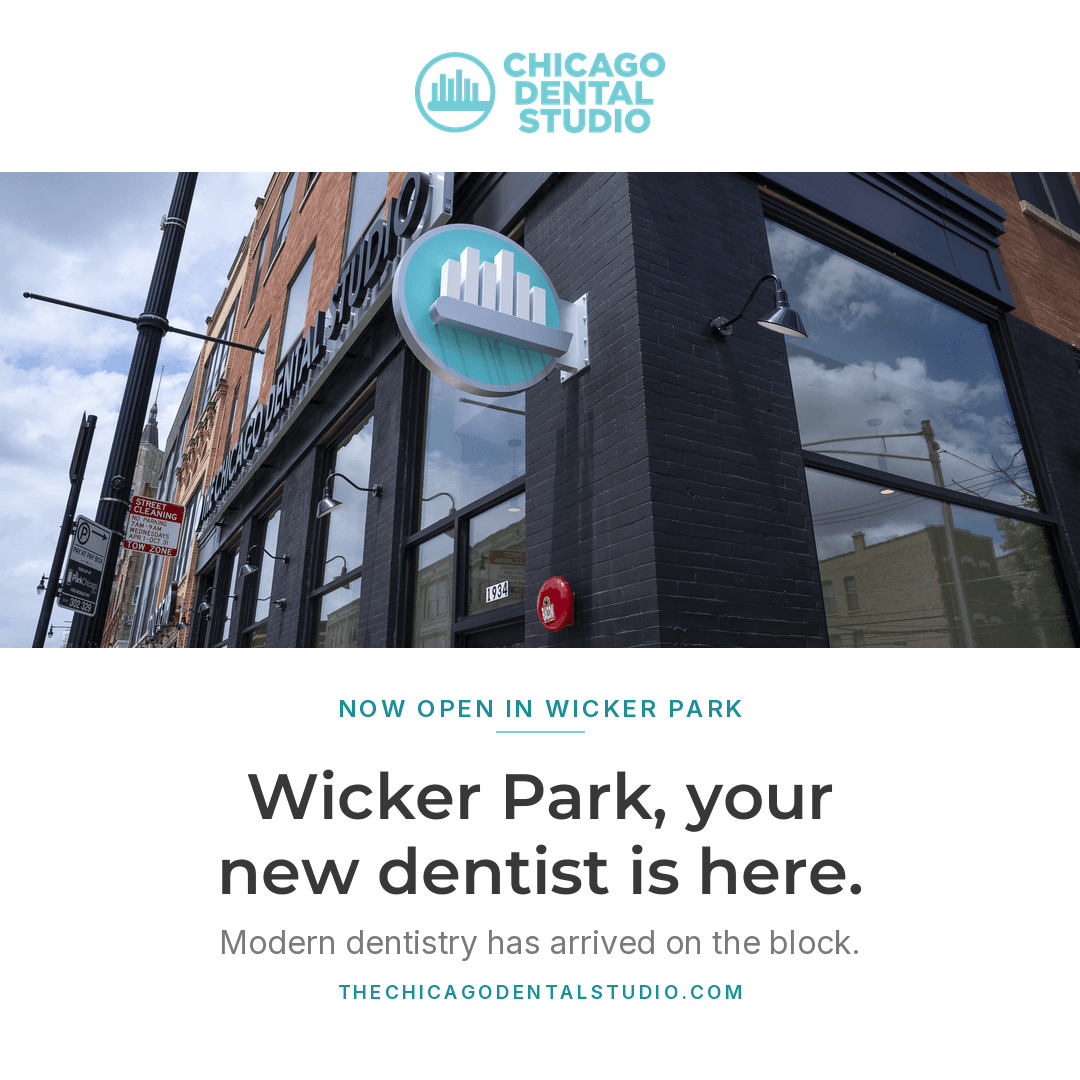
The ad leads with the storefront and opening announcement, asking the reader to note a new practice in their neighbourhood. It mentions no services, specialisms, or reasons to choose this dentist over others, leaving potential patients without grounds to book.
Request a review of your ads.
Send us your practice name. We’ll review your public Meta ads and email practical observations. Free, with no call required.
Prefer to talk through your marketing? We run Google Ads and Meta Ads for private dental practices.
Book a discovery callMethod: active ads pulled from Meta's public Ad Library in August 2026 for 80 dental practices in the US, the UK, Australia and Romania, sorted by Meta's own impressions ranking. Creatives were deduplicated on what the picture looks like, not on the file, and each was read to record what it shows. Days running are counted from the Ad Library start date. Reach is published for UK and EU ads only and never for US ones. Nothing was clicked, submitted or messaged, and no conversion data exists for any ad here in either direction. Advertiser names are as they appear publicly on Meta. The October examples were pulled on 22 October 2026, three image ads per practice in Meta's impressions order, running or ended, and cleared the same way as the rest.